
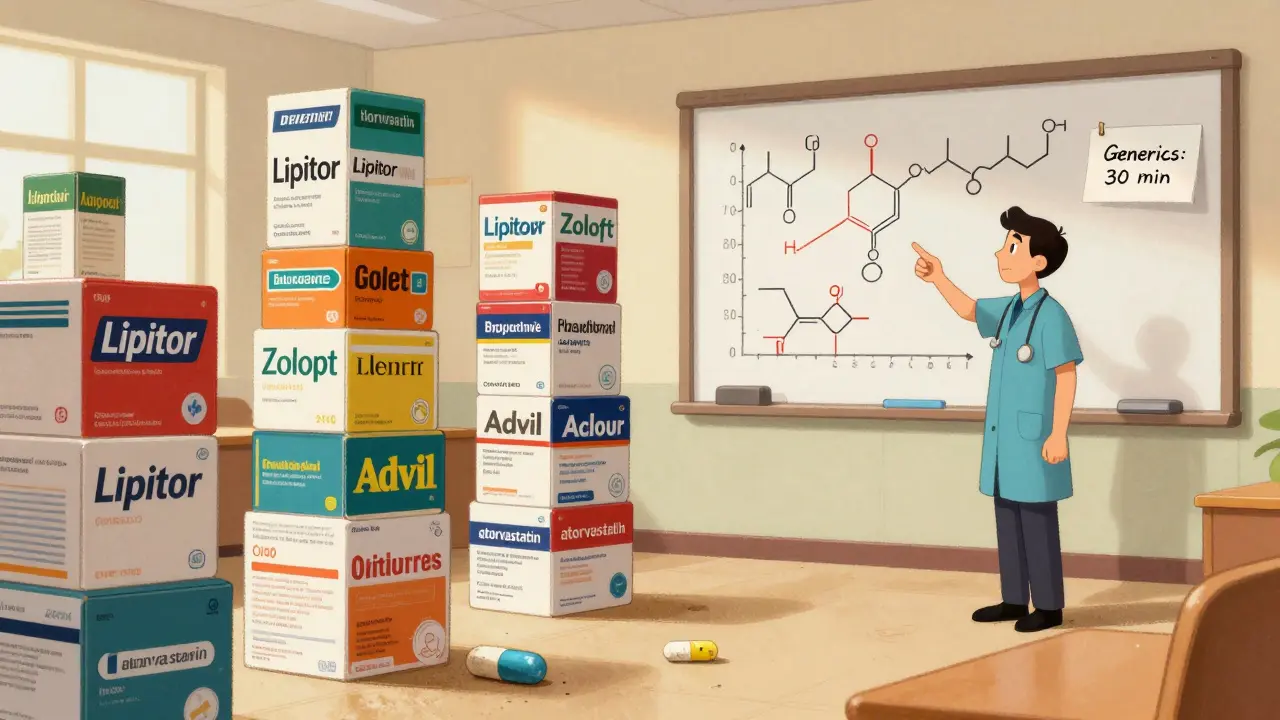
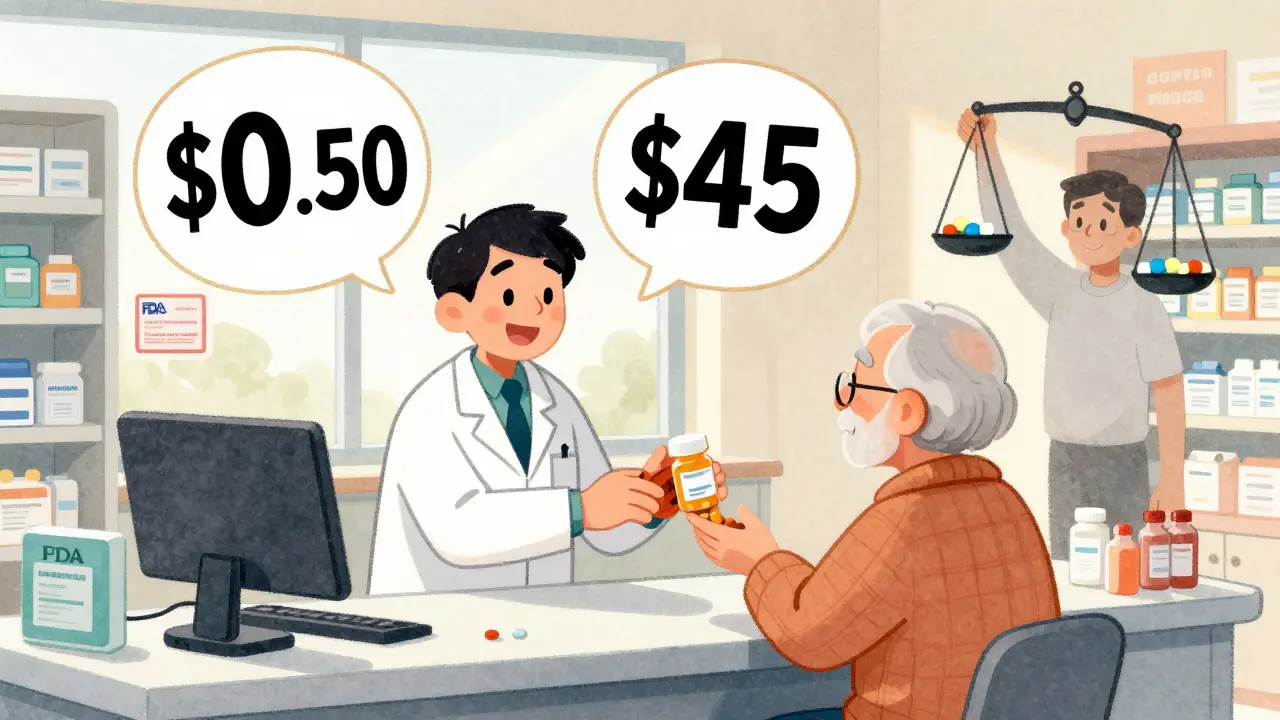
Doctors prescribe generics more than any other type of drug. In the U.S., generics make up 90% of all prescriptions but cost just 22% of what brand-name drugs do. That’s a massive savings. So why do so many doctors still hesitate to use them - or worse, still write brand names by habit?
The problem isn’t that generics don’t work. They do. The FDA and EMA require them to prove they’re bioequivalent: the same amount of active ingredient reaches the bloodstream at the same rate as the brand. The standard? A 90% confidence interval between 80% and 125% for absorption (AUC) and peak levels (Cmax). That’s not a guess. It’s science. And it’s been this way since the 1984 Hatch-Waxman Act. Yet, many doctors still don’t fully trust them.
What Doctors Are Taught - and What They’re Not
During medical school, students spend hours learning how brand-name drugs work. Mechanisms of action. Pharmacokinetics. Side effect profiles. But how much time is spent on generics? In one 2024 survey of U.S. medical students, 67% said their pharmacology course spent less than 30 minutes on generic substitution. Meanwhile, 78% of case studies used brand names only. That’s not an accident. It’s a pattern.
When you’re taught to think of a drug by its brand name - say, Lipitor instead of atorvastatin - that name sticks. It becomes the mental shortcut. Even if you later learn the science of bioequivalence, your brain defaults to what it learned first. And if your attending physician only prescribes the brand, you learn to do the same. Culture overrides curriculum.
The Knowledge Gap Is Real - Even Among Experts
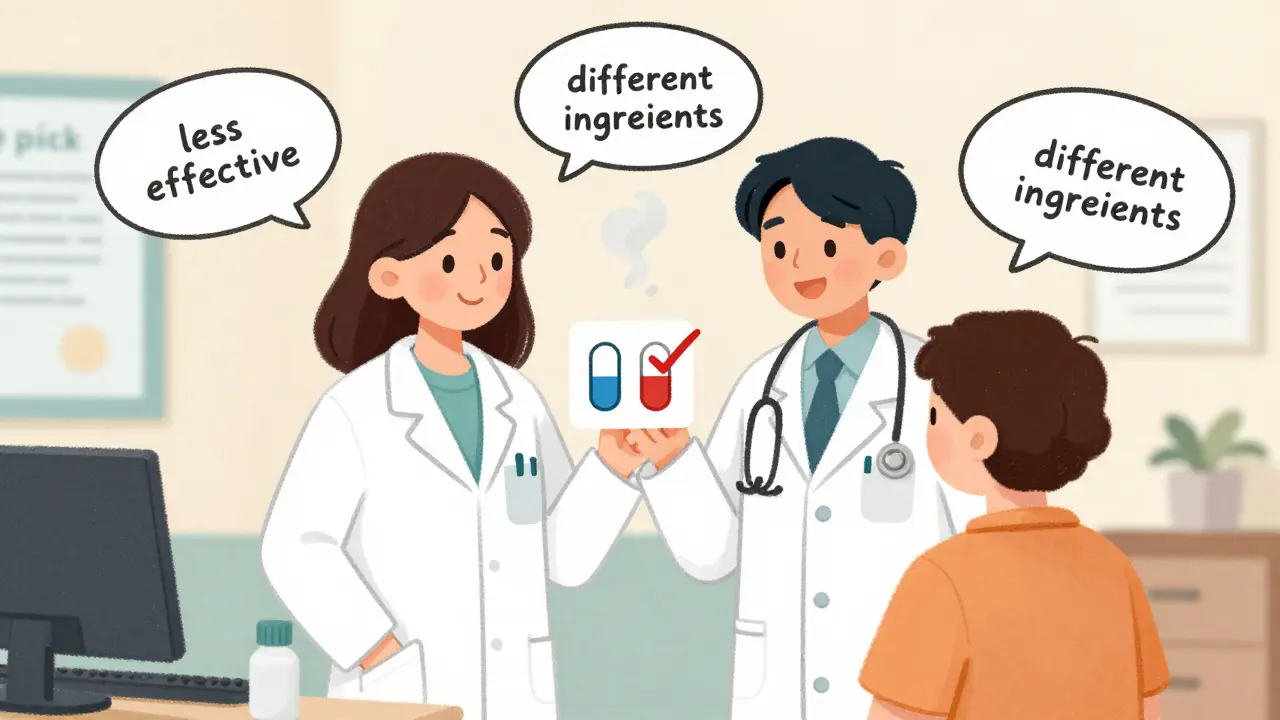
A 2015 study in Malaysia found that every single doctor surveyed - all 30 of them - had serious misconceptions about generics before a short educational session. They thought generics were less effective. That they used inferior ingredients. That they weren’t tested properly. After a 45-minute lecture from a pharmacist, knowledge scores jumped from 58.7% to 84%. That’s a huge improvement. But here’s the catch: their prescribing habits didn’t change.
Why? Because knowledge doesn’t automatically change behavior. You can know a generic is safe and still avoid it because your colleague won’t use it. Or because a patient once told you, "I switched and felt worse." That anecdote sticks harder than any regulatory guideline.
And it’s not just junior doctors. A 2024 Medscape poll of over 3,800 physicians showed that while 89% agreed generics are "generally equivalent," only 54% felt confident explaining bioequivalence to patients. And just 31% regularly use International Nonproprietary Names (INN) when writing prescriptions. That’s not ignorance. That’s habit.
Why Some Doctors Still Doubt - Even When the Science Says Otherwise
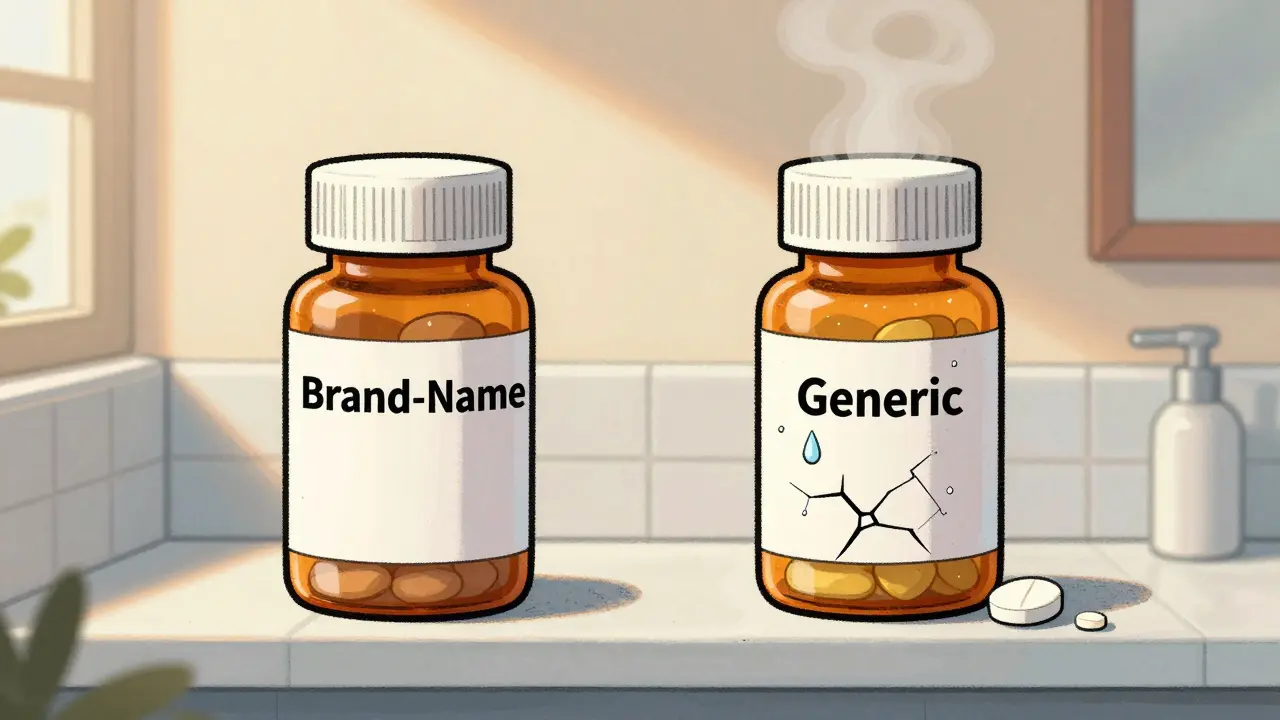
There are real cases where patients report feeling different after switching. The 2016 Concerta situation is often cited. Some patients on generic methylphenidate said their ADHD symptoms returned. The FDA investigated. The generics met bioequivalence standards. So why the complaints?
It’s likely a mix of placebo, nocebo, and subtle differences in inactive ingredients. A pill’s coating, filler, or release mechanism can affect how fast the drug dissolves - even if the active ingredient is identical. For drugs with a narrow therapeutic index - like warfarin, levothyroxine, or phenytoin - even tiny changes in absorption can matter. That’s why neurologists and endocrinologists are more cautious. In one 2022 survey, 23% of neurologists said they avoid switching epilepsy patients to generics. Not because they think generics are unsafe. But because they’ve seen stability issues - even if those cases were rare.
That’s the paradox. The science says: "They’re the same." The experience says: "Sometimes, they’re not." And when a patient’s life depends on consistent control - like with seizures or blood thinners - doctors err on the side of caution. Even if that caution isn’t always backed by data.
What Actually Changes Prescribing Behavior
So what works? Not more pamphlets. Not one-off lectures. Not even better knowledge scores.
What works is feedback. Reinforcement. Real-time support.
A 2023 study in Nature Scientific Reports showed that pharmacists who reviewed 100 prescriptions with feedback improved their ability to spot generic substitution opportunities by 40%. The key? They didn’t just learn. They practiced. And they got corrected. That’s how skills stick.
Same goes for doctors. When a family physician started using the "teach-back" method - asking patients to explain why they were switching to a generic - patient questions dropped by 63%. Why? Because the doctor wasn’t just giving information. They were checking understanding. And in doing so, they built trust.
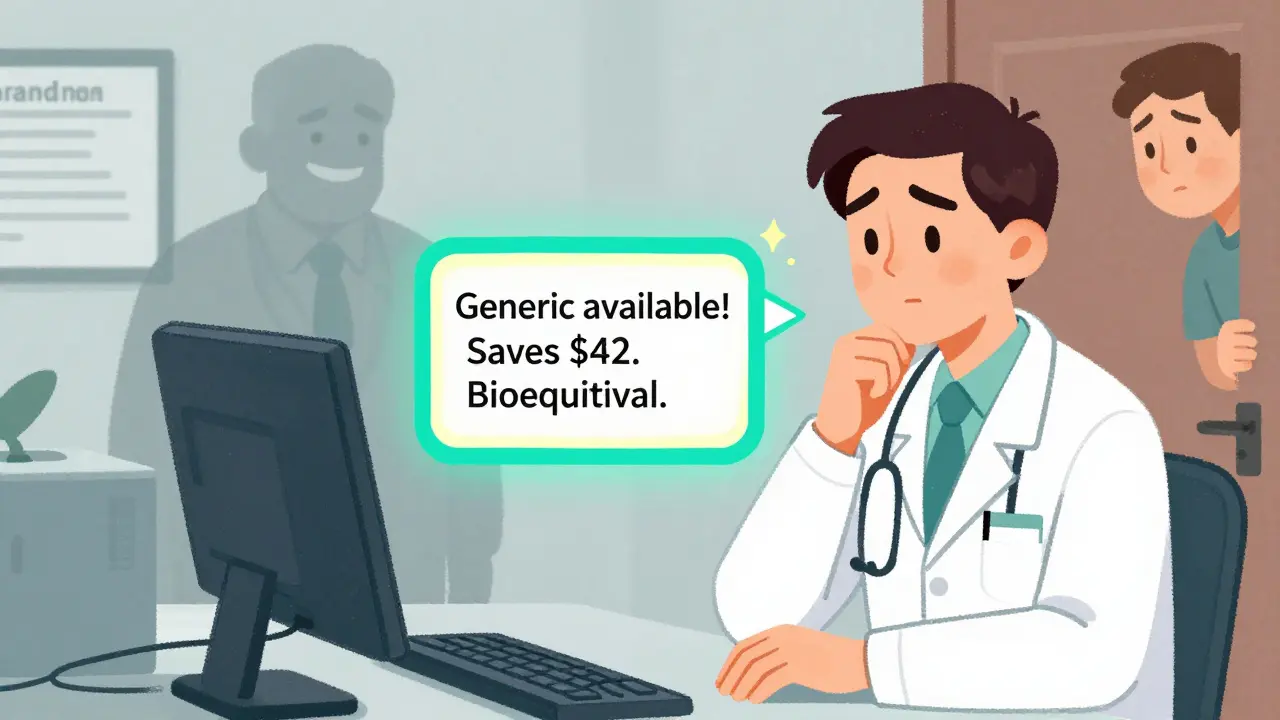
Another powerful tool? Electronic health record (EHR) alerts. When a doctor types in a brand name, a pop-up says: "A generic is available. Bioequivalent. Saves $42." That’s not a suggestion. It’s a nudge. And nudges work. In clinics using this system, generic prescribing rose by 27% in six months.
What’s Changing - and What’s Still Missing
The FDA launched a new initiative in 2023: 15-minute microlearning modules on bioequivalence. They’re free. They’re online. They’re short. And they’re being used by 28% of providers, according to the same Medscape poll. That’s a start.
Some medical schools are stepping up. Karolinska Institute in Sweden now requires INN prescribing in all clinical evaluations. Graduates there increased INN use by 47%. That’s not magic. It’s policy. If you’re graded on using the generic name, you learn to use it.
But here’s the gap: there’s still no national standard. No mandatory module. No exam question on bioequivalence. Medical education is a patchwork. Some schools teach it well. Others barely mention it. And once doctors graduate? Most never get refresher training.
Meanwhile, the market keeps growing. The global generic drug market is expected to hit $790 billion by 2030. Complex generics - inhalers, injectables, topical creams - are on the rise. These aren’t simple pills. They need more sophisticated education. And right now, most doctors aren’t ready.
What Needs to Happen
It’s not about convincing doctors that generics work. They mostly know that. It’s about making the right choice the easy choice.
Here’s what needs to change:
- Medical schools must integrate bioequivalence into core pharmacology - not as a footnote, but as a required topic with case studies using INNs.
- Residency programs should require feedback on prescribing patterns. Did you prescribe the generic? Why or why not? What did the patient say?
- EHR systems need smart alerts that show cost savings and bioequivalence status at the point of prescribing.
- Professional societies should update guidelines to recommend INN prescribing as the default, not the exception.
- Patients need clear, simple explanations - not jargon. "This generic has the same active ingredient and works the same way. It’s been tested and approved. It’s just cheaper."
Doctors don’t resist generics because they’re uneducated. They resist them because the system doesn’t support the right behavior. They’re trained to trust brands. They’re rewarded for following senior colleagues. They’re left alone with a 12-second window to make a decision - and no tools to help.
Fix that, and the numbers will follow. Because when doctors know, trust, and are supported - they prescribe generics. Not because they’re told to. But because they see how it helps their patients.
Do generic drugs work as well as brand-name drugs?
Yes. By law, generic drugs must prove they deliver the same amount of active ingredient into the bloodstream at the same rate as the brand-name version. This is called bioequivalence. The FDA and EMA require strict testing - usually in 24 to 36 healthy volunteers - to confirm this. The acceptable range for absorption is 80% to 125%. That’s not a guess. It’s science. Thousands of generics have been used safely for decades.
Why do some doctors still prefer brand-name drugs?
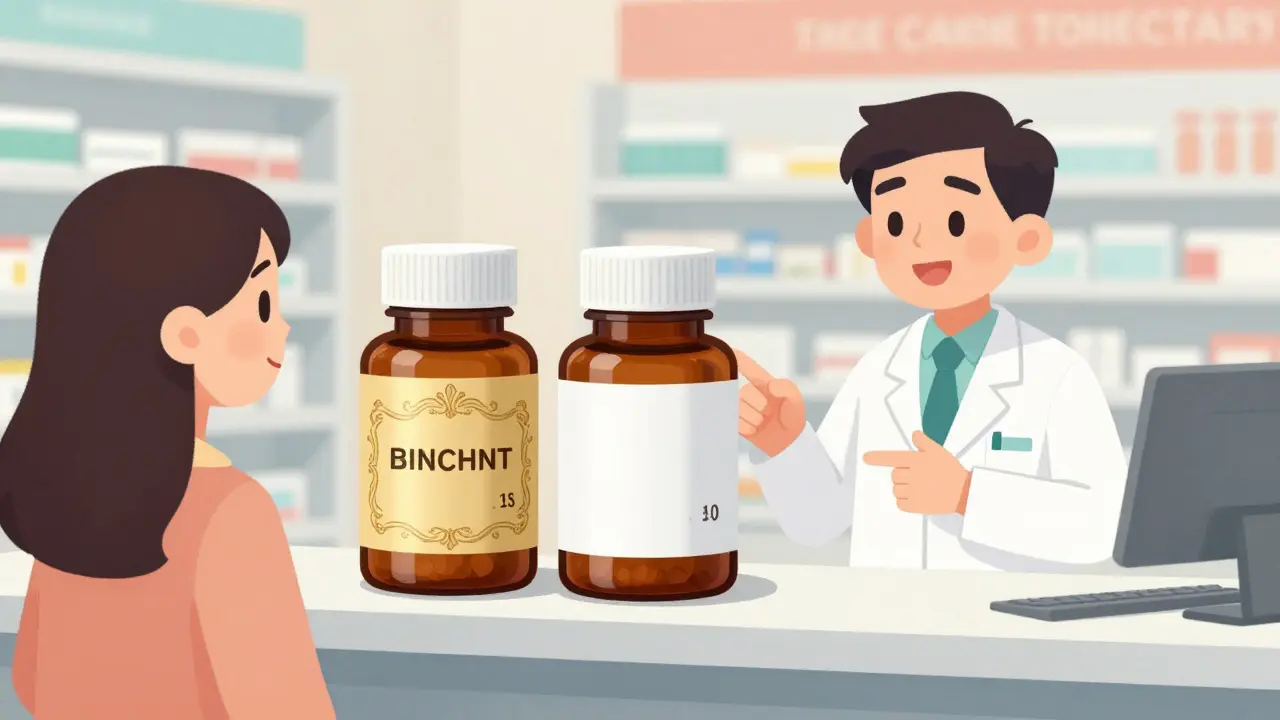
Many doctors were trained using brand names in textbooks and case studies. That habit sticks. Some have had rare patient experiences where a switch seemed to cause issues - even if the science doesn’t support it. Others follow senior colleagues who avoid generics. And without real-time support - like EHR alerts or feedback systems - the easiest choice is often the familiar one.
Are there any drugs where generics are risky?
For most drugs, no. But for drugs with a narrow therapeutic index - like warfarin, levothyroxine, phenytoin, or certain seizure medications - even small changes in absorption can matter. That’s why some specialists, like neurologists and endocrinologists, are more cautious. The FDA confirms generics for these drugs meet the same standards, but doctors may still prefer to keep patients on a brand they’ve used for years - especially if the patient is stable.
What’s INN prescribing, and why does it matter?
INN stands for International Nonproprietary Name - the generic name of a drug, like "metformin" instead of "Glucophage." Using INNs reduces confusion, cuts costs, and makes it easier for pharmacists and patients to understand what’s being prescribed. Medical schools that require INN prescribing - like Karolinska Institute - see a 47% increase in generic use among graduates. It’s a simple change that shifts culture.
How can medical education improve?
Start by teaching bioequivalence early - not as a side note, but as core content. Use real prescriptions with INNs in case studies. Add feedback loops: have residents review their own prescribing and explain their choices. Integrate EHR alerts that show cost and equivalence data at the point of care. And make INN prescribing part of clinical evaluations. Knowledge alone doesn’t change behavior. Systems do.
Do patients care about generics?
Most patients don’t care - as long as it works. But if they don’t understand why they’re switching, they may assume the generic is inferior. Doctors who use the "teach-back" method - asking patients to explain the switch in their own words - see 63% fewer patient concerns. Clear, simple communication builds trust. And trust leads to better adherence.

Dave Alponvyr
December 15, 2025 AT 11:01Doctors still write brand names because it's easier than typing 'atorvastatin' and hoping the pharmacist doesn't mess up the substitution.
Arun ana
December 15, 2025 AT 14:18Same in India. We get generics all the time, but patients still ask for 'Lipitor' like it's some magic pill. I just smile and hand them the bottle with atorvastatin on it.
Kim Hines
December 16, 2025 AT 20:20I've seen patients panic when switched. One lady cried because her 'blue pill' was now white. No science, just fear.
Cassandra Collins
December 18, 2025 AT 02:57Generics are a Big Pharma plot to make us sick so they can sell more drugs later. The FDA is in their pocket. You think they'd let a cheap pill be just as good? LOL
Joanna Ebizie
December 18, 2025 AT 07:08Of course doctors don't trust generics they're taught from day one that brand names are superior. It's not ignorance, it's brainwashing.
Souhardya Paul
December 18, 2025 AT 19:41My med school had one 45-minute lecture on generics. Meanwhile, we spent three weeks on the history of Prozac. No wonder we default to brand names. We need case studies using INNs from week one, not after graduation when we're already stuck in the habit.
I started using INNs in my notes and now my residents do too. It's not about convincing them it works-it's about making the right word the default.
Also, EHR alerts that say 'Saves $38' actually work. I had a patient who switched from brand to generic for his BP med and said he felt better because he wasn't stressed about the cost. That's the real win.
And yeah, sometimes the fillers matter. I had a patient on levothyroxine who got shaky after a switch. Turned out the generic had a different binder that slowed absorption. We went back. Not because generics are bad-because for some drugs, consistency matters more than savings.
But most of the time? It's fine. The problem isn't the science. It's the system that rewards familiarity over evidence.
My attending used to write 'Lipitor' even though he knew it was atorvastatin. I started signing my notes with 'atorvastatin 20mg' and he started copying it. Culture changes one signature at a time.
Medical education isn't broken-it's just asleep. Wake it up with real practice, not lectures.
Dylan Smith
December 19, 2025 AT 22:04Why are we still using brand names in textbooks? That's the root. If every case study said 'metformin' instead of 'Glucophage' we wouldn't have this problem. But no, we're trained to think in marketing names like it's a game show
I had a patient ask why her generic seizure med made her dizzy. We checked levels. It was fine. But she believed it was the pill. That's not science, that's trauma. We need to talk to patients like humans, not data points
And stop calling them 'generics' like they're second class. Call them 'bioequivalent alternatives'. Language shapes perception
Also why is no one talking about the fact that most pharmacy benefit managers push generics but don't train doctors? It's all incentives and no education
My residency program started requiring us to justify every brand prescription in our notes. Guess what? Generic use went up 50% in six months. Because now we had to think
Stop blaming doctors. The system is rigged to make the expensive choice the lazy choice
And yes, I know some generics have issues. But that's why we have therapeutic monitoring. Not blanket avoidance
Stop treating patients like they're stupid. Explain it. They get it
INN is not a preference. It's a standard. Use it. Or get out of medicine
One more thing-why are we still teaching pharmacology with brand names in 2024? That's not tradition. That's negligence
Hadi Santoso
December 21, 2025 AT 11:36My grandpa takes his thyroid med and won't switch because 'the blue one always worked'. He's 82. I get it. But I also showed him the FDA page that says the generic is identical. He still won't try it. So I just refill the brand and tell him it's the same thing. Sometimes peace is worth $40 a month.
Also, I saw a study once that said patients who switched to generics and had no side effects? They never told their doctor. So we only hear the horror stories. The silent majority is just happy they saved money.
And yeah, the EHR pop-up that says 'Saves $37' works. I had a patient who said 'oh wow I didn't know I could do that' and then asked if she could switch all her meds. That's the moment you realize education isn't about lectures-it's about a little nudge at the right time.
Also, I'm a fan of using INNs. I used to write 'Lipitor' out of habit. Now I write 'atorvastatin' and my pharmacist thanks me. It's a small thing, but it matters.
And I swear, if one more person tells me 'my cousin took a generic and got sick' I'm gonna scream. Cousin stories aren't evidence. But they're the only thing some patients understand.
Medical school needs to fix this. But until then, we just do what we can.
Elizabeth Bauman
December 22, 2025 AT 10:45America leads the world in medicine, and we still let cheap foreign pills be prescribed? That's a national security risk. The FDA approves generics from factories with no inspections. You think they test every batch? Please. The real problem isn't doctors-it's the government letting foreign labs make our medicine.
I had a friend who switched to a generic blood thinner and almost died. The hospital said it was 'bioequivalent' but her blood didn't clot right. That's not science-that's a gamble with lives.
Why don't we just make all drugs American-made? Then we wouldn't have this problem. Generics are a socialist trick to make healthcare 'affordable' while sacrificing quality.
And don't get me started on the WHO pushing INNs. That's globalism trying to erase American brands. We need to protect our pharmaceutical heritage.
Mike Smith
December 22, 2025 AT 21:10The core issue is not knowledge-it’s behavior design. We don’t need more lectures. We need decision architecture.
When a physician opens the EHR, the default prescription should be the generic. The brand should require two extra clicks, a dropdown explanation, and a signature. That’s not coercion. That’s responsible design.
Residency programs should audit prescribing patterns monthly-not to punish, but to coach. ‘Why did you choose brand today? What did the patient say? What alternatives did you consider?’ That’s how habits change.
Medical schools must make INN use a graded competency. Not a suggestion. A requirement. Like handwashing. Like documentation. If you don’t write ‘metformin,’ you don’t pass the rotation.
And for patients? Teach-back isn’t optional. It’s clinical care. ‘Tell me in your own words why you’re taking this pill.’ If they say ‘I don’t know, the doctor said it’s cheaper,’ you haven’t done your job.
Doctors aren’t resistant to generics. They’re resistant to systems that don’t support them. Fix the system, and the behavior follows.
This isn’t about trust in science. It’s about trust in infrastructure.
Ron Williams
December 23, 2025 AT 05:24Just had a patient come in asking if her generic statin was ‘the real thing.’ I showed her the FDA bioequivalence chart. She nodded, said ‘oh, so it’s not fake?’ and then asked if she could get the brand if she paid cash. I told her no, it’s the same. She left confused but didn’t argue.
Most patients don’t care about the science. They care about the label. If it says ‘Lipitor’ on the bottle, they feel safer. If it says ‘atorvastatin,’ they think it’s a sample or a mistake.
So I started writing ‘Lipitor (atorvastatin)’ on the prescription. It’s not ideal, but it bridges the gap. The pharmacy fills the generic. The patient sees the name they know. Everyone’s happy.
It’s not perfect. But sometimes, you gotta work with the system you’ve got.
Kitty Price
December 23, 2025 AT 08:57Ugh I just switched my blood pressure med to generic and now I feel weird 😕 maybe it's the fillers? idk
Dave Alponvyr
December 25, 2025 AT 06:30That’s the nocebo effect. Your brain expects to feel weird. So you do. Happens all the time. The pill didn’t change. Your mind did.
Souhardya Paul
December 27, 2025 AT 01:11Exactly. And if you say that to a patient, they’ll think you’re dismissing them. So you say: ‘It’s common to feel that way at first. Let’s check your numbers next week. If it’s still off, we’ll switch back.’ That’s how you build trust without arguing science.