
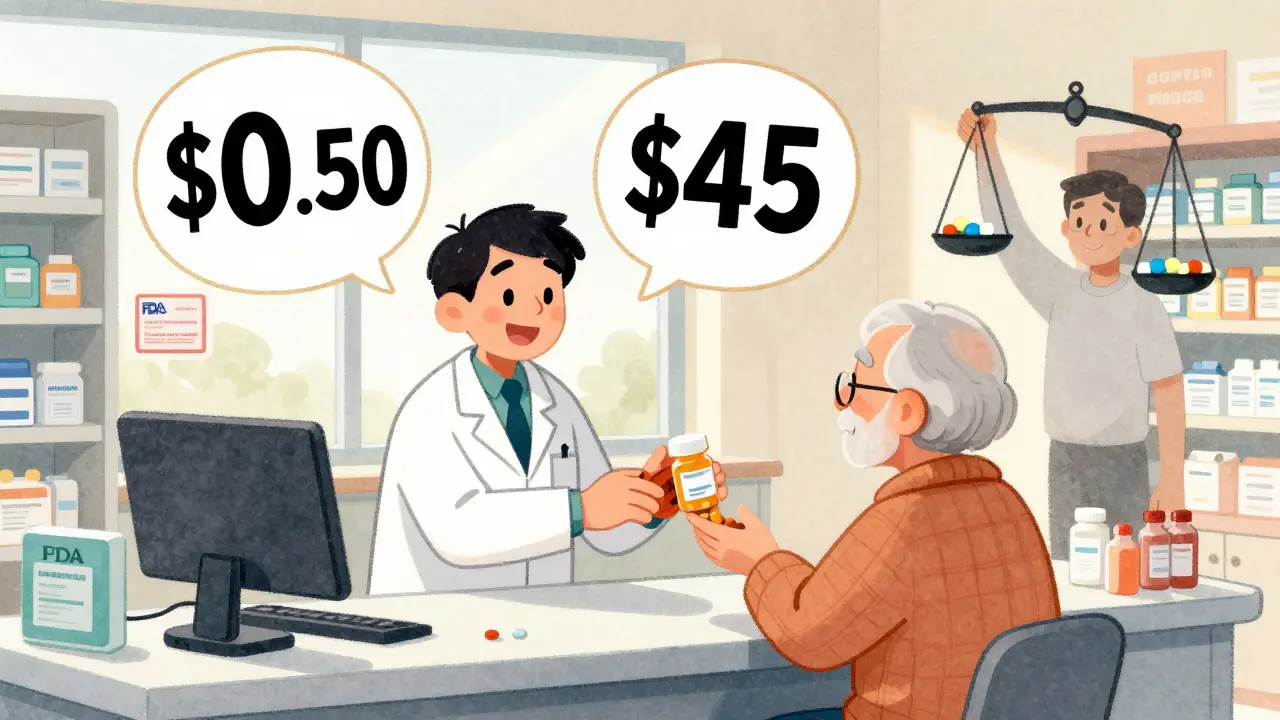
When you pick up a prescription at the pharmacy, you might not think about where the pill came from or how its price got so low. But behind every generic drug is a complex web of laws, negotiations, and policies that vary wildly from country to country. In the U.S., 90% of prescriptions are filled with generics. In Germany, it’s 79%. In India, generics make up 20% of the world’s supply by volume. Yet the same medicine can cost ten times more in one country than another-even when it’s made in the same factory.
Why Generics Matter More Than Ever
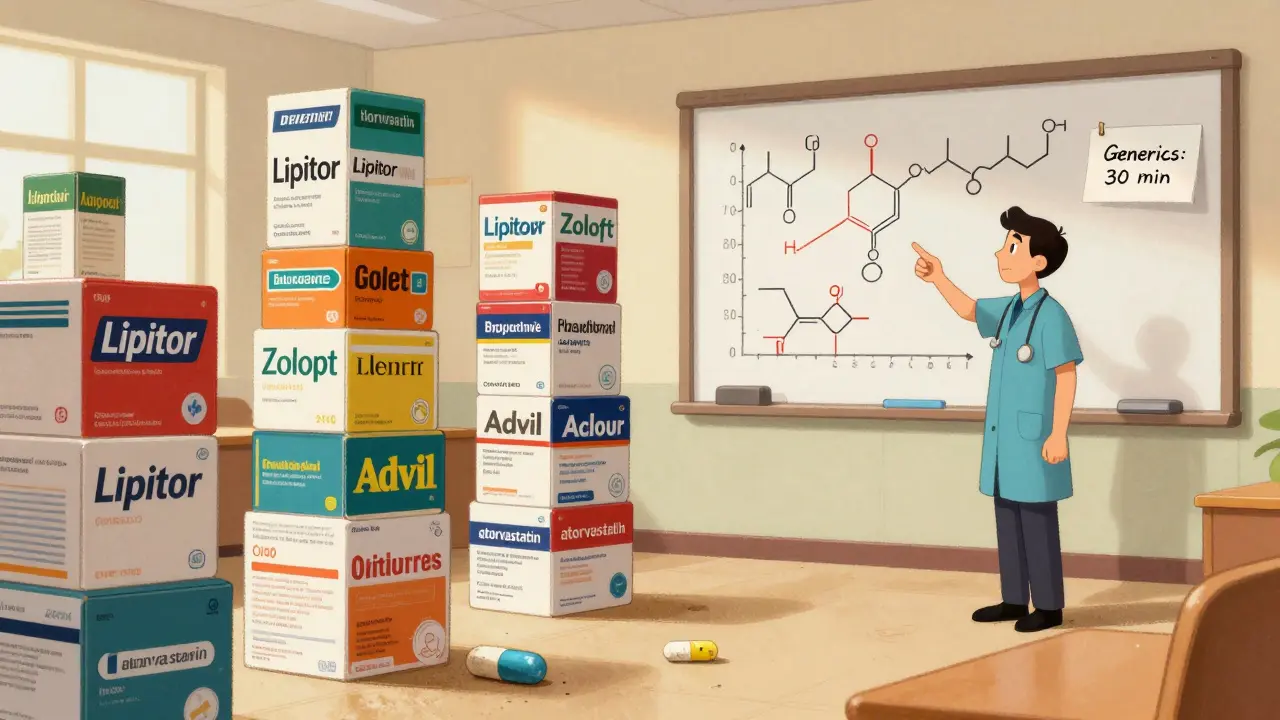
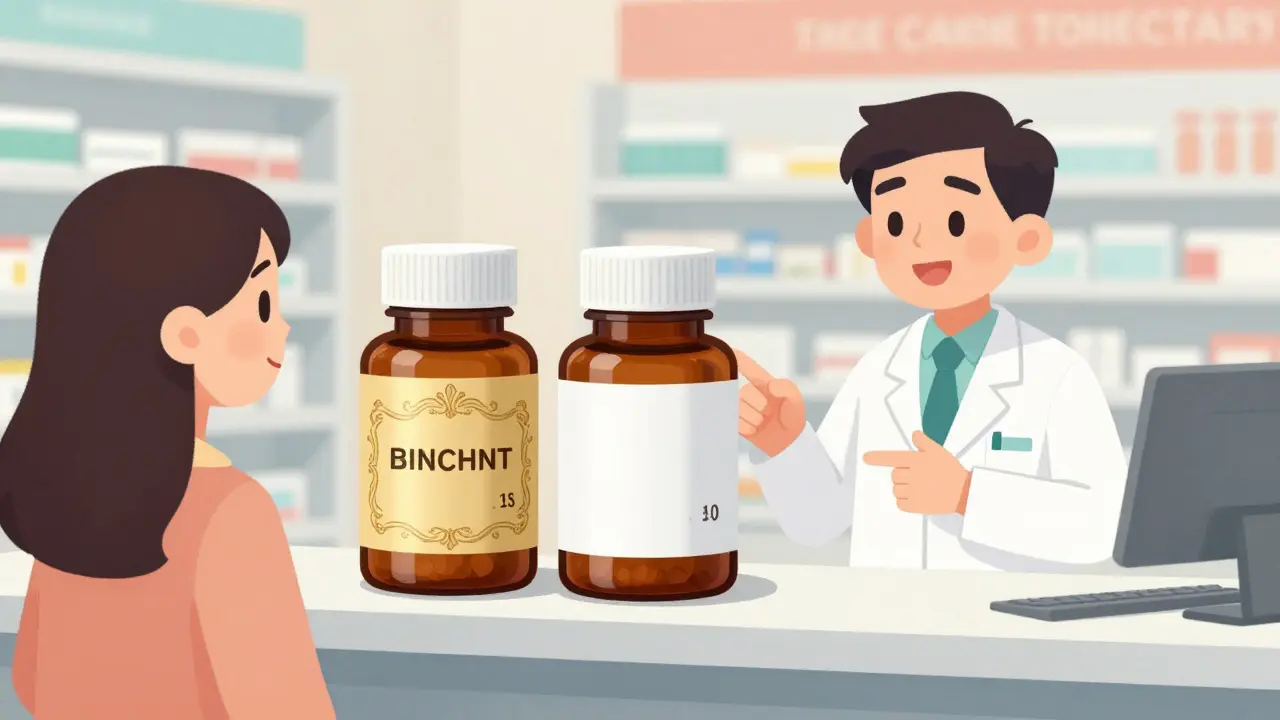
Generic drugs aren’t cheap knockoffs. They’re exact copies of brand-name medicines, approved after patents expire. They contain the same active ingredients, work the same way, and meet the same safety standards. But they cost far less-often 80-90% less. That’s not just a savings for patients. It’s a lifeline for public health systems struggling with aging populations and rising chronic diseases like diabetes, heart disease, and cancer. In 2025, the global generic drug market hit $468 billion. By 2034, it’s expected to grow to $728 billion. Why? Because countries are running out of money. The U.S. saved $142 billion in Medicare alone last year thanks to generics-$2,643 per beneficiary. The European Union estimates generics make up 65% of all prescriptions but only 22% of total drug spending. In China, a single policy cut the price of some medicines by 93%. But here’s the catch: not all systems work the same. Some countries crush prices so hard that manufacturers can’t stay in business. Others let branded drugs stay expensive, even when generics are available. The real question isn’t whether generics work-it’s how to make them work without breaking the system.The U.S. Model: High Volume, Low Prices, But Still High Costs
The United States is the world’s leader in generic use. Over 90% of prescriptions are for generics. The FDA has approved more than 11,000 generic products. And the average price of a generic pill is among the lowest in the world. How? Two things: competition and negotiation. Once a patent expires, dozens of companies rush to make the same drug. That drives prices down. The FDA’s Orange Book lists every approved generic, and the Competitive Generic Therapy (CGT) program gives the first company to file a 180-day exclusivity window-spurring faster approvals. Zenara Pharma’s Sertraline capsules, approved in August 2025, are a perfect example: they hit the market faster thanks to CGT status. But here’s the paradox: even with 90% generic use, the U.S. still pays more for drugs than any other country. Why? Because the brand-name drugs are astronomically expensive. Generics bring down the average-but they don’t touch the high-cost drugs still under patent. The result? Public-sector net prices are 18% lower than in peer countries, but overall drug spending remains the highest globally. And patients aren’t always seeing the savings. Pharmacy Benefit Managers (PBMs) sometimes charge higher copays for generics than for brand-name drugs. Reddit users in r/AskDocs reported 63% frustration with this weird incentive structure. If your insurance rewards you for picking the expensive brand, why would you switch?Europe: Harmonized Rules, Fragmented Prices
The European Union has one of the most advanced drug approval systems. The European Medicines Agency (EMA) gives a single approval that applies to all 27 member states. Sounds efficient, right? Not quite. Each country sets its own prices. That means the same generic drug can cost 300% more in one country than its neighbor. Germany uses mandatory substitution-pharmacists must switch you to the cheapest generic unless your doctor says no. Italy doesn’t. The result? Germany hits 88% generic use. Italy sits at 67%. The Netherlands plays a clever game. It uses external reference pricing, comparing prices to France, Belgium, the UK, and Norway-but picks the lowest ones to anchor its own prices. It even includes non-EU countries to drive prices even lower. This system works, but it’s a patchwork. No one in the EU has a unified pricing strategy. The European Commission is trying to fix this with a new Pharmaceutical Package, expected in late 2025. It aims to shorten generic entry timelines by 12-15% and give incentives to the first company to launch a generic. But without a common pricing rule, the market will stay messy.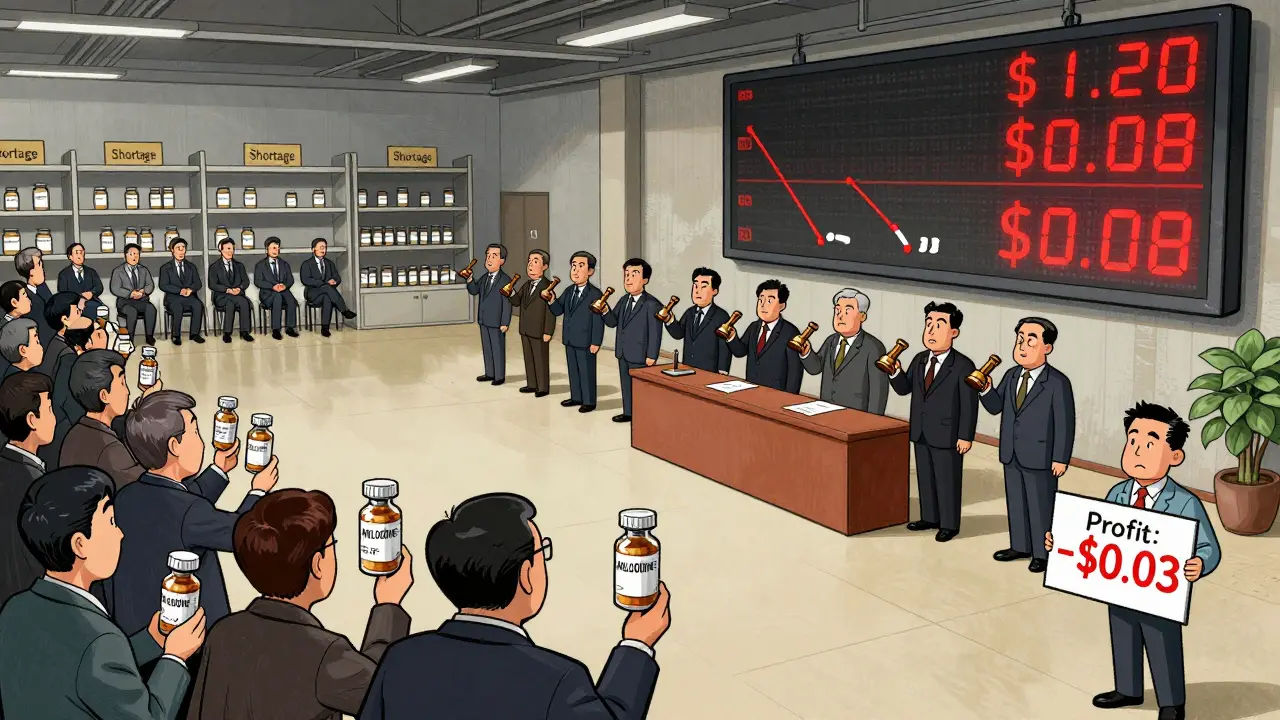
China: Bulk Buying, Zero Margin
China’s approach is brutal-and effective. In 2018, it launched Volume-Based Procurement (VBP). Instead of letting hospitals choose drugs, the government holds centralized auctions. Manufacturers bid to supply entire provinces. The lowest bidder wins-and gets the entire market. The results? Average price cuts of 54.7%. Some drugs dropped 93%. Amlodipine, a common blood pressure pill, went from $1.20 per pill to $0.08. Millions of patients now pay less for chronic meds. But there’s a cost. Manufacturers are bleeding money. A 2025 survey by the China Generic Pharmaceutical Association found 23% of companies are selling VBP drugs at a loss. Some stopped production. In 2024, 12 provinces had a six-to-eight-week shortage of Amlodipine because no one wanted to make it at the set price. China’s system is a masterclass in cost control-but it’s not sustainable if companies can’t survive. The government is now expanding VBP to 150 more drugs in January 2026, with winning bids required to supply 80% of hospital demand. If manufacturers can’t make a profit, who will keep making the drugs?India: The Pharmacy of the World
India makes 20% of the world’s generic drugs by volume. It’s the go-to source for low-cost medicines across Africa, Latin America, and Southeast Asia. How? It uses compulsory licensing. Under Section 84 of India’s Patents Act, the government can allow local companies to copy a patented drug if it’s too expensive or not available in sufficient quantity. This lets Indian firms produce life-saving HIV and hepatitis C drugs at a fraction of the global price. But there’s a dark side. The FDA has issued 17% more warning letters to Indian generic manufacturers between 2022 and 2024. Many are tied to data integrity issues-fake lab results, missing records, or unverified production batches. The Access to Medicine Foundation warns that chasing low prices without quality control risks global trust in generics. Indian doctors report inconsistent bioavailability in some generics, especially for drugs like warfarin and phenytoin, where tiny differences can cause serious side effects. Patients get the medicine. But do they get the right dose?South Korea: The Tightrope Walk
South Korea tried to fix the problem of too many cheap generics flooding the market. In 2020, it introduced the “1+3 Bioequivalence Policy.” Only three generic versions of a drug can be approved using the same bioequivalence data. After that, new entrants must prove their own data. It worked. Redundant generics dropped by 41% between 2020 and 2024. But it also cut new launches by 29%. Fewer competitors meant less price pressure. The government responded with a Differential Generic Pricing System: generics that meet both quality and price standards get 53.55% of the brand’s price. Those meeting only one criterion get 45.52%. The rest? Just 38.69%. The goal: reward good quality, punish cheap junk. But the side effect? Innovation stalled. Companies stopped investing in new generics because the return was too low. The policy saved money-but it also slowed down access to newer, better generics.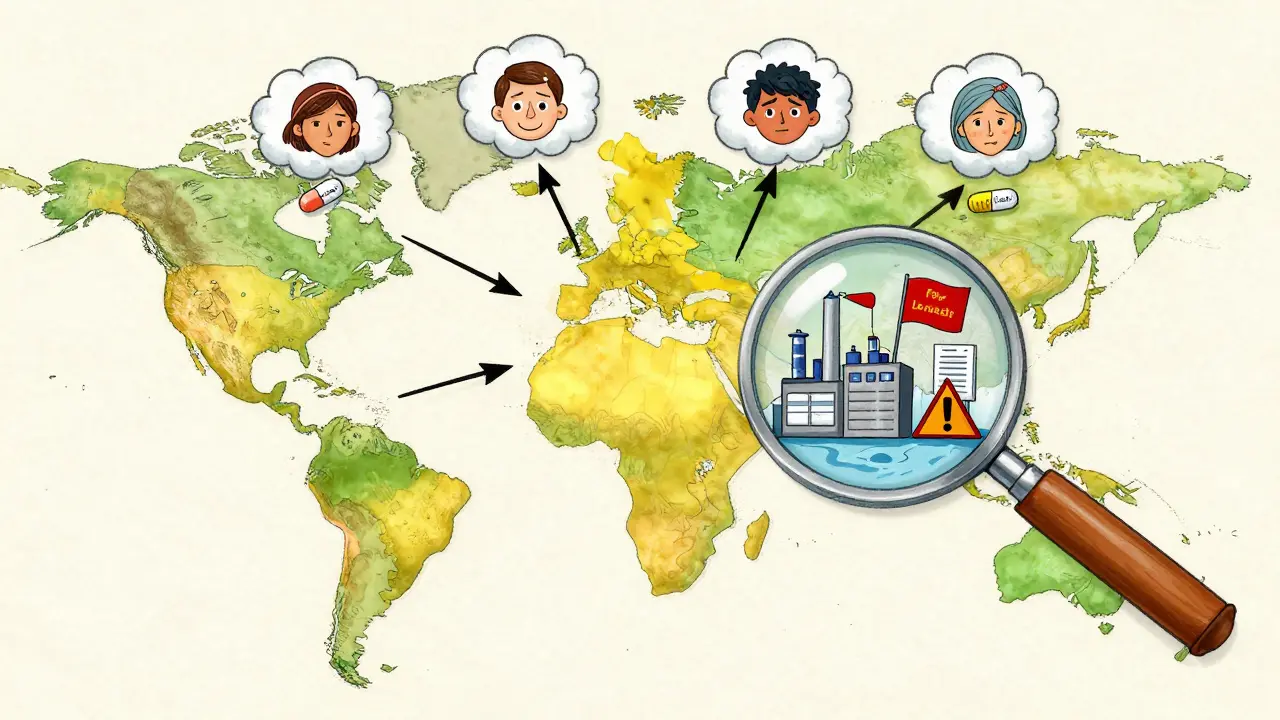
The Hidden Danger: Quality Under Pressure
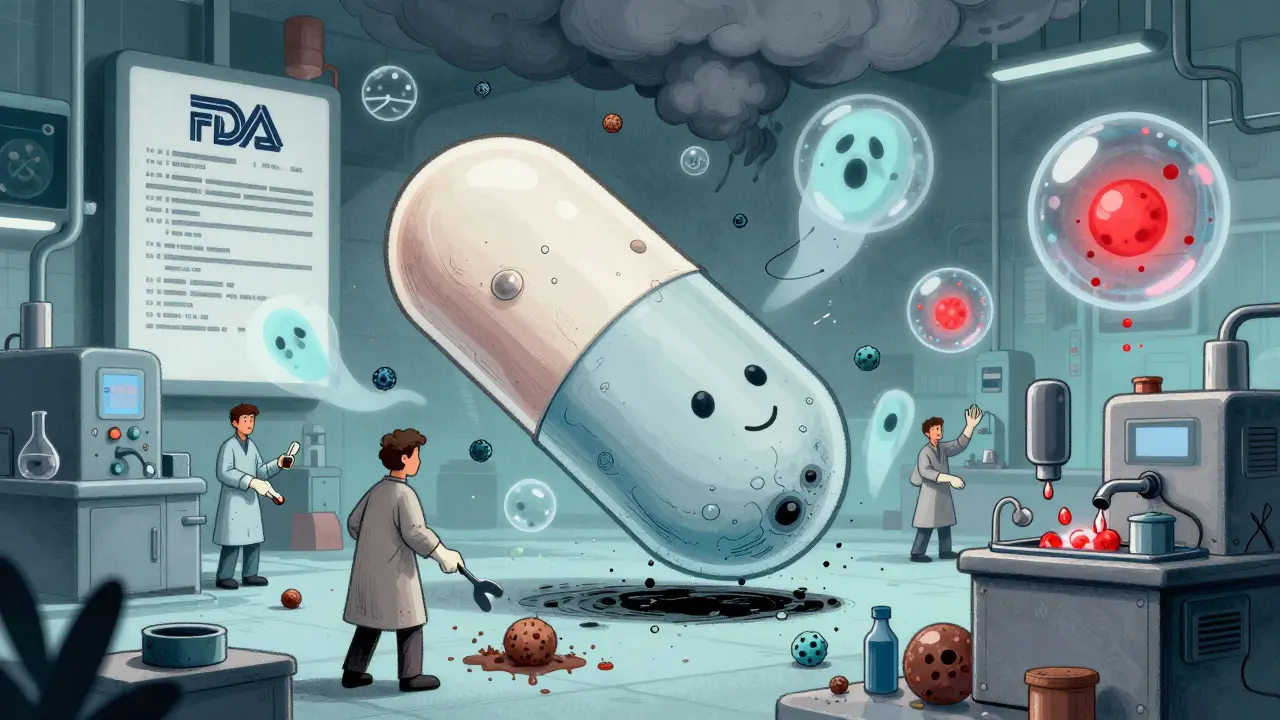
Every country wants cheaper drugs. But when prices are squeezed too hard, quality suffers. The FDA’s import alerts for quality violations jumped from 1,247 in 2020 to 2,183 in 2024. Most involve manufacturers in India and China. These aren’t just paperwork issues. They’re about whether a pill dissolves correctly, whether the active ingredient is stable, whether the batch is contaminated. The WHO warns that aggressive price controls threaten supply chain resilience. If manufacturers can’t make a 15-20% margin, they cut corners. They skip tests. They outsource production to unregulated labs. They stop investing in quality control systems. Dr. Anant Jani of the Access to Medicine Foundation puts it bluntly: “Excessive focus on short-term savings risks undermining quality standards.” And it’s not just about pills. It’s about trust. If patients believe generics are less effective, they won’t use them. In the EU, 44% of patients still worry about quality, especially for drugs with narrow therapeutic indexes-like blood thinners or epilepsy meds.What Works? Lessons from the Frontlines
There’s no one-size-fits-all solution. But the best systems share three things:- Clear bioequivalence standards. A generic must be absorbed into the body within 80-125% of the brand’s rate. No exceptions.
- Education for doctors and pharmacists. When providers understand generics are safe, patient acceptance jumps 22-35%.
- Reasonable margins for manufacturers. If companies can’t make money, they leave. Or worse-they cut corners.
Arlene Mathison
January 21, 2026 AT 00:28Generics are the unsung heroes of modern medicine. I’ve been on sertraline for years-paid $4 for the generic, $400 for the brand. No difference in how I feel, just my bank account. Why are we still pretending brand names matter?
And don’t even get me started on PBMs. They’re the real villains. My copay for the generic was higher than the brand last month. That’s not a bug-it’s a feature of a broken system.
Nadia Watson
January 21, 2026 AT 17:28It is fascinating to observe how different nations approach pharmaceutical accessibility. The United States, despite its high volume of generic prescriptions, continues to exhibit structural inefficiencies that undermine cost savings at the patient level. Meanwhile, nations such as India and China demonstrate that centralized procurement and compulsory licensing can yield dramatic reductions in drug pricing, albeit with attendant risks to manufacturing integrity and long-term sustainability. The global community must prioritize not merely affordability, but also the preservation of quality assurance frameworks to maintain public trust in therapeutic equivalence.
Courtney Carra
January 22, 2026 AT 12:13Bro. 🤔 We’re treating life-saving pills like bulk toilet paper. You think the FDA cares if your blood pressure med dissolves at 82% instead of 85%? Nah. They care if the paperwork says it did.
Meanwhile, some kid in Mumbai is making 50 cents a pill and getting fined for 'inconsistent dissolution profiles.' Meanwhile, Big Pharma’s CEO just bought a private island. 🍑
It’s not capitalism. It’s performance art.
Shane McGriff
January 24, 2026 AT 07:25There’s a real human cost here. My mom’s on warfarin. She switched to a generic after her insurance pushed it-and her INR went haywire. Turns out, the bioequivalence was technically legal, but the excipients changed how fast it absorbed. She spent three weeks in the ER.
It’s not just about price. It’s about consistency. If you’re going to force people onto generics, you need to guarantee the same pharmacokinetics, not just the same active ingredient.
And yes, I know the FDA says they’re equivalent. But my mom’s body doesn’t read FDA documents. It reacts to what’s in the capsule.
Jacob Cathro
January 24, 2026 AT 09:11so like… the u.s. pays the most for drugs but uses the most generics?? lmao. that’s like saying you eat 90% salad but still get fat because the dressing is $80 a bottle.
pbms are the real monsters. they’re like middlemen who take your money then laugh while handing you the cheap version of the same thing.
and china? 93% price drop? yeah right. those pills are probably made in a basement with a 3d printer and some chalk.
also why is india even allowed to make drugs? they can’t even keep their own roads paved.
pragya mishra
January 25, 2026 AT 14:38India makes 20% of the world’s generics? That’s because we’ve been doing this since the 1970s. While you were patenting aspirin, we were making antiretrovirals for $1 a day. You call it 'data integrity issues'-we call it survival.
My cousin works in a Mumbai plant. They test every batch. The FDA’s warnings? Mostly targeting the small players who can’t afford American lawyers. Big Indian firms? They’re ISO-certified, FDA-approved, and shipping to the EU daily.
Stop blaming us for your broken pricing system. We’re the reason your insulin isn’t $1,000 a vial.
Manoj Kumar Billigunta
January 25, 2026 AT 19:28As someone from India who works in pharma logistics, I’ve seen both sides. Yes, some small labs cut corners. But the big ones? They’re world-class. We supply to WHO, the US, and the EU. Quality isn’t about where it’s made-it’s about how it’s managed.
And yes, we make drugs cheap. But we also make them with dignity. Millions of African children get malaria meds because India didn’t wait for permission to save lives.
Don’t mistake affordability for inferiority. We’re not selling candy. We’re selling time. And sometimes, that’s all someone has left.
Andy Thompson
January 26, 2026 AT 13:41MARK MY WORDS. This is all part of the globalist agenda. Why do you think the WHO and UN are pushing 'global alignment'? So they can force us to buy Chinese and Indian pills and destroy our pharma industry.
Our doctors know the truth. Brand drugs are safer. The FDA is being pressured. The 'bioequivalence' standards? Made up by bureaucrats who’ve never held a pill.
And don’t get me started on how India got away with stealing our patents. That’s not innovation-that’s theft. We need tariffs. We need bans. We need America to make its own pills again.
sagar sanadi
January 28, 2026 AT 06:07oh wow. china cut prices 93%. guess what? now no one makes the drug. surprise! capitalism is a thing.
india makes 20% of generics? cool. and 17% of their factories got FDA warnings. so… they’re the pharmacy of the world… and also the pharmacy of 'uh oh we forgot to check this batch'
and the u.s. is the problem? bro. we’re the only country that lets you pay $4 for a pill that costs $0.03 to make. everyone else is just trying not to go bankrupt.
kumar kc
January 29, 2026 AT 07:10Quality over price. Always.