
Semaglutide: What It Is, How It Works, and What You Need to Know
When you hear semaglutide, a once-weekly injectable medication that mimics a natural hormone to control blood sugar and reduce appetite. Also known as Ozempic or Wegovy, it has become one of the most talked-about drugs in modern medicine—not because it’s magic, but because it works differently than anything before it. Unlike older weight loss pills that just suppress hunger or speed up metabolism, semaglutide targets the brain’s hunger signals directly, helping people eat less without constant willpower battles.
This drug is part of a class called GLP-1 agonists, a group of medications that activate the glucagon-like peptide-1 receptor to slow digestion and signal fullness. It’s not just for people with diabetes—though it was first approved for that. Today, it’s widely used for weight management, and studies show people lose an average of 15% of their body weight over a year. That’s not a small number. It’s the difference between struggling to fit into clothes and finally feeling comfortable in your own skin. But it’s not without side effects. Nausea, vomiting, and stomach upset are common at first, and not everyone tolerates it well. It also requires a prescription, regular doctor visits, and isn’t cheap—though generic versions are starting to appear.
What makes semaglutide stand out isn’t just the number on the scale. It’s how it changes your relationship with food. People report feeling less obsessed with snacks, less triggered by cravings, and more in control. That’s why it’s often paired with lifestyle changes—not instead of them. The best results come when it’s used as part of a plan, not a quick fix. And while it’s not a cure, for many, it’s the first tool that actually makes long-term weight loss possible.
You’ll find posts here that dig into how semaglutide compares to other weight loss drugs, what the real side effects are, how it interacts with other medications, and why some people stop taking it. There’s also information on how it affects blood sugar, what to expect during treatment, and how to talk to your doctor about whether it’s right for you. This isn’t marketing hype. These are real experiences, science-backed facts, and practical advice from people who’ve been through it.
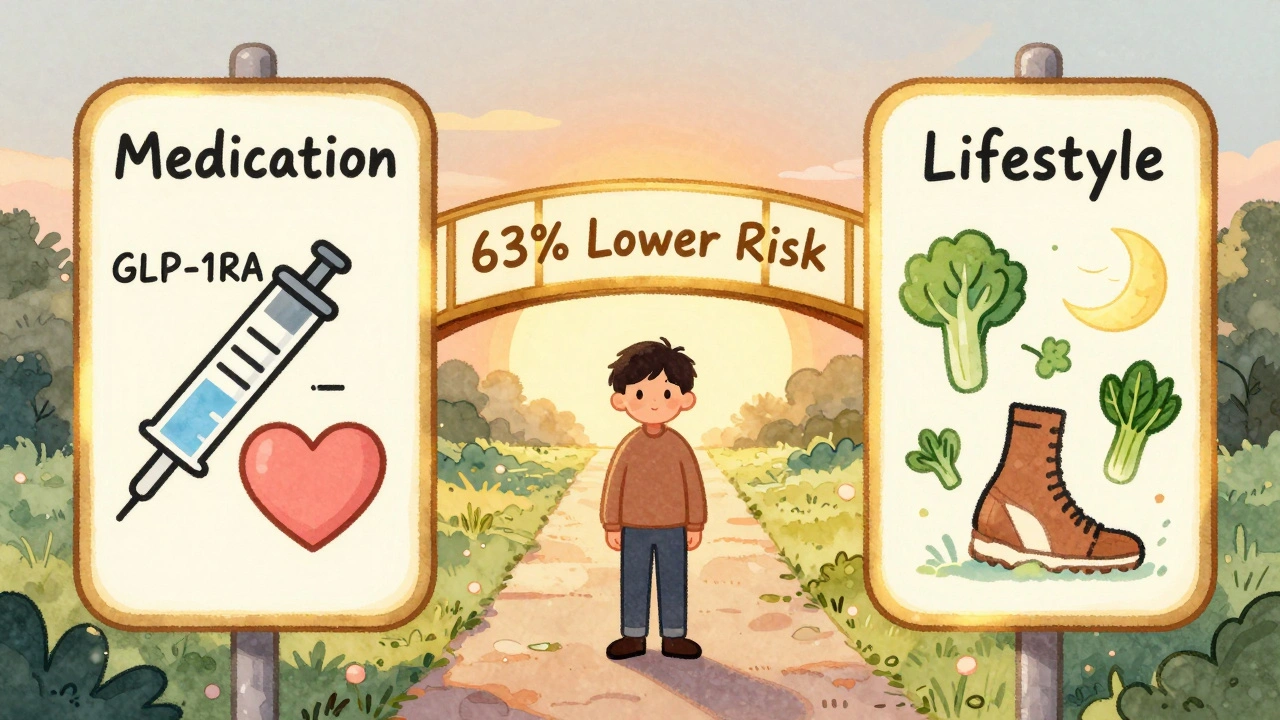
Diabetes and Heart Disease: How Medications and Lifestyle Together Lower Risk
Diabetes greatly increases heart disease risk, but combining GLP-1 RA medications like semaglutide with lifestyle changes-diet, exercise, and weight loss-can cut cardiovascular risk by up to 63%. This is the most effective strategy proven today.

GLP-1 Agonists and Weight Loss: How These Diabetes Drugs Are Changing Obesity Treatment
GLP-1 agonists like Ozempic and Wegovy were designed for diabetes but now lead in weight loss treatment. They reduce hunger, improve heart health, and lower blood sugar-without the weight gain from other meds. But they come with side effects, high costs, and no quick fixes.