
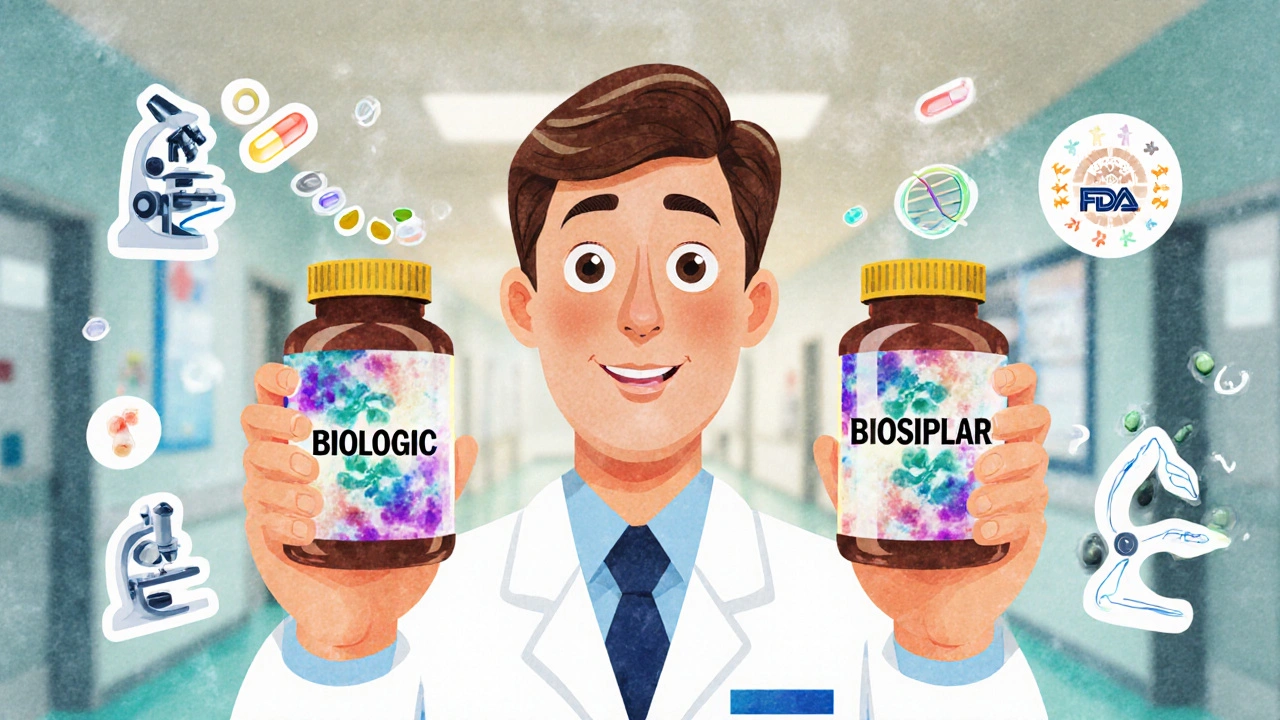
When a doctor prescribes a biologic for rheumatoid arthritis, Crohn’s disease, or cancer, they’re using a complex, living-cell-derived medicine-something far more intricate than a simple pill. These drugs have changed lives, but they’re also incredibly expensive. That’s where biosimilars come in. They’re not generics. They’re not copies. And if you don’t understand the difference, you could be missing out on real savings-or worse, hesitating to use a treatment that’s just as safe and effective.
What Exactly Is a Biosimilar?
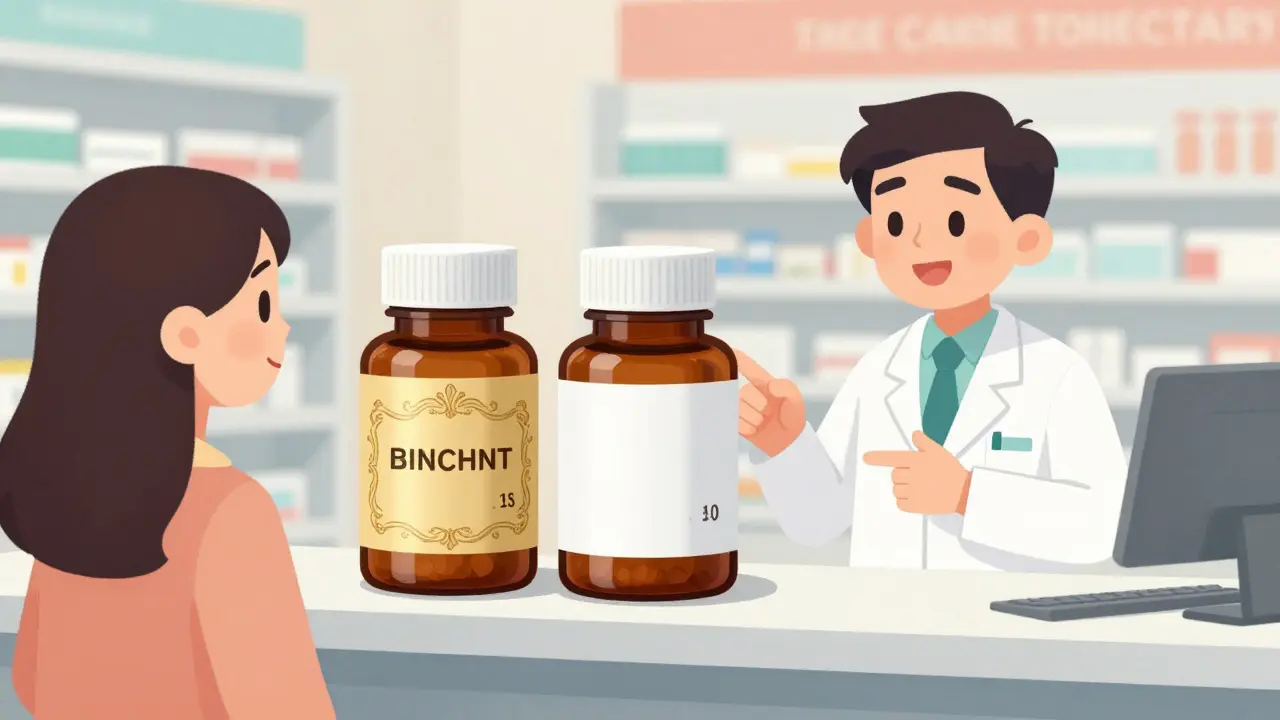
A biosimilar is a biological product that is highly similar to an FDA-approved reference biologic. It has no clinically meaningful differences in terms of safety, purity, or potency. That’s the official definition from the FDA, and it’s the foundation of everything that follows. But here’s the catch: 63% of U.S. physicians in a 2016 survey couldn’t correctly explain how biosimilars differ from generics. That’s not a small gap-it’s a barrier to care.
Biologics are made from living cells-human, animal, or microbial. Think monoclonal antibodies, insulin, growth hormones. Because they’re so complex, you can’t just reverse-engineer them like you can with a chemical drug. That’s why biosimilars require over a decade of research, hundreds of analytical tests, and at least one clinical trial to prove they work the same way. Generics? They’re chemically identical to their brand-name counterparts. Biosimilars are nearly identical-but not exactly. Minor differences in inactive ingredients are allowed, as long as they don’t affect safety or effectiveness.
Biosimilars vs Generics: The Real Difference
Let’s clear this up once and for all. A generic version of metformin is chemically identical to the brand-name version. Same molecule. Same shape. Same everything. You can swap them without a second thought.
A biosimilar? It’s like a handcrafted replica of a vintage car. The engine, suspension, and performance are identical. But maybe the paint has a slightly different sheen, or the interior stitching uses a different thread. It still drives the same. It still gets you there. But you can’t just assume it’s the same without checking the specs.
The FDA requires biosimilars to go through more testing than generics. Generics only need to prove bioequivalence-how fast and how much of the drug enters the bloodstream. Biosimilars must prove similarity in structure, function, stability, and clinical outcomes. That means comparing protein folding, glycosylation patterns, and even immune response profiles. It’s not just about blood levels. It’s about whether your body reacts the same way over time.
Why Provider Education Is Still Lagging
Even though the first U.S. biosimilar (Zarxio, a filgrastim product) was approved in 2015, many providers still don’t feel confident using them. A 2017 study found that 86% of nurses and 43% of doctors hadn’t even heard the word “biosimilar” in the past month. That’s not ignorance-it’s a system failure.
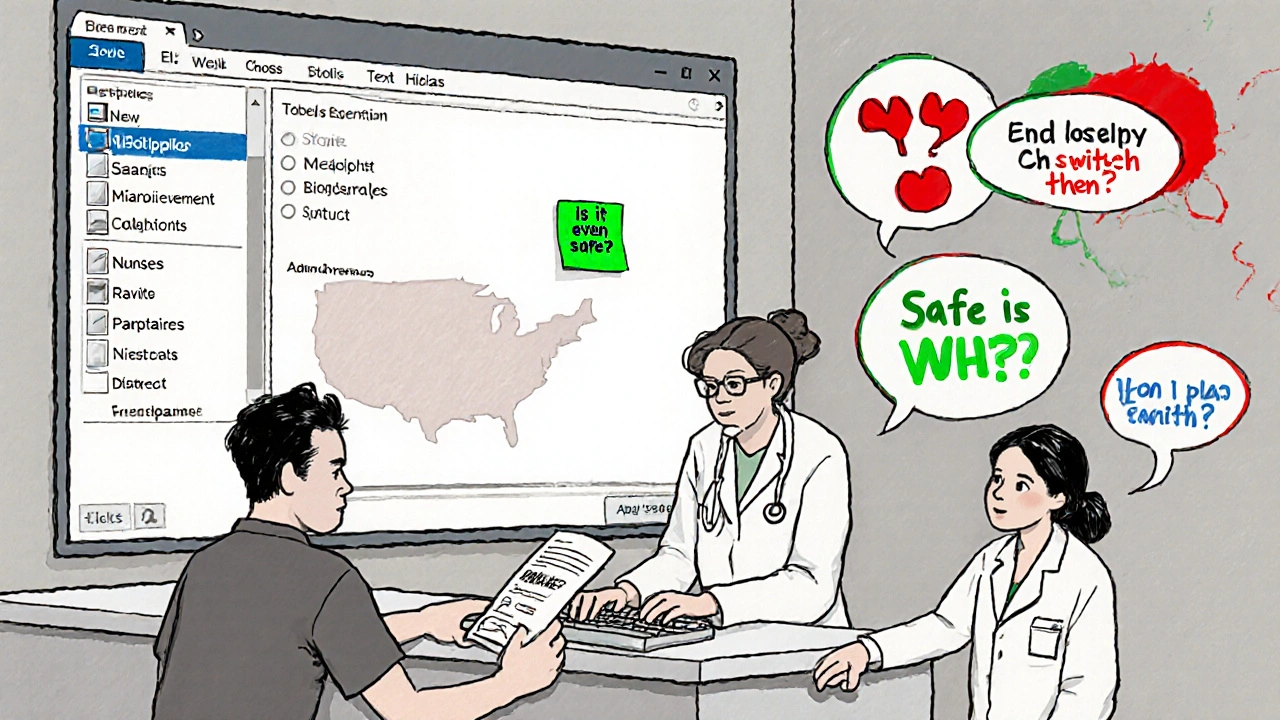
Providers are overwhelmed. They’re expected to keep up with new drugs, new guidelines, new billing codes, and new EHR requirements-all while seeing 30 patients a day. Add to that: 78% of U.S. hospitals reported challenges documenting biosimilar use in electronic health records. Epic, Cerner, and other systems often don’t have dropdown menus for biosimilars. Nurses end up typing it manually, risking errors or missed data.
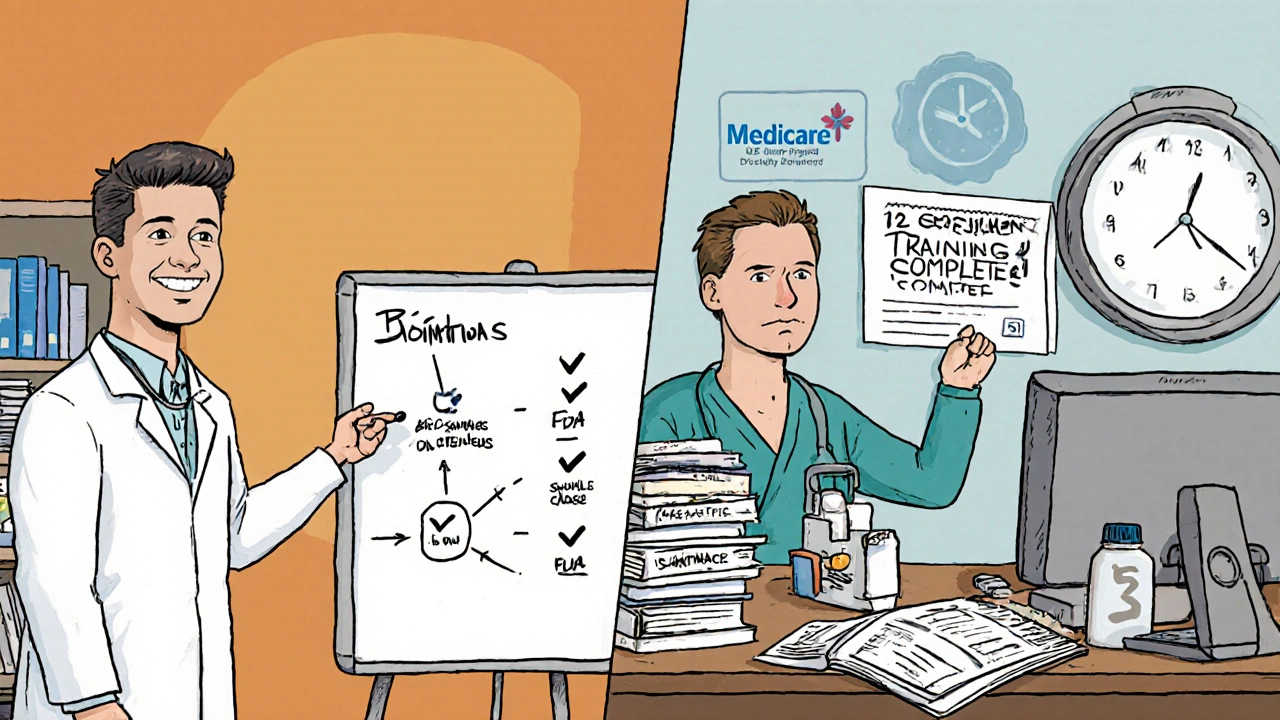
And then there’s the fear of immunogenicity-the risk that the body might develop antibodies against the drug. While studies show biosimilars have similar immunogenicity profiles to their reference products, many providers still worry. That fear isn’t irrational. It’s based on incomplete information. Education closes that gap. In one oncology program, after 12 training sessions over four months, provider confidence in biosimilar efficacy jumped from 40% to 92%.
Extrapolation and Interchangeability: Two Terms That Trip People Up
Here’s another area where confusion runs deep: extrapolation. If a biosimilar is approved for one condition-say, rheumatoid arthritis-can it be used for another condition the reference product treats, like psoriasis? The answer is yes, if the FDA determines the mechanism of action is the same across conditions. But 57% of providers still worry about using biosimilars for indications not directly tested in trials.
Then there’s interchangeability. This is a separate FDA designation. An interchangeable biosimilar has passed additional studies showing it can be switched back and forth with the reference product without increased risk. Only a handful of biosimilars have this status so far. But in states that allow automatic substitution, pharmacists can swap them without telling the prescriber. That’s huge. And it’s why EHR documentation matters-so you know what the patient actually received.
Who’s Leading the Way? Who’s Falling Behind?
Adoption isn’t equal across specialties. Rheumatologists lead, with 68% using biosimilars routinely. Oncologists are close behind at 52%. But endocrinologists? Only 29%. That’s despite insulin biosimilars being available since 2015. Why the gap?
It’s not about the science. It’s about education. Rheumatology societies have issued clear guidelines supporting biosimilar use, backed by 37 clinical trials involving over 12,000 patients. Endocrinology hasn’t caught up. And without institutional support, individual providers won’t take the leap.
Pharmacists are stepping in. In 76% of U.S. hospitals, clinical pharmacists now lead biosimilar education. They run lunch-and-learns, update EHR templates, and answer questions from nurses and doctors. At UCSF Medical Center, pharmacist-led education cut prescribing hesitancy from 58% to 12% in six months. That’s not magic. That’s targeted training.
The Real Cost Savings-and Why They’re Not Reaching Patients Yet
The Congressional Budget Office estimates biosimilars could save the U.S. healthcare system $150 billion over the next decade. Medicare Part B data from 2022 shows biosimilars are priced 28% lower than reference products on average. So why aren’t more patients benefiting?
Because savings aren’t automatic. If a provider doesn’t prescribe a biosimilar because they’re unsure, or if a pharmacy can’t substitute due to EHR issues, the discount never materializes. And if patients are confused-thinking a biosimilar is “less effective”-they might refuse it. A 2022 survey found 34% of rheumatology patients felt uncertain when switched to a biosimilar, mostly because their provider didn’t explain why.
Real savings happen when education leads to adoption, and adoption leads to substitution. Europe got there. Today, biosimilars make up 80% of the market for some biologics there. The U.S. is at 32%. The gap isn’t about cost. It’s about confidence.
What Providers Need to Know: The Essentials
If you’re a provider, here’s what you need to walk away with:
- Biosimilars are not generics. They’re complex, living products that require rigorous testing.
- Minor differences in inactive ingredients are allowed-but they don’t affect safety or effectiveness.
- Extrapolation is scientifically valid when supported by data. Don’t assume it’s off-label.
- Interchangeable biosimilars can be substituted at the pharmacy in certain states. Know your state’s rules.
- Immunogenicity risk is similar to the reference product. Don’t overestimate it.
- Documentation matters. If your EHR doesn’t track biosimilars separately, push for an update.
- Start conversations with patients early. Explain why you’re switching, and what it means.
The FDA has a free, comprehensive Teaching Resource Guide with 12 modules on biosimilars-available in nine languages. Use it. Share it. Don’t wait for someone else to teach you.
The Future Is Here-Are You Ready?
By 2025, 95% of U.S. medical schools plan to include biosimilar education in their curriculum. The FDA is updating its materials in 2024 to include real-world evidence data. The Alliance for Safe Biologic Medicines is rolling out new tools for providers. The pieces are in place.
The question isn’t whether biosimilars work. They do. The question is whether you’re equipped to use them confidently. The data is clear: educated providers prescribe more. Patients trust them more. Costs drop. Access improves.
Don’t wait for a patient to ask you about biosimilars. Be the one who brings it up. Be the one who knows the difference. Because in healthcare, the most expensive thing isn’t the drug-it’s the hesitation to act on what you already know is true.
Are biosimilars as safe as the original biologic drugs?
Yes. The FDA requires biosimilars to show no clinically meaningful differences in safety, purity, or potency compared to the reference product. This includes extensive analytical testing, non-clinical studies, and at least one clinical trial. Immunogenicity risks-the body’s immune response-are closely monitored and have been shown to be comparable in real-world use. Thousands of patients have received biosimilars without increased adverse events.
Can a biosimilar be used for all the same conditions as the reference product?
Yes, if the FDA approves extrapolation. This means that if a biosimilar is proven effective for one condition, it can be approved for other conditions the reference product treats-provided the mechanism of action is the same. For example, if a biosimilar works for rheumatoid arthritis and the reference product also treats psoriatic arthritis, the biosimilar can be approved for both, even if it wasn’t tested directly in psoriatic arthritis patients. The FDA requires strong scientific justification for extrapolation, and it’s based on decades of clinical evidence.
What’s the difference between biosimilar and interchangeable?
All interchangeable biosimilars are biosimilars, but not all biosimilars are interchangeable. An interchangeable biosimilar has passed additional studies proving it can be switched back and forth with the reference product multiple times without increased risk. This allows pharmacists to substitute it automatically in states that permit substitution-without needing a new prescription. Only a few biosimilars have this designation so far, and state laws vary on whether substitution is allowed.
Why do EHR systems have trouble tracking biosimilars?
Many EHR systems were built before biosimilars existed and don’t have built-in fields to distinguish them from reference products. This forces staff to manually type in biosimilar names, which increases the risk of errors and makes it hard to track outcomes or billing. Hospitals that have updated their systems with specific dropdowns or barcodes for biosimilars report better documentation, fewer billing issues, and more accurate data for quality reporting.
Why aren’t more providers using biosimilars if they’re cheaper?
The biggest barriers are lack of education, EHR limitations, and patient concerns. Many providers don’t feel confident explaining biosimilars to patients or don’t know how to document them properly. Others worry about immunogenicity or extrapolation, even though data supports their use. When providers get proper training-like the 12-session oncology program that boosted confidence from 40% to 92%-adoption jumps dramatically. It’s not about cost. It’s about clarity.
Can patients be switched from a reference biologic to a biosimilar?
Yes, and it’s done safely every day. Studies show that switching from a reference biologic to a biosimilar does not increase the risk of adverse events or loss of effectiveness. The FDA and major medical societies, including the American College of Rheumatology, support switching when clinically appropriate. The key is communication. Patients need to understand why the switch is happening and that the treatment is equally effective. Providers who explain this clearly report fewer patient concerns and better adherence.

Justina Maynard
November 30, 2025 AT 12:49Biosimilars aren't just cheaper versions-they're scientific marvels built on decades of protein folding research. I’ve seen patients go from $12k/month biologics to $3k biosimilars and not miss a beat. The data’s solid. The FDA doesn’t approve these on a whim. It’s not magic-it’s meticulous science. And yet, we still treat them like second-class meds. That’s not caution. That’s ignorance dressed up as care.
My rheumatologist switched me last year. No flare-ups. No weird reactions. Just lower copays and the same quality of life. Why are we still having this conversation in 2025?
Evelyn Salazar Garcia
December 2, 2025 AT 06:14U.S. healthcare is broken. Biosimilars won’t fix it.
Clay Johnson
December 2, 2025 AT 13:20The real issue isn’t biosimilars. It’s the commodification of life itself. We reduce complex biological systems to patentable molecules and call it progress. The body doesn’t care about FDA designations. It responds to trust, to continuity, to the quiet certainty of a known regimen. To swap one biologic for another because the price tag is lower-that’s not medicine. That’s accounting with a stethoscope.
Jermaine Jordan
December 2, 2025 AT 18:20THIS is the moment healthcare transforms. Not with new drugs. Not with flashy tech. But with EDUCATION. Every nurse who learns the difference between biosimilar and generic. Every doctor who updates their EHR. Every pharmacist who explains it to a scared patient. THIS is the revolution. We’re not just saving money-we’re saving dignity. We’re restoring trust. We’re making healthcare human again. Don’t sit this one out. Be part of the change.
Chetan Chauhan
December 4, 2025 AT 12:49you know what they say about biosimilars right? theyre just the same as generics but more expensive. why dont they just make real generics? also why is the fda so obsessed with protein folding? i mean its not like we can see it. its all just lab magic. also i heard the big pharma companies pay the fda to block generics so they can keep charging 50k for insulin. just saying.
Phil Thornton
December 5, 2025 AT 17:49My mom got switched to a biosimilar last year. She was terrified. I sat with her for an hour, explained it like she was 8. Now she’s the one telling other patients to give it a shot. No drama. No drama. Just better access.
Pranab Daulagupu
December 7, 2025 AT 12:46The pharmacokinetic profiles are robust. The immunogenicity data is reassuring. We need standardized EHR templates and provider incentives-not fear. This is the future of equitable biologic access.
Barbara McClelland
December 8, 2025 AT 03:25Just saw a nurse at my clinic spend 20 minutes walking a patient through the biosimilar switch. That’s the kind of care that changes lives. We need more of this. Not just in rheum or onc, but in endo, dermatology, GI. If your EHR doesn’t have a biosimilar dropdown, ask for it. If your hospital doesn’t have a pharmacist-led training, suggest one. Small actions. Big impact.
And patients-you’re not being experimented on. You’re being given a better option. Ask questions. Trust the data. You’ve got this.
Alexander Levin
December 8, 2025 AT 22:32They’re tracking us through our prescriptions now. Biosimilars are just the first step. Next they’ll force us to take them. Then they’ll tie your insurance to compliance. Then your social credit. This isn’t healthcare. It’s control. 🤖