
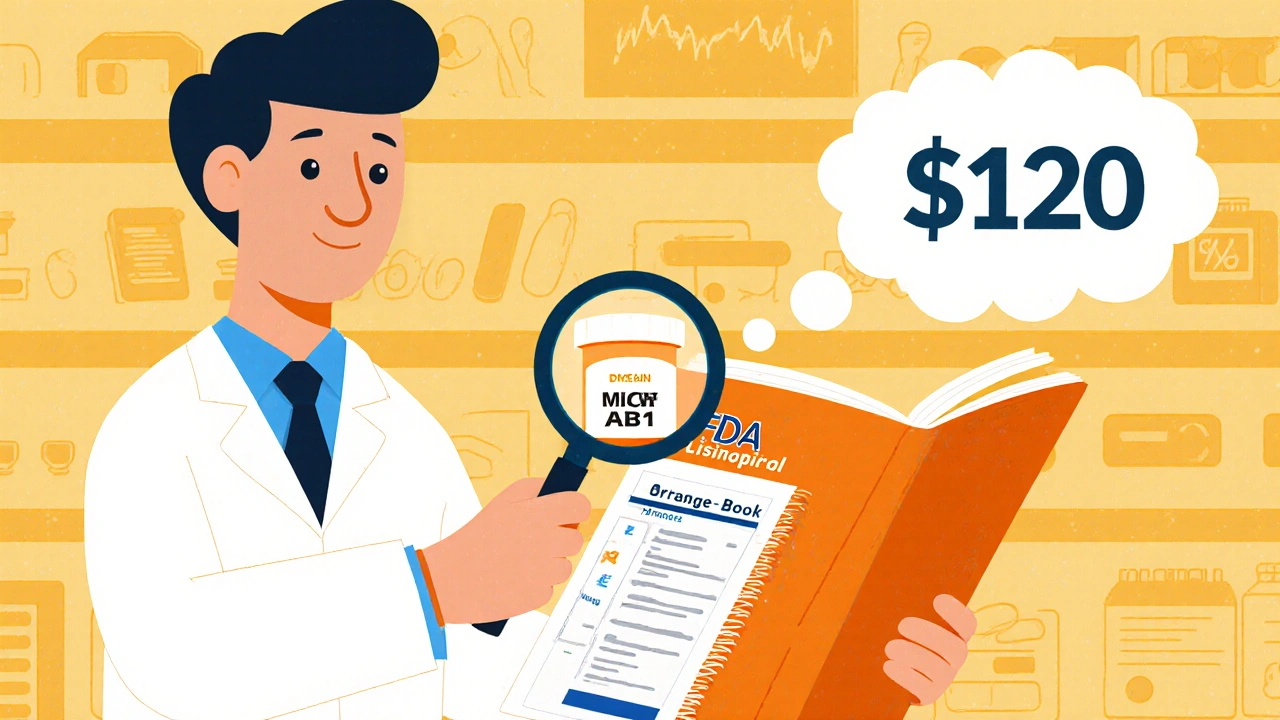
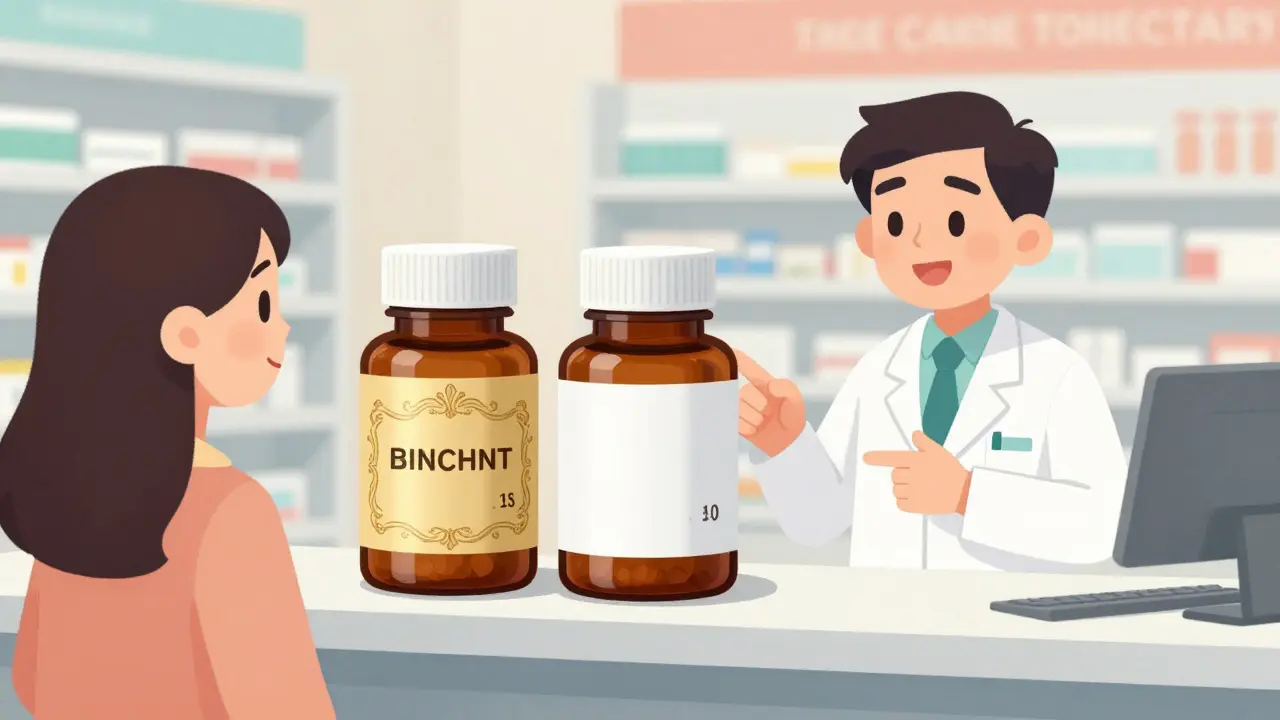
When a pharmacist sees a brand-name prescription, they don’t just fill it-they think. Is there a generic version? Is it safe to switch? And most importantly, how do they tell the prescriber without causing confusion or resistance?
This isn’t just about saving money. It’s about making sure patients get the right medicine, at the right cost, without risking their health. In the U.S., 97% of prescriptions are filled with generics. That’s $409 billion saved every year. But behind every generic fill is a conversation-sometimes quick, sometimes complex-that determines whether the switch happens smoothly or gets stuck.
When Generics Are Safe to Swap
The FDA’s Orange Book is the bible for this decision. It lists every approved drug and rates its generics. An ‘A’ rating means the generic is therapeutically equivalent to the brand. That’s true for 92.7% of all generics. If a prescription is for lisinopril, simvastatin, or metformin, the pharmacist can confidently substitute-unless the prescriber says no.
But not all drugs are created equal. Some have a narrow therapeutic index (NTI), meaning the difference between a helpful dose and a dangerous one is tiny. Warfarin, levothyroxine, phenytoin-these aren’t candidates for casual swapping. Even small differences in absorption can cause blood clots, thyroid imbalances, or seizures. Pharmacists know this. When they see one of these, they pause. They don’t assume. They call.
Why? Because the FDA’s Product-Specific Guidances show that bioequivalence for NTI drugs isn’t always guaranteed, even if the generic is labeled ‘A’. That’s why 12 out of 1,456 FDA guidances focus only on these high-risk drugs. Pharmacists use those guidances to back up their advice.
When Generics Are Not a Simple Swap
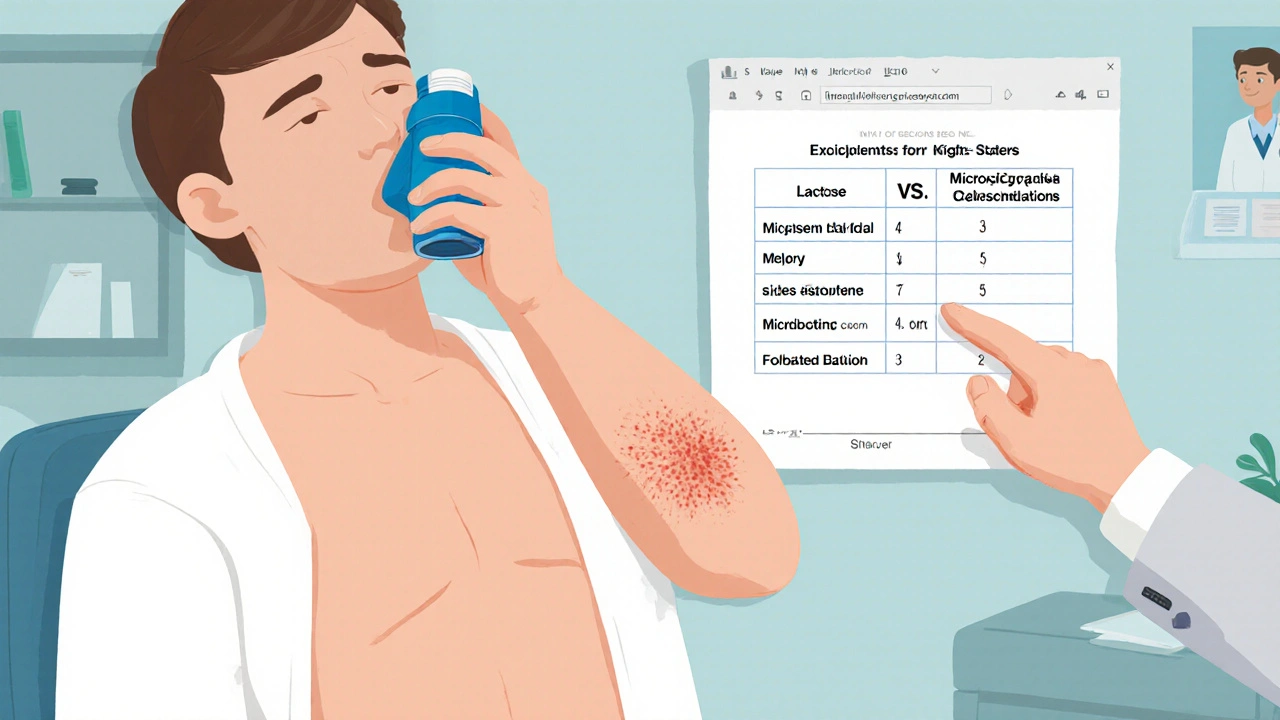
There’s another hidden reason substitutions fail: inactive ingredients. Generics must contain the same active ingredient as the brand-but they can use different fillers, dyes, or preservatives. For most people, that’s fine. But for about 8.7% of patients with allergies or sensitivities, it’s not.
One patient in Liverpool developed a rash after switching from a brand-name asthma inhaler to a generic. The brand used lactose; the generic used microcrystalline cellulose. The patient had a rare lactose allergy. The pharmacist caught it because they checked the manufacturer’s excipient list. They called the prescriber. The prescription was changed back. That’s the kind of detail that saves lives.
Another red flag? When the prescriber writes ‘Dispense As Written’ (DAW) on the script. About 15.3% of prescriptions have this note. Often, it’s because the doctor has seen a bad reaction before-maybe the patient’s blood pressure spiked after a switch, or their seizures returned. Pharmacists don’t ignore DAW. They investigate. They ask: Why? Was it a true intolerance? Or just a myth?
How Pharmacists Talk to Prescribers
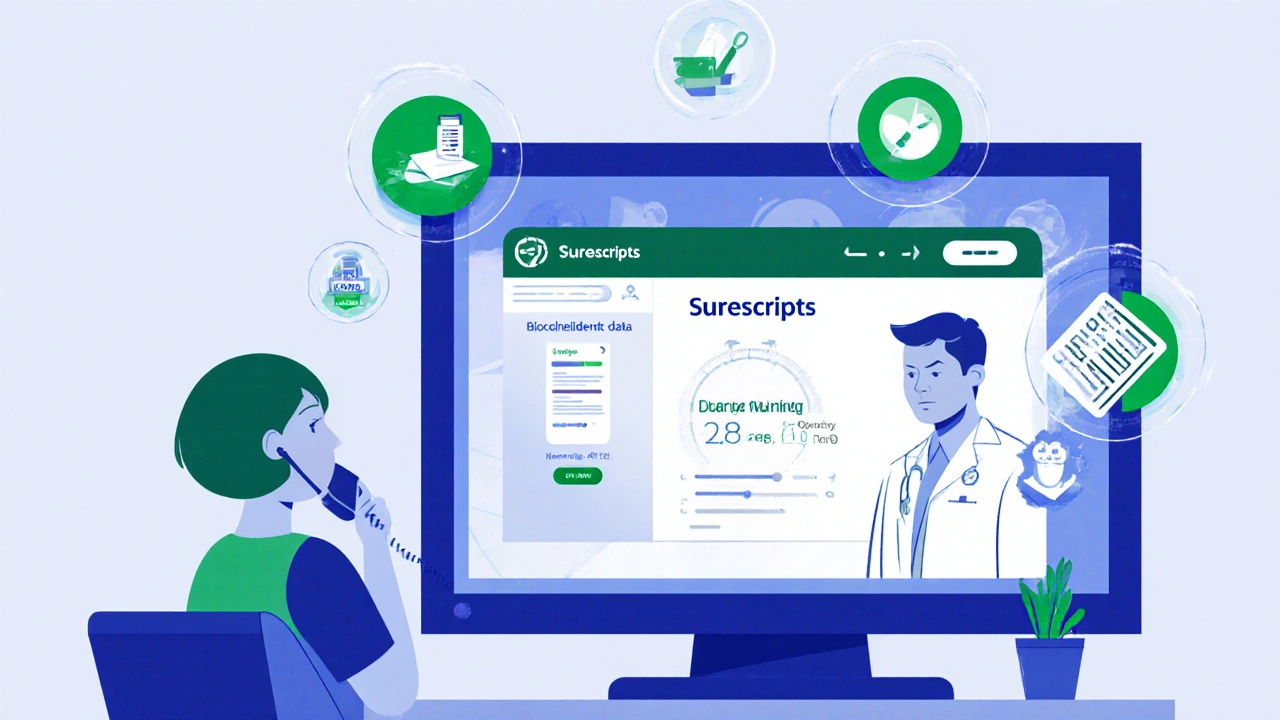
Calling a doctor’s office used to take 8 minutes. Now, with tools like Surescripts, it takes under 3. That’s because communication has become structured. The American Society of Health-System Pharmacists (ASHP) recommends a four-step approach:
- Reach out within 24 hours of receiving the prescription.
- Reference the Orange Book’s equivalence rating-don’t say ‘it’s the same,’ say ‘it’s rated AB1.’
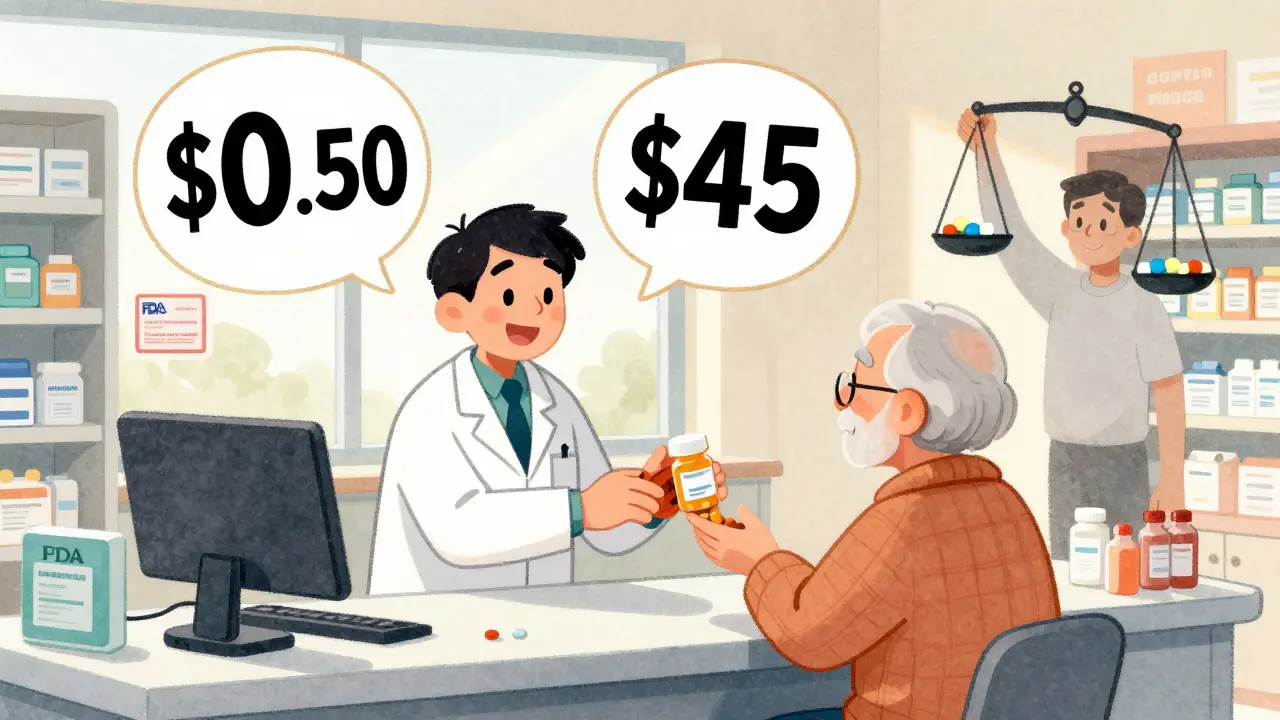
- Share the cost difference. A $120 brand-name pill vs. a $12 generic? That’s not just savings-it’s adherence.
- Document everything: who you spoke to, what you said, what they agreed to.
Studies show this method works. Pharmacists who follow it get 82.4% of prescribers to agree to the switch. Those who just say, ‘I think we should use the generic,’? Only 57.3%.
And it’s not just about being polite. It’s about being precise. Saying ‘the generic is equivalent’ doesn’t convince a skeptical doctor. But saying ‘the bioequivalence study showed a 98.7% match in absorption rates, with 95% confidence intervals within 95-105% of the brand’? That’s evidence. That’s credibility.
Why Prescribers Resist-And How to Overcome It
Even with all the data, 37.6% of prescribers still worry about generics. For complex drugs like inhalers, topical creams, or extended-release tablets, the concern is higher-over 40%. Why? Because they’ve heard stories. A patient’s migraine got worse. A diabetic’s HbA1c rose. Often, those cases are anecdotal. But they stick.
Pharmacists who succeed don’t argue. They educate. They bring data. They say: ‘Here’s the 2018 Shrank study of 12.7 million patients. Those on generics had 12.4% better adherence and 28.6% fewer hospital visits.’ They don’t say ‘trust me.’ They say ‘look at this.’
They also know when to step back. If a patient has been stable on a brand for years, and switching hasn’t been tried before, sometimes the safest move is to wait. The goal isn’t to switch every drug-it’s to switch the right ones, the right way.
Technology Is Changing the Game
AI tools like PharmAI’s Generic Substitution Assistant are now used by nearly 30% of chain pharmacies. These systems scan the prescription, check the Orange Book, flag NTI drugs, cross-reference excipient lists, and even suggest a message template to send to the prescriber. They cut communication time by 42% and raise recommendation accuracy from 76% to 94%.
Electronic health records (EHRs) now auto-populate substitution notes. If a pharmacist calls about a generic, the system logs the conversation, attaches the FDA equivalence rating, and sends a secure message to the prescriber’s inbox. No more voicemail left for 3 days.
And with the Inflation Reduction Act kicking in January 2025, pharmacists will have even more authority. Medicare Part D will expand medication therapy management services-meaning pharmacists won’t just be filling scripts. They’ll be actively managing therapy, including recommending generics as part of a care plan.
What Gets Documented-and Why It Matters
If it wasn’t written down, did it happen? In pharmacy, the answer is no. Every substitution, every call, every exception must be recorded. CMS requires the NDC, manufacturer, date, time, and method of communication. The AMA and APhA recommend adding the prescriber’s name, the reason for the recommendation, and the outcome.
Pharmacies using digital systems have 98.7% compliance. Those using paper logs? Only 76.4%. And the difference shows: pharmacies with strong documentation have 27.5% fewer medication errors and 18.3% higher patient satisfaction.
It’s not bureaucracy. It’s protection-for the patient, the pharmacist, and the prescriber.
The Bigger Picture: Generics Are Part of Better Care
Generic substitution isn’t just a cost-cutting trick. It’s a tool for better health. Patients who save money on meds are more likely to take them. Those who take their meds regularly have fewer ER visits, fewer hospital stays, and longer lives.
Accountable Care Organizations (ACOs) now measure success by how many patients are switched to cost-effective generics. The CDC is launching a Generic Medication Safety Network in late 2024 to track real-world outcomes. The FDA is updating the Orange Book to include real-world data-not just lab results.
Pharmacists are no longer just the people who hand out pills. They’re the bridge between science and practice. Between cost and care. Between a doctor’s note and a patient’s health.
When a pharmacist recommends a generic, they’re not challenging authority. They’re upholding evidence. And that’s a conversation worth having.
Tina Dinh
November 30, 2025 AT 05:52YESSSS this is why pharmacists are the real MVPs 💪💊
They’re the unsung heroes catching errors no one else even thinks about.
My grandma’s thyroid med switch saved her from a hospital trip-pharmacist called the doc, flagged the excipient issue, and boom-lives changed. 🙌
gerardo beaudoin
December 1, 2025 AT 21:01Love this breakdown. Honestly, I didn’t realize how much thought goes into swapping generics.
My cousin’s doc always says DAW, but turns out it was just because he heard a story from a patient years ago.
Pharmacist called, showed him the data, and now he’s cool with it. Small wins.
Also, the 82.4% success rate with the four-step method? That’s wild. Just saying ‘use the generic’ doesn’t cut it.
Communication matters more than we think.
linda wood
December 3, 2025 AT 16:27Oh so now pharmacists are also data scientists, patient advocates, and telepathic therapists?
Wow. Just wow.
Next they’ll be writing sonnets about pill counts.
Meanwhile, my doctor still thinks ‘generic’ means ‘maybe it works’.
LINDA PUSPITASARI
December 5, 2025 AT 08:49THIS. So much this 🙏
My sister’s asthma inhaler switch almost killed her because the generic had a different filler
Pharmacist caught it because they checked the label like a detective
They called the doc, got it switched back, saved her from a trip to the ER
Generics are great but not all are created equal
And pharmacists? They’re the ones actually paying attention 😭❤️
Mary Kate Powers
December 5, 2025 AT 13:59One of the most important things people don’t talk about is how documentation protects everyone.
Not just the patient, not just the pharmacist-but the doctor too.
When you log the call, the reason, the outcome? You’re building trust.
And trust is what keeps people from saying ‘DAW’ out of fear instead of facts.
This system works because it’s human-centered, not just cost-centered.
Love seeing this kind of care in action.
Peter Lubem Ause
December 6, 2025 AT 02:48Let me tell you something about generics-this isn’t just about money, it’s about dignity.
When a patient has to choose between insulin and groceries, the pharmacist stepping in isn’t being pushy, they’re being a lifeline.
And yes, some drugs are tricky-NTI drugs, inhalers, topical creams-but that’s why we need trained professionals, not algorithms alone.
AI helps, sure, but it doesn’t feel the anxiety in a patient’s voice when they say, ‘I’ve been on this brand for 10 years, I don’t want to switch.’
That’s when you pause, you listen, you validate, and then you educate.
It’s not about forcing change-it’s about guiding it.
And the fact that 98.7% of digital pharmacies document properly? That’s not bureaucracy, that’s accountability.
That’s how we stop errors before they happen.
And now, with Medicare expanding MTM services in 2025? Pharmacists aren’t just filling scripts-they’re becoming true care coordinators.
This is the future of healthcare, and it’s beautiful.
Sara Shumaker
December 7, 2025 AT 04:53There’s a quiet revolution happening in community pharmacies, and most people don’t even notice.
It’s not flashy, no viral TikTok, no celebrity endorsement.
Just a pharmacist, a phone, a database, and a patient’s life.
Every time they call a prescriber to explain AB1 equivalence, they’re not just saving $108-they’re affirming that science matters more than brand loyalty.
And when they document it? They’re not just checking a box-they’re writing a story of care.
History will look back at this era and wonder why we ever thought doctors were the only ones who could make clinical decisions.
Turns out, the person who hands you the pill might know more about it than the one who wrote the script.
Matthew Higgins
December 7, 2025 AT 15:59Bro. I used to think pharmacists just counted pills.
Now I realize they’re like the FBI of meds.
They’ve got the Orange Book, the excipient lists, the AI tools, the call logs.
They’re out here playing chess while everyone else is playing checkers.
And the best part? They don’t even brag about it.
Just quietly saving lives and money while we scroll memes.
Respect.
Also, 97% generics? That’s wild. We’re basically living in a generic economy now.
Just sayin’.
Joy Aniekwe
December 7, 2025 AT 18:49Oh please. Like pharmacists are saints.
They just want to reduce liability and hit their corporate KPIs.
‘Oh, I called the doctor!’-sure, but only because their pharmacy chain’s software flagged it.
They don’t care about your thyroid-they care about the 30% bonus for hitting substitution targets.
And don’t get me started on ‘DAW’-doctors write it because they’ve seen bad outcomes.
Not because they’re ‘stubborn.’
Stop romanticizing corporate pharmacy.
Geoff Heredia
December 8, 2025 AT 19:36ALERT ALERT.
THE GOVERNMENT IS USING PHARMACISTS TO CONTROL THE POPULATION.
GENERICS AREN’T ‘EQUIVALENT’-THEY’RE LAB-TESTED TO BE SLIGHTLY LESS EFFECTIVE SO YOU’LL NEED MORE.
THE FDA IS IN BED WITH BIG PHARMA.
THE ORANGE BOOK IS A LIE.
AND THAT ‘AI TOOL’? IT’S TRACKING YOUR MEDS FOR THE SURVEILLANCE STATE.
THEY WANT YOU DEPENDENT ON CHEAPER PILLS SO YOU’LL NEVER QUESTION THE SYSTEM.
CALL YOUR DOCTOR. ASK ABOUT THE ‘REAL’ MEDS.
THEY DON’T WANT YOU TO KNOW.
Andrew Keh
December 9, 2025 AT 09:57This is really well explained. I’ve seen both sides-doctors who resist change, and pharmacists who push too hard.
The key is balance.
Not every switch needs to happen.
But when it does, having clear data, respectful communication, and good documentation makes all the difference.
It’s not about winning an argument.
It’s about making sure the patient gets the best outcome.
Simple. Effective.
Thanks for sharing this.
Scott Collard
December 11, 2025 AT 02:39Let’s be real. Most pharmacists don’t even know what ‘AB1’ means.
They just click ‘substitute’ in the system.
And doctors? They’re drowning in EHR alerts.
AI tools? They’re trained on biased data.
This whole thing is a facade of expertise.
Real clinical judgment? Rare.
Box-ticking? Everywhere.
Don’t mistake automation for competence.
Latika Gupta
December 11, 2025 AT 07:21Wait so you’re saying pharmacists are now responsible for everything? What about the doctors? Don’t they have to know this stuff too? I mean, I’m just asking because my doctor prescribed me this brand and I’m confused why the pharmacist is the one calling them? Like, isn’t that their job? I just want to know if I’m being passed around. I’m not trying to be difficult. I just want to understand. Like, who’s really in charge here? I feel like I’m being shuffled between people. Is this normal? Can I just ask the pharmacist to stop calling? I don’t want to be a burden. But I’m worried. I just need to know if this is safe. I’m not trying to be annoying. I just want to be sure.