
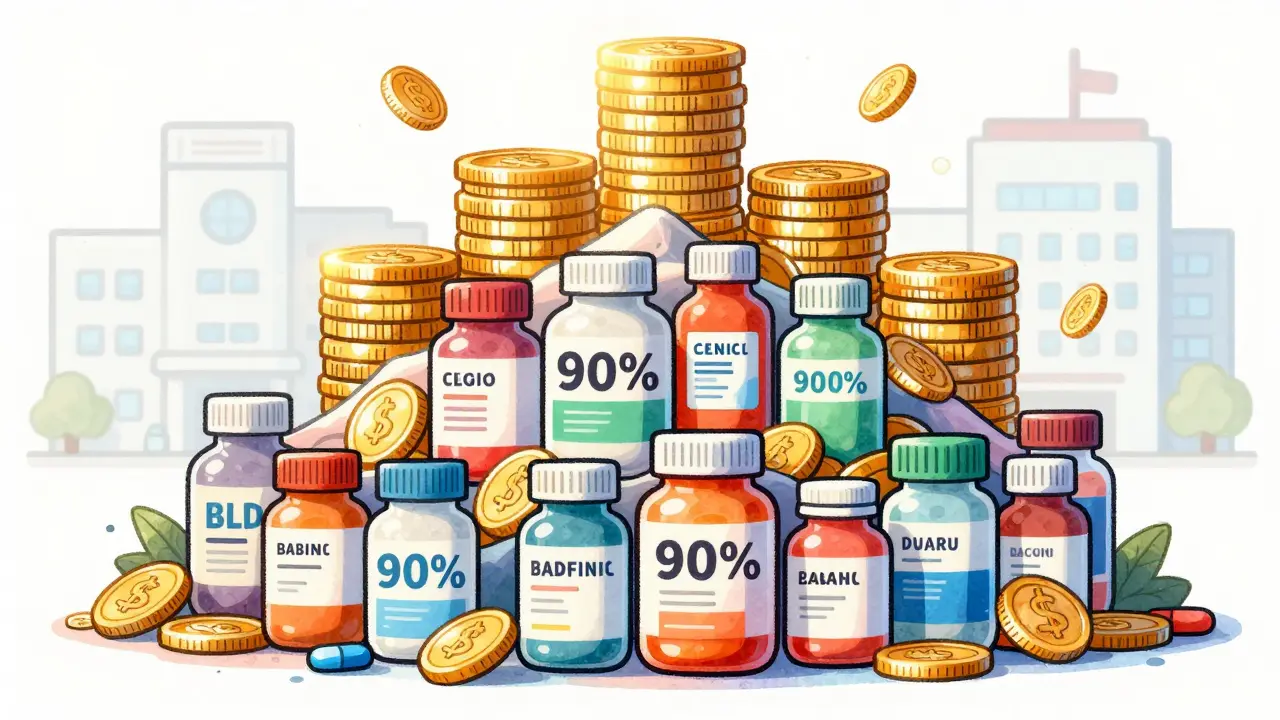
You might have heard that switching to generic medicines saves money, but the scale of those savings is staggering. In 2024 alone, Generic Medicines saved the healthcare ecosystem across the United States $467 billion. That number isn't just an estimate; it comes from hard data released by major industry watchdogs. When you add up the decade from 2015 to 2024, the total bill reduction tops $3.4 trillion. This isn't small change for your monthly budget; it reshapes the entire financial foundation of American health care.
To understand why these numbers matter, we have to look at how prescriptions actually work today. Most people think of medicine as expensive because they see the sticker price on the label. But the reality hidden behind that price tag shows a massive split between what people take and what they pay. According to the 2025 Savings Report from the Association for Accessible Medicines (AAM), generic drugs make up 90 percent of every prescription filled in the country. That is 3.9 billion prescriptions out of every 4.3 billion dispensed.
The Disparity Between Volume and Cost
Here is where the math gets interesting. Even though 90 percent of pills are generic, they account for only 12 percent of the total money spent on drugs. The remaining 10 percent of prescriptions-brand-name drugs-make up 88 percent of the spending. In 2024, that meant $700 billion went toward brand names while $98 billion covered generics.
This gap has been growing wider for years. Back in 2016, generics accounted for 27 percent of drug spending. By 2024, that share dropped to 12 percent. This shift proves that competition drives prices down aggressively. When multiple manufacturers make the same generic version, the price collapses. A prime example is the deflationary pressure seen recently. From April to July 2025, analysts observed net deflation in the generic sector, meaning prices dropped even as demand stayed steady or grew.
This stability contrasts sharply with the broader economy. While inflation hits most sectors, the generic pharmaceutical market pushes prices lower. Blue Cross Blue Shield reported that major pharma companies raised median prices on 250 drugs by 4.5 percent in early 2025, yet generics kept falling. This trend protects patients who rely on essential maintenance medications for conditions like diabetes, high blood pressure, and cholesterol.
Out-of-Pocket Costs for Patients
The statistics get even more personal when you look at what a patient hands over at the counter. The average co-pay for a generic prescription was $6.95 in 2024. Compare that to $28.69 for a brand-name equivalent. That is nearly five times the cost. If you do not have insurance, the difference becomes life-or-death for some families.
| Drug Type | Average Cost | Prescription Volume Share | Total Spending Share |
|---|---|---|---|
| Generic Medicines | $6.95 | 90% | 12% |
| Brand-Name Drugs | $28.69 | 10% | 88% |
| Biosimilars | N/A | Part of 90% | Significant portion of savings |
For the uninsured, the gap widens further. Brand-name costs jumped roughly 50 percent since 2019, hitting $130.18 per script. Meanwhile, generic prices actually dipped by $2.45 during that same window. This makes generic access critical for anyone struggling with coverage gaps. It also explains why pharmacy benefit managers (PBMs) push generics so hard-they align the incentives of insurers and patients.
The Rise of Biosimilars
We cannot discuss generic drug savings without mentioning the newer category called biosimilars. These are complex versions of biologic drugs used for serious illnesses like cancer and autoimmune disorders. Unlike simple chemical pills, biologics involve living cell processes, making them harder to replicate exactly.
Despite the complexity, biosimilars are gaining traction fast. They generated $20.2 billion in savings during 2024, nearly doubling from the year before. Since entering the market in 2015, they have accumulated $56.2 billion in total savings. What stands out is the recent acceleration: about 60 percent of all biosimilar savings happened in just the last two years. This suggests doctors and hospitals are finally overcoming hesitancy and trusting these alternatives.
Safety remains a top concern for many patients. The Biosimilars Council reports that these drugs have been administered across nearly 3.3 billion days of patient therapy without unique clinical challenges. The technology ensures they perform just like the original brand product. As adoption increases, the potential for cost reduction in high-price specialty areas grows significantly.

Risks to Supply and Stability
While the savings are undeniable, the business model faces hurdles. Manufacturers operate on very thin margins now. Because prices drop so low, some companies cannot stay profitable making older, common medications. The Biosimilars Council warns that extreme price deflation can lead to unsustainable market conditions. If a company loses too much money making a specific drug, they stop producing it.
This creates a risk of shortages. When supply chains get fragile, patients might suddenly find their medication unavailable at local pharmacies. The issue compounds when policy changes interact with market forces. For instance, payment structures in Medicare or actions by Pharmacy Benefit Managers can sometimes block access to the cheapest options.
Policymakers recognize these threats. The Congressional Budget Office estimated that limiting "patent thicketing"-where brands file extra patents to block generics-would yield $1.8 billion in savings over a decade. Ending "product hopping," where makers tweak a pill slightly to restart patents, could save another $1.1 billion. Experts argue that banning pay-for-delay settlements is vital; studies suggest these deals inflate drug costs by nearly $12 billion annually.
Long-Term Impact on Health Care
Looking ahead, the role of generics in the U.S. system will likely become even more central. Specialty drugs are projected to drive 60 percent of total spending by 2025, putting pressure on the rest of the system to absorb costs elsewhere. Generics currently represent only 1.2 percent of all healthcare spending, proving their disproportionate value.
New federal policies, including Most-Favored-Nation pricing targets from the Department of Health and Human Services, aim to align domestic prices with international standards. If successful, this could normalize pricing but might also impact manufacturer revenue streams further. The goal is drastic price reduction on U.S. drug prices, which often sit three to five times higher than abroad.
Hospitals are already seeing benefits. Stanford Medicine noted that outpatient medication spending at large hospital systems could drop by nearly half with certain reimbursement models. Over ten years, a single system project suggested savings of $144 billion. As the decade progresses, the balance sheet of American health care depends heavily on keeping these generic markets viable.
Are generic drugs exactly the same as brand name drugs?
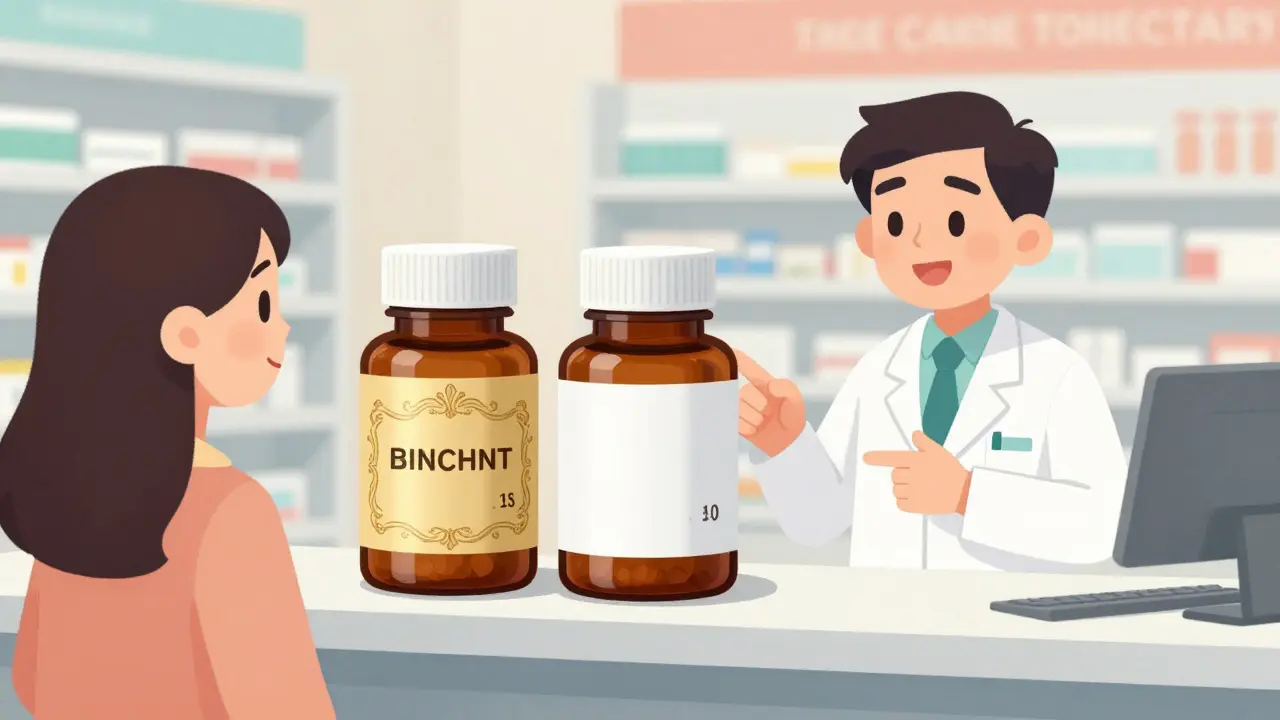
Yes, generic medicines must contain the same active ingredients as the brand-name version. They meet strict FDA requirements for strength, quality, and performance. The appearance may differ, but the medical effect is the same.
Why are brand-name drug prices increasing while generic prices fall?
Brand manufacturers often raise prices to maximize revenue after patents expire or to recoup R&D costs. Generic markets are competitive, so multiple suppliers drive prices down through supply and demand dynamics.
What is a biosimilar?
A biosimilar is a biological product highly similar to an already approved reference biologic medicine. Unlike traditional generics, which copy small molecules, biosimilars copy complex proteins used for treatments like cancer or arthritis.
How much money does Medicare save on generics?
According to the 2025 Savings Report, generics generated $142 billion in savings for Medicare in 2024 alone. This averages out to $2,643 in savings per beneficiary under the program.
Will generic medicines run out in the future?
There is a risk of shortages if prices drop too low for manufacturers to make a profit. Industry groups warn that sustainable pricing policies are needed to keep essential drugs available on shelves.


Rick Jackson
March 30, 2026 AT 17:53The breakdown of spending share is honestly the part that stands out the most here. You do the math and the incentives just dont align naturally. It makes sense why PBMs push hard on generics but the patient experience still feels disjointed sometimes. I appreciate seeing actual dollar amounts attached to the volume metrics. It changes the conversation from abstract percentages to real money. Keeping the market competitive seems like the only way forward honestly. I hope policymakers catch up on fixing the shortage risks soon enough. This kind of transparency helps voters understand where the waste actually sits. Generic medication access is a fundamental right in my book. Lets keep the momentum going on these reforms.
Carolyn Kask
April 1, 2026 AT 11:53Oh fantastic another report telling us how great america is at saving money until the next crisis hits. The numbers look pretty on paper but trust me when I say the system is rotting from the inside out. Brand name companies know exactly how to game the patent rules to keep the cash flowing. Everyone praises the savings while the uninsured get left to pay $130 for insulin. Its almost funny how selective the statistics are presented to sound positive. The deflation trend is nice until a supplier goes bankrupt and shelves go empty. Why does everyone trust these industry watchdogs to release neutral data anyway. We should be skeptical of any source funded by the people selling the pills. Real savings mean nothing if you cant find the box on the shelf. Stop clapping for capitalism when it leaves your mother stranded.
Angel Ahumada
April 1, 2026 AT 16:04the discourse surrounding pharmaceutical economics tends to overlook the philosophical implications of commodifying essential biological functions for profit we live in an era where cost effectiveness is prioritized over human dignity and i feel the need to point out that the metric of success is purely financial and not based on wellness outcomes which is frankly absurd given the gravity of healthcare delivery systems across the nation
Katie Riston
April 1, 2026 AT 16:08It really makes you think about how we value human life against profit margins in the modern economy. We tend to forget that every dollar saved in healthcare is a dollar kept in our pockets for families to spend elsewhere. The systemic reliance on brand names feels like a relic of an older financial age that we refuse to let go of completely. I wonder if the true cost is hidden in the bureaucracy rather than the pill itself which shifts burden to administrators. People scream about inflation yet ignore the price manipulation within their own medicine cabinets on a daily basis. There is something deeply cynical about the way insurance dictates what biology is accessible to the masses without question. We need to acknowledge that generics are not just cheaper options but moral imperatives for a functioning society. When a company charges five times more for the same chemical formula it exposes greed over necessity clearly. Stability in pricing allows patients to plan for their chronic conditions without constant panic attacks about affordability. Without access to affordable treatment the safety net becomes a sieve that lets too many vulnerable people slip through entirely. We often praise innovation yet punish the market mechanisms that bring prices down for ordinary consumers effectively. It takes a collective shift in perspective to see these statistics as victories rather than mere data points on a spreadsheet. We should be celebrating the millions who gain access to survival tools simply through market competition dynamics. The balance sheet does matter less than the individual lives sustained by this specific economic leverage in hospitals. Ultimately the math shows that keeping markets open is the most effective charity we can offer to struggling communities.
Ruth Wambui
April 3, 2026 AT 09:55They feed us these glossy reports to distract from the master plan hiding behind the scenes. Big Pharma knows the supply chain fragility and engineers shortages intentionally to spike prices back up later. This deflationary pressure is just a bait switch before the inevitable monopoly lock-in happens globally. You see the patterns in the timing of these reports and the policy changes that follow closely after. Trust the science not the narrative sold to the public by corporate shills and consultants. They want you complacent while they consolidate power over your health infrastructure completely.
emma ruth rodriguez
April 3, 2026 AT 13:26While, the data is clear, there are nuances, to consider, regarding, the stability, of, the supply, chains, in, certain, regions. We must recognize, that marginal, reductions in price, can lead to, unsustainable manufacturing, conditions, which impact availability. Regulatory bodies, such as, the FDA, monitor quality, but cannot predict, economic viability, for, smaller producers. It is essential, to maintain, incentives, that allow, production continuity, alongside cost efficiency measures.
Beccy Smart
April 5, 2026 AT 08:35Exactly what i was thinking today lol 🤔💊✨
sanatan kaushik
April 5, 2026 AT 09:05In india we see similar gaps but the politics change the outcome for people. Price caps work better when the government enforces strict limits on profit margins. We need to look at the indian model where generic versions are pushed early. Local manufacturing keeps prices low and supply stays steady. Your country has so much tech but the cost is still too high for poor people. We learn from mistakes made by global corporations trying to maximize revenue. Health should be treated as basic right not a luxury product for sale. Access matters more than the fancy branding on the box label. Community health workers play huge role in distribution networks too. Hope your region finds better balance soon for everyone suffering.
Christopher Curcio
April 7, 2026 AT 07:21From a pharmacoeconomics standpoint the therapeutic equivalence data supports the utilization of interchangeable alternatives. Bioequivalence studies demonstrate the area under the curve parameters remain within acceptable bounds for clinical efficacy. The active pharmaceutical ingredients possess identical molecular configurations despite excipient variations. Formulary management protocols prioritize these agents to mitigate overall expenditure burdens. Adverse event reporting rates show no statistical significance difference in tolerability profiles. Cost-benefit analysis indicates a favorable return on investment for integrated care pathways utilizing these options.
Debbie Fradin
April 7, 2026 AT 11:16Your jargon heavy explanation is just a wall of noise hiding the simple truth about corporate extraction. These interchangeability studies are designed to validate products already cleared by regulators. Stop pretending technical specs matter when the bottom line is what drives production decisions. Patients need plain language not a lecture on bioequivalence curves and tolerance profiles. The whole system is rigged to benefit shareholders instead of the people taking the meds. Its insulting to act like complex terminology fixes the broken access issues facing families. Keep the money focused on real solutions not marketing speak disguised as medical advice. The arrogance in assuming people care about molecular configs is laughable at best.
Rick Jackson
April 8, 2026 AT 22:55I stand by my initial thought that transparency is the first step toward reforming the payment structures. It is easy to get lost in the debate but the core issue remains affordability and stability. We need sustainable models that support manufacturers while protecting patients from sudden shocks. Collaboration between stakeholders is the only viable path forward for long term security. Thank you for bringing up the international comparisons and perspectives. It adds depth to the ongoing dialogue regarding policy adjustments and implementation strategies. Hopefully the next cycle sees improvements in supply reliability. We all want outcomes that favor health over profit margins ultimately.