Key Takeaways for Caregivers and Patients
- Noninvasive ventilation (NIV) can extend survival by an average of 7 months and dramatically improve sleep.
- Early PEG tube placement stabilizes weight and can add roughly 120 days to survival.
- The combination of respiratory and nutritional support provides a massive survival advantage compared to standard care.
- Early intervention-starting when lung capacity drops below 80%-is more effective than waiting for a crisis.
Understanding Noninvasive Ventilation (NIV)
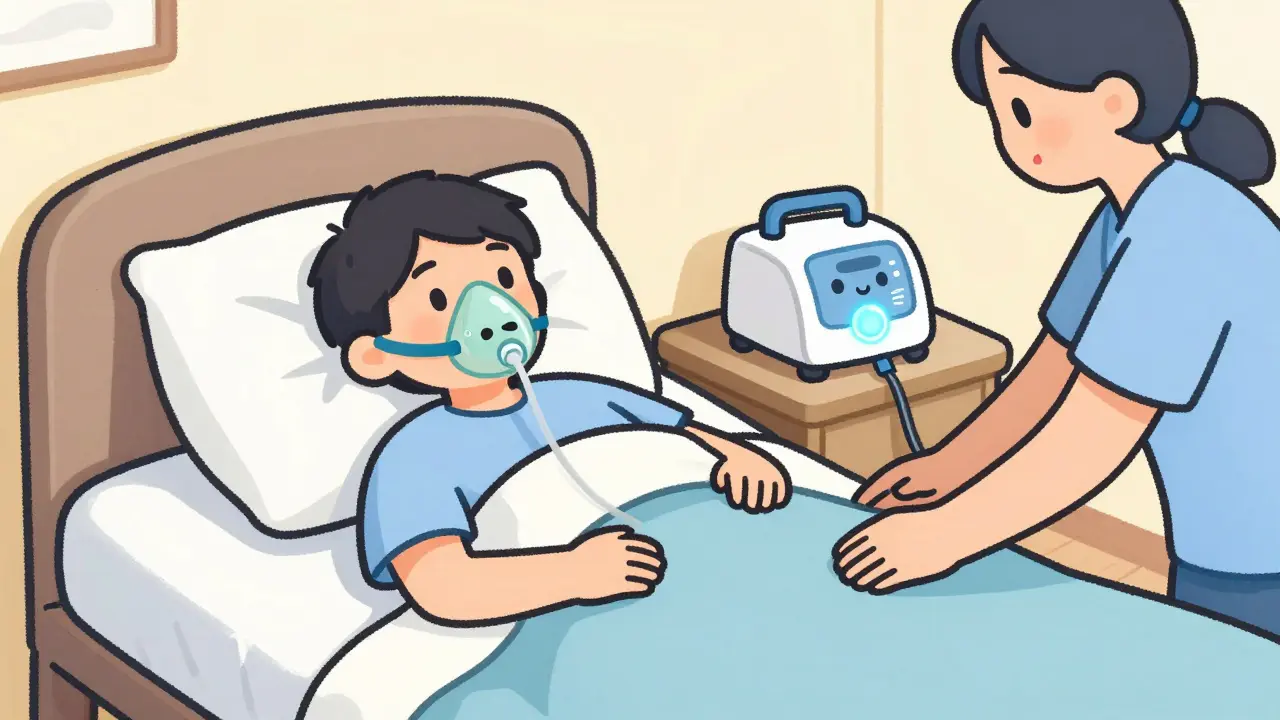
When the diaphragm weakens, your body struggles to clear out carbon dioxide and bring in enough oxygen. Noninvasive Ventilation (NIV) is a method of delivering positive pressure air through a mask to support the respiratory muscles without needing an invasive tube in the windpipe. It acts like a helper for your lungs, doing some of the heavy lifting that the muscles can no longer manage.
Most people start with a BiPAP (Bilevel Positive Airway Pressure) machine. Unlike a standard CPAP, a BiPAP changes the pressure depending on whether you are breathing in or out. This makes it much easier to exhale and prevents the "suffocating" feeling some patients report. For those whose needs progress, portable ventilators like the Trilogy 100 offer more advanced settings, such as volume control, which ensures a specific amount of air reaches the lungs regardless of the pressure.
But when should you actually start? If you wait until you're gasping for air, you've waited too long. Experts recommend starting NIV when Forced Vital Capacity (FVC)-a measure of how much air you can blow out of your lungs-drops below 80% of what is predicted for your age and height. Even if the numbers look okay, keep an eye out for "silent" symptoms: morning headaches, feeling excessively sleepy during the day, or needing to prop yourself up with pillows to breathe comfortably at night (orthopnea). These are clear signals that your brain isn't getting enough oxygen during sleep.
Making the Transition to NIV
Let's be honest: wearing a mask while you sleep is awkward. It's common for patients to struggle during the first 30 days. Some might only manage the machine for a few nights a week. However, data shows that after a year, most people get used to it, moving from occasional use to nearly every night. The secret is in the titration-the process where a respiratory therapist adjusts the pressure settings to find the "sweet spot" where you feel supported but not overwhelmed.
Typical starting settings often involve an inspiratory pressure (IPAP) of 12-14 cm H2O and an expiratory pressure (EPAP) of 4-6 cm H2O. If you're feeling too much resistance, don't just give up. Mask discomfort and skin irritation are the biggest reasons people quit, but switching mask styles or using specialized skin barriers often solves the problem. The goal is to hit at least 4 hours of use per day; this is the threshold where we see the most significant survival and energy benefits.
| Feature | Standard BiPAP | Portable Ventilator (e.g., Trilogy) |
|---|---|---|
| Primary Use | Mainly Nocturnal | Day and Night |
| Advanced Modes | Basic Pressure Support | Volume Control / Dual Backups |
| Mobility | Limited (Plug-in) | High (Internal Battery 8-12 hrs) |
| Approx. Cost | $1,200 - $2,500 | $6,000 - $10,000 |

Nutrition Strategies: Beyond the Plate
In ALS, weight loss is a stealthy enemy. It happens because chewing and swallowing become difficult (bulbar dysfunction) and because the body burns more energy just trying to breathe. When you start losing weight, your respiratory muscles weaken even faster, creating a dangerous cycle. This is where Percutaneous Endoscopic Gastrostomy (PEG) comes in. A PEG tube is a surgically placed feeding tube that goes directly into the stomach, bypassing the need to swallow food.
Many people dread the idea of a feeding tube, but the data is compelling. When a PEG tube is placed before a patient's BMI drops below 18.5 or their FVC falls below 50%, it can stabilize weight loss-reducing it from a potential 12% drop to almost nothing. More importantly, it removes the stress and danger of choking during meals, which can actually make mealtime a more social, less anxious experience if the tube is used for supplements and the patient continues to eat small amounts of "pleasure foods" by mouth.
The timing here is critical. Waiting until a patient is malnourished makes the surgery riskier and the recovery slower. A proactive approach-placing the tube while the patient is still relatively strong-is linked to a survival increase of about 120 days. It ensures that the body has the caloric reserves to handle the stress of the disease and the use of the NIV machine.
The Power of the Multidisciplinary Approach
If you treat breathing and eating as separate problems, you're missing the bigger picture. A patient who is well-nourished can tolerate the NIV machine better, and a patient who sleeps better because of NIV has more energy to engage with their nutritional plan. When these are handled by a coordinated team-neurologists, respiratory therapists, and dietitians-the results are far superior.
Research indicates that this combined approach provides a 7.5-month survival advantage over standard, fragmented care. In some cases, the combined implementation of NIV and nutritional support can provide a median survival advantage of over 12 months. This isn't just about adding days to a calendar; it's about reducing the number of emergency room visits for respiratory distress and preventing the severe fatigue that often isolates ALS patients from their families.

Overcoming Common Barriers to Care
Despite the benefits, there is often a gap between what the guidelines suggest and what happens in the clinic. For instance, some insurance providers in the US require a lung capacity (FVC) of less than 50% before they will pay for a BiPAP machine. This is a problem because the European and Canadian guidelines suggest starting much earlier. If you're hitting a wall with insurance, it's worth discussing the clinical symptoms (like morning headaches) with your doctor to build a stronger case for early intervention.
Another hurdle is the "adaptation period." About 36% of patients need three or more office visits to get their NIV settings right. If the mask feels like it's fighting you, or if you feel like you can't exhale, don't assume the machine is "wrong" for you. It usually just needs a tweak in the EPAP setting or a different mask cushion. Most patients who push through the first month report a huge surge in daytime energy and a disappearance of those nagging morning headaches.
Does NIV work if the patient has bulbar ALS (difficulty swallowing)?
Yes. There was an old belief that bulbar dysfunction made NIV less effective, but studies have shown that patients with bulbar ALS receive similar survival benefits from NIV as those with non-bulbar ALS. The challenge is usually just finding a mask that fits comfortably around the jaw and mouth.
Can I still eat normally if I have a PEG tube?
Absolutely. A PEG tube doesn't mean you can't eat. Many patients continue to eat for pleasure as long as it is safe to do so. The tube ensures you get the necessary calories and hydration, which takes the pressure off every single bite of food.
How long does it take to see the benefits of the BiPAP machine?
Most users report a significant improvement in sleep quality and a reduction in morning headaches within 4 weeks of consistent use. The key is consistency-trying to use it every night to let the brain and body adapt.
What is the difference between BiPAP and a portable ventilator?
A BiPAP is generally for nighttime use and provides pressure support. A portable ventilator (like the Trilogy) is more advanced; it can be used during the day, has a battery for mobility, and can guarantee a specific volume of air per breath, which is helpful as respiratory muscles continue to weaken.
When is the absolute best time to get a PEG tube?
Ideally, before your Body Mass Index (BMI) drops below 18.5 or your Forced Vital Capacity (FVC) drops below 50%. Placing the tube proactively prevents the cycle of malnutrition and respiratory decline.
Next Steps and Troubleshooting
If you are currently caring for someone with ALS, start by tracking their sleep. Are they tossing and turning? Do they wake up feeling exhausted despite "sleeping" all night? If so, ask your neurologist for a respiratory function test to check their FVC.
If you already have an NIV machine but are struggling with adherence, try these quick fixes:
- Skin breakdown: Try a different mask interface (silicone vs. fabric) or use a medical-grade barrier film on the bridge of the nose.
- Difficulty exhaling: Ask your therapist to lower the EPAP (expiratory pressure) setting.
- Dry throat: Ensure the humidifier setting on your machine is turned up, especially during winter months.