
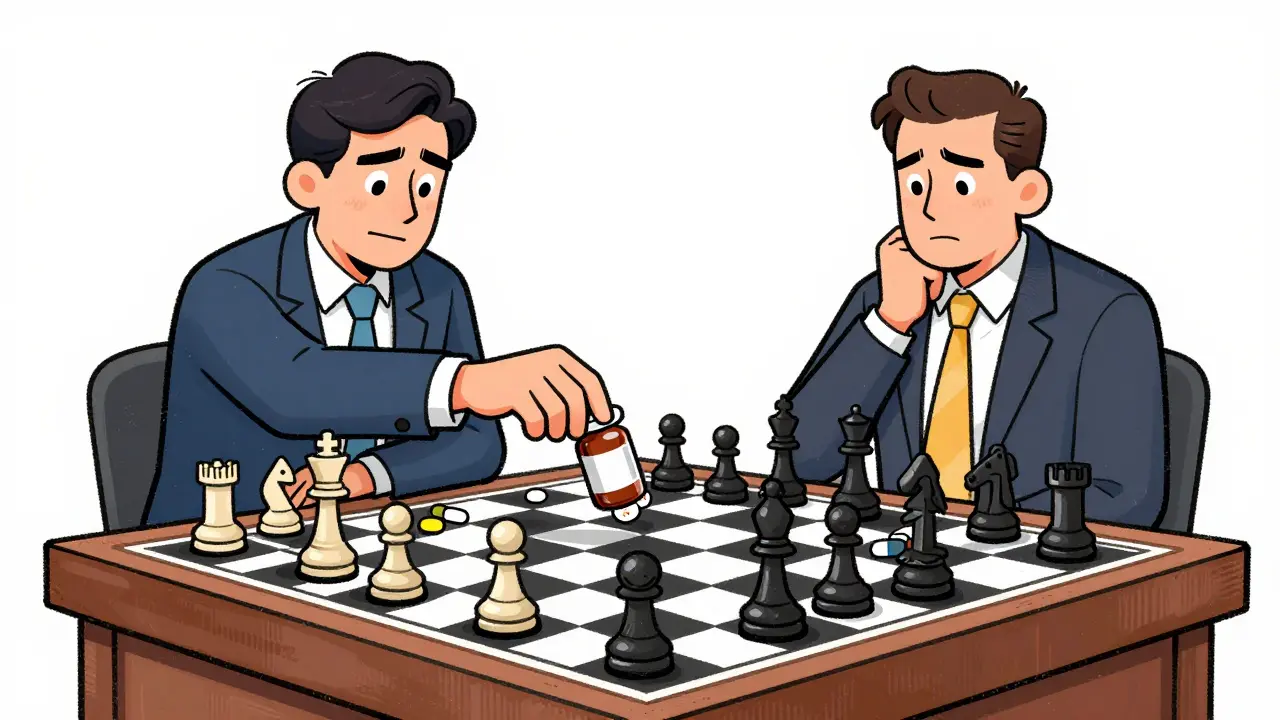
Imagine you're shopping for a new phone. You know a cheaper, almost identical version from another brand is hitting the shelves next month. Suddenly, the store manager is much more willing to give you a discount on the current model just to keep your business. In the world of healthcare, this is exactly how price negotiations work, but the stakes aren't just a few dollars-they're billions in public health spending.
Buyers, ranging from government agencies to insurance companies, use the threat or presence of generic alternatives as a hammer to drive down the cost of brand-name drugs. It is a high-stakes game of chess where the goal is to reach a price point that balances the need for new medicines with the reality of tight budgets.
The Core Logic of Generic Leverage
At its simplest, the more companies making the same drug, the lower the price. When a patent expires, a flood of Generic Drugs-which are medicines with the same active ingredients as brand-name versions-enter the market. For buyers, this is the ultimate leverage.
The numbers here are staggering. Research shows that when a drug has six generic competitors, the median discount is about 90.1%. If that number jumps to nine competitors, the price drop can hit 97.3%. Buyers don't just wait for this to happen; they actively use these benchmarks to tell brand-name manufacturers, "Your price is too high because we know a cheaper version is coming."
This dynamic was supercharged by the Hatch-Waxman Act of 1984 in the U.S. This law created a clear path for generics to get approved without repeating every single clinical trial, effectively building the engine that drives today's pharmaceutical price wars.
How the Negotiators Actually Do It
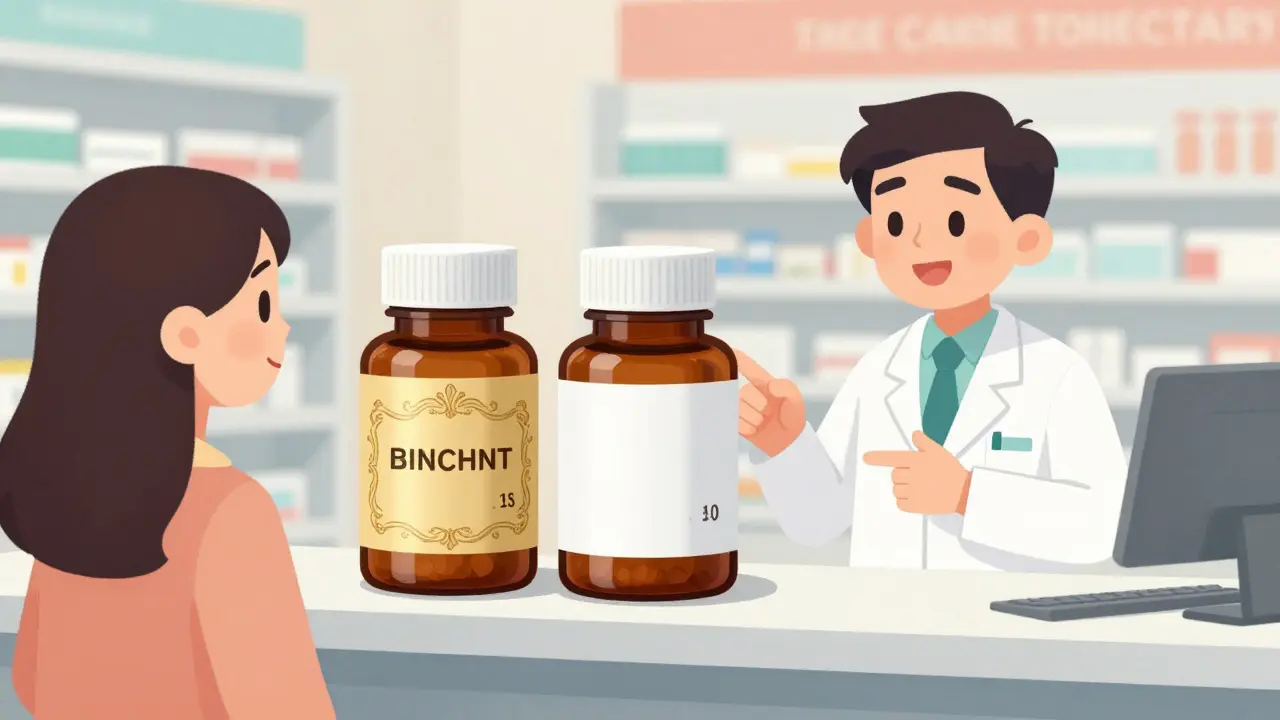
Buyers don't just ask for a discount; they use specific frameworks to justify the lower price. One common method is reference pricing. This is where a buyer sets a benchmark price based on the cost of a similar, generic alternative. If the brand-name drug wants to be covered by insurance, they either have to lower their price or accept that the patient will have to pay the difference.
In Canada, they've used a tiered pricing model since 2014. It's a clever system: they allow a higher maximum price when there's little competition, but as more generic players enter the market, the ceiling on the price drops. It keeps the market sustainable for the manufacturers while ensuring the public doesn't overpay.
Then there's the heavy hitter: the Centers for Medicare & Medicaid Services (CMS). Under the Inflation Reduction Act, CMS now has the power to negotiate prices directly for some of the most expensive drugs. They don't just look at the drug in question; they look at "therapeutic alternatives." If there's a generic drug that does the same job, CMS uses that price as the starting point for the negotiation. It's a powerful way to force brand-name companies to justify why their product is worth a premium.
| Strategy | Who Uses It | Primary Mechanism | Typical Outcome |
|---|---|---|---|
| Reference Pricing | Private Payers/EU Systems | Benchmarks against generic alternatives | Capped reimbursement rates |
| Tiered Pricing | Canadian Government | Price ceiling drops as competitor count rises | Gradual, predictable price decline |
| Direct Negotiation | CMS (USA) | Therapeutic alternatives as price floors | Immediate, significant cost reductions |
The "Chilling Effect" and the Risks of Over-Negotiating
You might think, "Why not just push prices as low as possible?" Well, there's a catch. If a government sets a brand-name drug's price too low *before* generics even arrive, they might accidentally kill the incentive for generic companies to enter the market.
Generic manufacturers have to spend a lot of money to challenge patents and set up factories. If the government has already crushed the price of the brand-name drug, the generic company might realize they can't make enough profit to justify the risk. This is what experts call the "chilling effect." Instead of getting more competition, we might get fewer generic options, which ironically hurts the buyer in the long run.
Brand-name companies also have their own tricks to stop this leverage. Some use "product hopping," where they release a slightly tweaked version of a drug just as the old patent expires, nudging patients toward a new, patented version to avoid the generic switch. Others have been caught in "reverse payment settlements," where the brand company literally pays the generic company to stay out of the market for a few more years.
Complexity Matters: Generics vs. Biosimilars
It's important to note that not all "generics" are created equal. For simple pills (small-molecule drugs), the switch is easy. But for complex biological drugs, we deal with Biosimilars. These aren't exact copies but are "highly similar."
The leverage here is much weaker. While standard generics often hit 90% market share, biosimilars usually only reach about 45%. This is because they are harder to make, more expensive to regulate, and doctors are often more hesitant to switch patients to them. For buyers, this means the "generic hammer" doesn't hit as hard when dealing with biologics.
The Future of the Price War
As we move deeper into 2026, the focus is shifting toward real-world evidence. Buyers are no longer just looking at the price tag; they're looking at comparative effectiveness. If a generic is cheaper but the brand-name version proves it keeps patients out of the hospital more effectively, the negotiation changes. We're seeing a move toward value-based pricing, where the price is linked to the actual health outcome.
We're also seeing a push for more transparency. For years, Pharmacy Benefit Managers (PBMs) kept their negotiation algorithms a secret. But with more government oversight and public pressure, the "black box" of drug pricing is starting to open, allowing buyers to be more strategic and data-driven in their approach.
Do generic drugs actually lower the cost for patients?
Yes, significantly. Because generics can enter the market with much lower overhead-they don't have to fund the original discovery and primary clinical trials-they can price their products much lower. When multiple generics compete, prices can drop by over 90% compared to the original brand-name drug.
What is a "therapeutic alternative" in negotiations?
A therapeutic alternative is a different drug that treats the same condition and works in a similar way, even if it's not a chemical copy. Buyers use the price of these alternatives as a "reality check" during negotiations to argue that the brand-name drug is overpriced relative to other effective options.
How does the Inflation Reduction Act change things?
It gives the U.S. government (via CMS) the legal authority to negotiate prices directly with manufacturers for the first time for certain high-spend drugs. Previously, Medicare was largely forbidden from doing this. By leveraging the existence of generics and alternatives, the government can force lower prices for millions of seniors.
Why are biosimilars different from generics?
Generics are chemically identical copies of small-molecule drugs. Biosimilars are made from living cells and are incredibly complex, meaning they can't be "identical," only "highly similar." This complexity makes them more expensive to produce and harder to swap, which reduces the price-lowering leverage buyers have.
What is a reverse payment settlement?
This is a controversial tactic where a brand-name drug company pays a potential generic competitor to keep their cheaper version off the market for a set period. It essentially buys the brand company more time as a monopoly, delaying the price drops that generic competition would bring.

Srikanth Makineni
April 6, 2026 AT 03:54big pharma just hates competition
Del Bourne
April 7, 2026 AT 23:32The point about the Hatch-Waxman Act is crucial here. Without that streamlined approval process, the barrier to entry for generic manufacturers would be far too high, effectively extending the monopolies of brand-name companies. It's also worth noting that the 'therapeutic alternatives' mentioned in the CMS section aren't just about cost, but about clinical efficacy benchmarks. When the government can prove that a cheaper drug provides the same patient outcomes, the brand-name manufacturer loses their primary argument for a premium price. This creates a much healthier ecosystem for patients who are often caught in the middle of these pricing wars.
Daniel Trezub
April 9, 2026 AT 02:17I mean, sure, this looks good on paper, but the Canadian tiered model isn't as flawless as it sounds. It often just shifts the burden or creates weird gaps in availability. Plus, let's be real, most of these "negotiations" are just corporate theater where the price drops a bit but still stays way above what it should be if the system actually worked. It's a nice theory, but the execution is usually pretty lazy.
Benjamin cusden
April 9, 2026 AT 08:31It is frankly amusing that some people believe direct negotiation is a novel concept. The disparity between the US and European markets has been an open secret for decades. The real issue is the intellectual laziness of the American regulatory framework, which has allowed PBMs to operate in a vacuum of transparency. If one actually understood the intricacies of pharmaceutical patent law, they would see that 'product hopping' is merely a symptom of a flawed patent system that rewards incrementalism over true innovation.
GOPESH KUMAR
April 9, 2026 AT 09:03The paradox here is that the pursuit of lower prices might actually be a pursuit of stagnation. We treat medicine like a commodity, like phones or sneakers, but health is an existential state. When we squeeze the profit margins of the originators too hard, we aren't just lowering a price tag; we are potentially erasing the future of a cure that hasn't been discovered yet. It's a classic struggle between the immediate needs of the many and the long-term survival of the species. Very simplistic to call it a "game of chess" when the pieces are human lives.
Laurie Iten
April 10, 2026 AT 01:55there is something deeply unsettling about the idea of paying someone to not make a drug
reverse payment settlements feel like a breach of the social contract between science and society
Victoria Gregory
April 11, 2026 AT 09:47Omg, I totally agree!! 🌸 It's so sad that some people have to suffer just because of a corporate payment deal!! 😭 But I'm so glad there's a push for more transparency now!! ✨ Hopefully, the future brings more balance for everyone involved!! ❤️🙏
Kathleen Painter
April 12, 2026 AT 06:06I've always felt that the conversation around biosimilars needs a lot more nuance because it's not just about the chemistry but about the trust between a provider and a patient. When a doctor is hesitant to switch a patient to a biosimilar, it's often not because of the 'complexity' of the molecule itself, but because of the fear of a negative reaction in a patient who is already fragile. We need to foster an environment where clinicians feel supported in making these transitions, rather than just focusing on the leverage buyers have. If we can bridge that gap with better data and inclusive guidelines, the price-lowering effect of biosimilars will finally catch up to that of small-molecule generics, which would be a huge win for public health accessibility over the next decade.
jack hunter
April 13, 2026 AT 23:13lol imagine thinking the govt actually cares about our wallets... its all just a big scam to keep the pbm's rich while we fight over generic vs biosimilars. its like trying to fix a sinking ship with a bandaid. the hole is the system itself and no amount of "negotiation" is gonna change the fact that greed is the only thing driving this whole industry... totaly fake
Nikhil Bhatia
April 15, 2026 AT 09:00too long didn't read but basically pharma is greedy