
Strabismus Detection: How to Spot Eye Misalignment Early and What Comes Next
When one eye doesn’t line up with the other, it’s called strabismus, a condition where the eyes point in different directions due to poor muscle control. Also known as crossed eyes or walleye, it’s not just a cosmetic issue—it can lead to permanent vision loss if ignored.
Strabismus detection often starts with parents or caregivers noticing that a child’s eyes don’t move together. One eye might turn inward, outward, up, or down, especially when tired or focused. In adults, sudden eye misalignment can signal a neurological problem like a stroke or nerve damage. Early detection matters because the brain starts ignoring input from the turned eye, leading to lazy eye, a condition where vision in one eye doesn’t develop properly. Without treatment, that eye may never see clearly, even with glasses.
Doctors use simple tests to confirm strabismus detection: covering one eye at a time to watch for movement, shining a light to see if reflections align on the cornea, or asking older kids to follow a moving object. It’s not complicated, but it’s often missed in routine checkups. Kids should have their first comprehensive eye exam by age three, especially if there’s a family history. Adults with sudden double vision or eye drift need immediate evaluation—this isn’t something to wait on.
Strabismus detection doesn’t end with diagnosis. It leads to treatment—glasses, eye patches, vision therapy, or sometimes surgery. The goal isn’t just to straighten the eye, but to restore depth perception and prevent lifelong vision loss. Many people think it’s just a childhood issue, but adults develop it too, often after injury or illness. And while surgery gets talked about a lot, most cases start with non-invasive steps that work if caught early.
What you’ll find below are real, practical guides on how strabismus detection works in clinics, what signs to watch for at home, how it connects to other vision problems like amblyopia, and what treatments actually deliver results—not just theory. These aren’t generic overviews. They’re based on what doctors, parents, and patients have learned through experience.
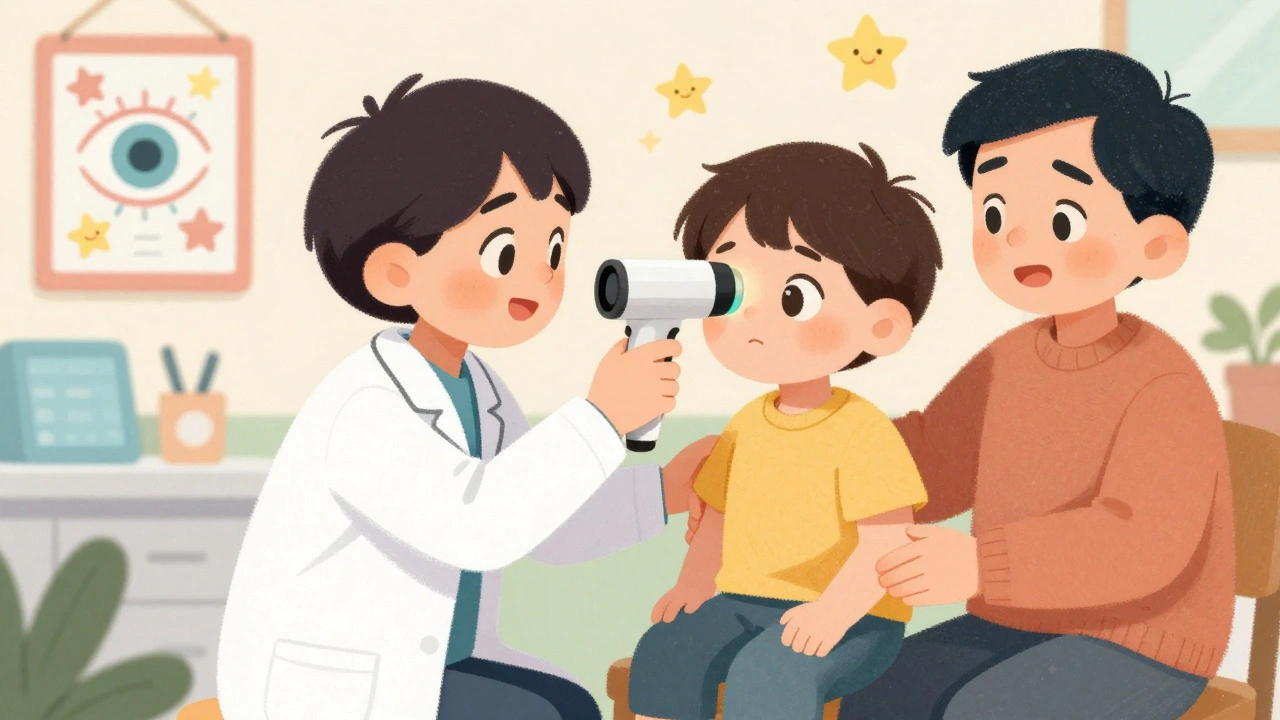
Pediatric Vision Screening: How Early Detection Prevents Lifelong Vision Problems
Pediatric vision screening catches treatable eye problems like amblyopia and strabismus before age 5, preventing lifelong vision loss. Early detection works in up to 95% of cases-delaying screening can make treatment ineffective.