
Why Pediatric Vision Screening Matters More Than You Think
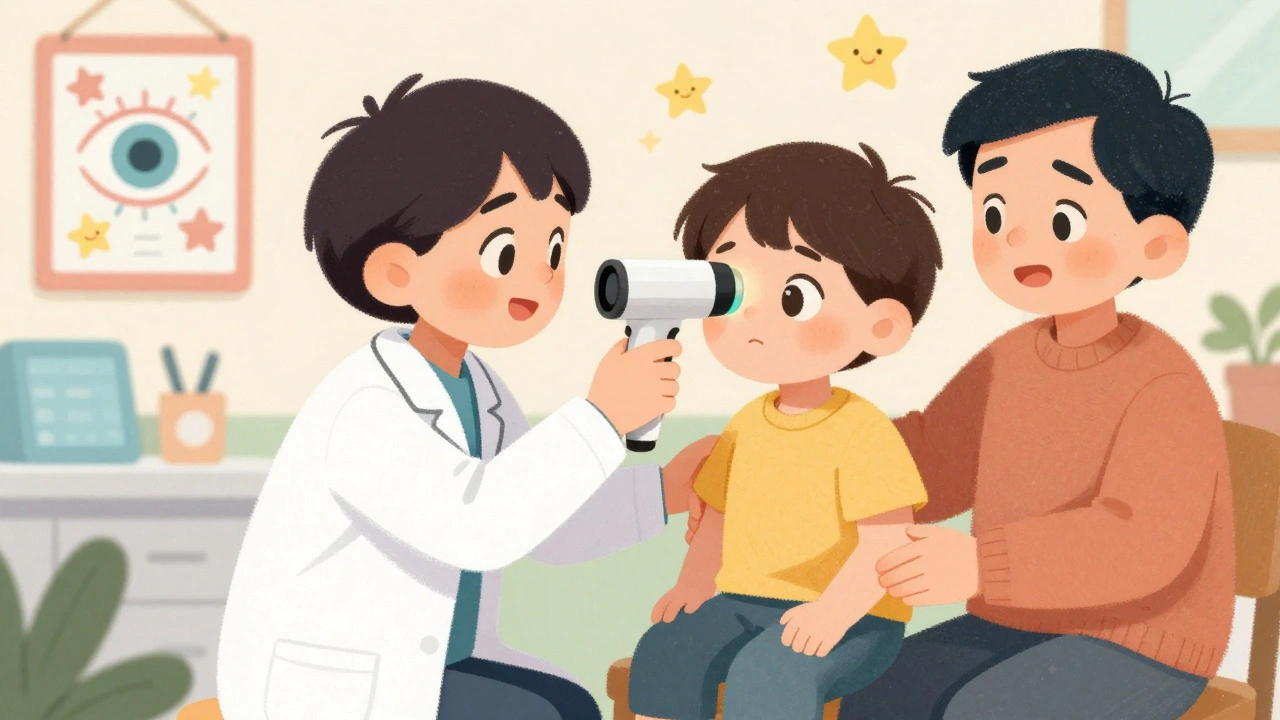
Most parents know to take their kids for checkups, vaccines, and dental visits. But how many know that a simple 5-minute eye check before age 5 can stop permanent vision loss before it starts? Pediatric vision screening isn’t just another box to tick-it’s one of the most effective, low-cost ways to protect a child’s future sight. Around 1 in 30 children has a vision problem like amblyopia (lazy eye) or strabismus (crossed eyes). Left undetected, these conditions don’t just blur vision-they can permanently damage how the brain processes what the eyes see. After age 7, the brain’s ability to fix these issues drops sharply. That’s why screening between ages 3 and 5 isn’t optional-it’s essential.
What Exactly Is Screened, and When?
Screening isn’t one-size-fits-all. It changes as kids grow. For babies under 6 months, doctors check the red reflex-flashing a light into the eyes to see if the reflection looks normal. A dull or white glow can signal cataracts or tumors. From 6 months to 3 years, providers watch for eye movement, eyelid health, and whether the child tracks objects. Once kids can follow instructions, usually around age 3, they start looking at charts.
Here’s what success looks like at each age:
- Age 3: Must identify most symbols on the 20/50 line
- Age 4: Must read the 20/40 line
- Age 5 and up: Must read the 20/32 line (or 20/30 on Snellen charts)
These aren’t random numbers. They’re based on years of research from the Vision in Preschoolers (VIP) study and guidelines from the American Academy of Pediatrics. If a child can’t meet these benchmarks, they’re referred to an eye specialist. Delaying that step can mean losing the chance to fully correct their vision.
Two Main Ways to Screen: Charts vs. Machines
There are two main tools used in pediatric vision screening: eye charts and machines. Each has strengths.
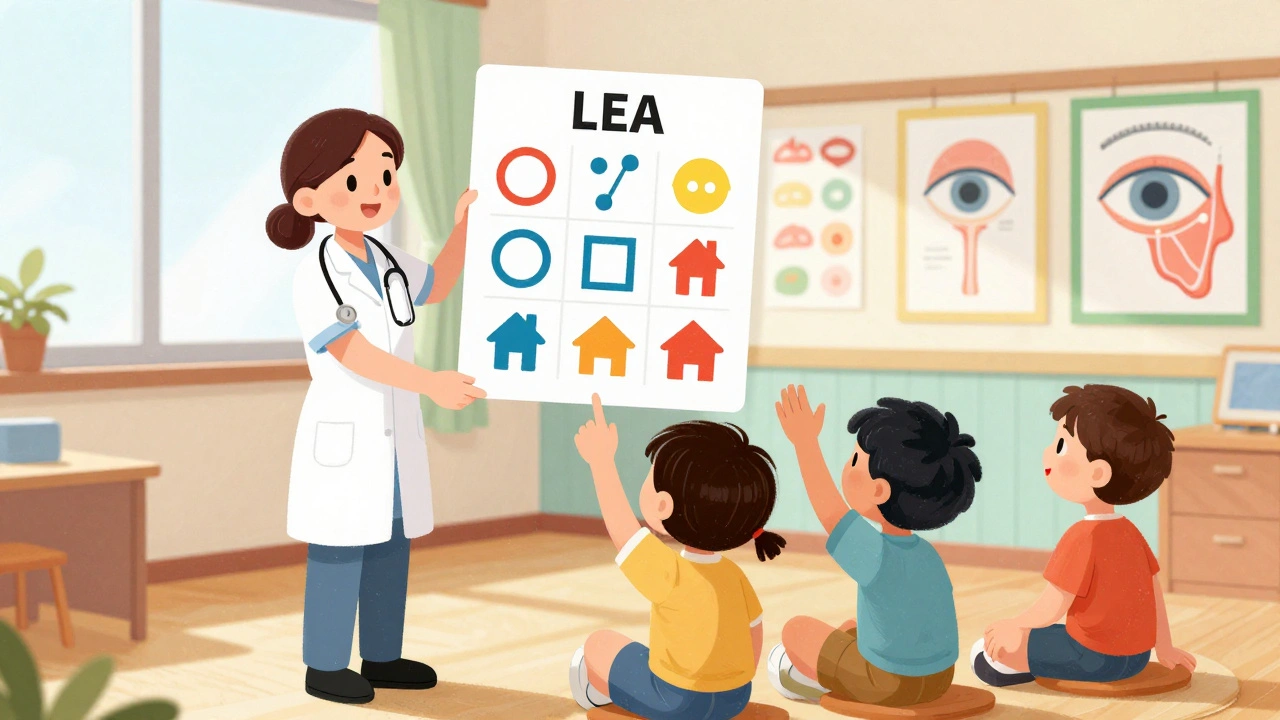
Eye charts like LEA Symbols or HOTV letters are the traditional method. Kids point to matching shapes or say what they see. They’re cheap, portable, and trusted. But they need cooperation. About 1 in 4 three-year-olds won’t sit still or understand the task. That’s why some clinics miss cases.
Instrument-based screens like the SureSight, Retinomax, or blinq™ scanner take 1-2 minutes. The child just looks at a light while the device measures how light bends through the eye. These catch refractive errors-nearsightedness, farsightedness, astigmatism-that kids can’t describe. The blinq™ scanner, cleared by the FDA in 2018, found 100% of kids with serious vision risks in a 2022 study. It’s especially useful for toddlers who won’t cooperate with charts.
But machines aren’t perfect. They sometimes flag kids who don’t need glasses-false positives. That’s why experts recommend using both methods together, especially for 3- to 4-year-olds. A child who fails a machine test should still get a chart test. A child who fails a chart test should get a machine check to confirm.
What Happens After a Failed Screen?
A failed screen doesn’t mean your child needs glasses right away. It means they need a full eye exam by a pediatric ophthalmologist or optometrist. That’s the referral step-and it’s where many families get stuck.
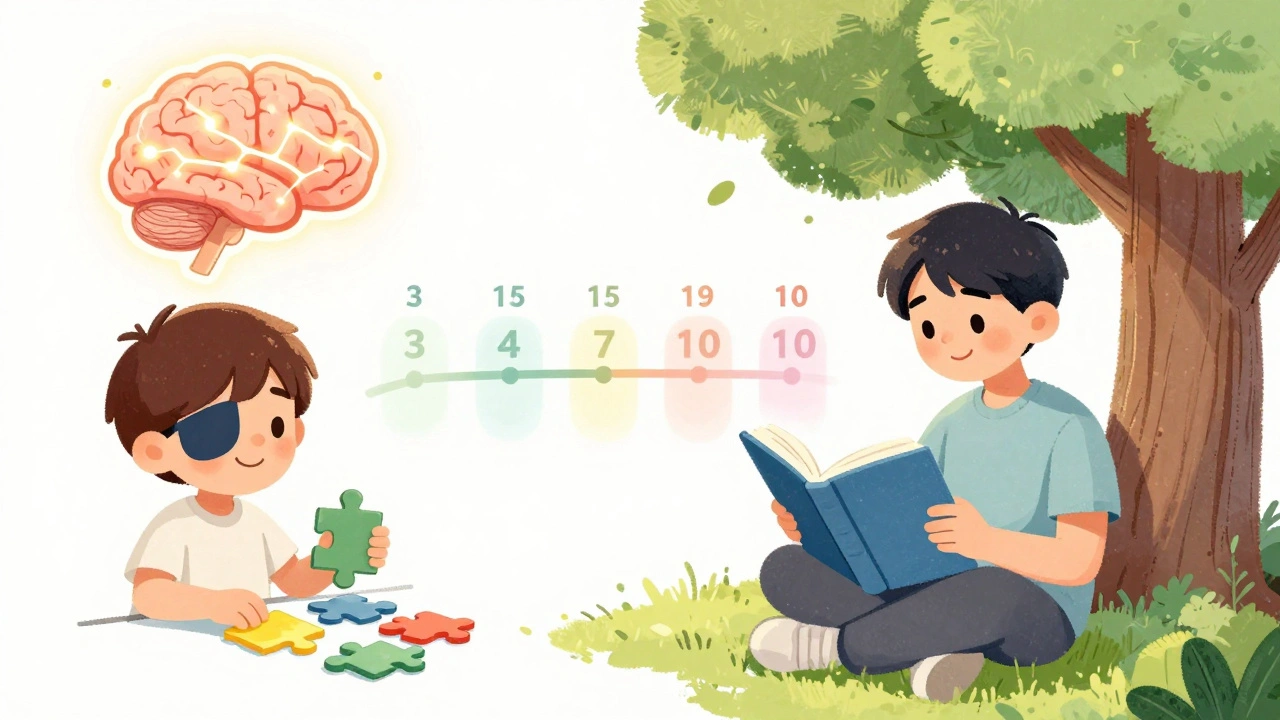
Only 40% of children who fail screening actually get follow-up care, according to studies in JAMA Ophthalmology. Why? Cost, access, or thinking it’s not urgent. But here’s the truth: if amblyopia is caught before age 5, treatment works in 80-95% of cases. Patching the good eye, using eye drops, or wearing glasses can retrain the brain. After age 8, success drops to under 50%. That’s not just a small difference-it’s the difference between seeing clearly for life or living with permanent vision loss.
Referral isn’t just a formality. It’s the turning point. Pediatricians, nurses, and even school staff need to make sure families understand this isn’t a "maybe"-it’s a "must."
Who Does the Screening, and How Do They Get Trained?
You might think only eye doctors handle this. But in reality, most screenings happen during well-child visits by pediatricians, nurses, or medical assistants. That’s why training matters.
The National Center for Children’s Vision and Eye Health (NCCVEH) offers free online training modules used by over 15,000 providers since 2016. Training takes just 2-4 hours. It covers:
- Proper chart placement (eye level, 10 feet away)
- How to test each eye separately
- Correct lighting (too dim = false negatives)
- How to interpret results without over-referring
Common mistakes? Improper distance (20% of errors), poor lighting (25% of screenings affected), and not testing each eye alone. Even small errors can mean missing a problem-or sending a healthy child for unnecessary follow-up.
Why Some Kids Get Missed-And How to Fix It
Not all children have equal access to screening. Hispanic and Black children are 20-30% less likely to get checked than white children, according to the National Survey of Children’s Health. Why? Language barriers, lack of insurance, transportation, or simply not knowing it’s part of routine care.
States are trying to fix this. Thirty-eight states require vision screening before school entry-but standards vary wildly. Some use only charts. Others use machines. Some screen at age 3. Others wait until age 5.
The solution? Uniform guidelines. The American Academy of Pediatrics and USPSTF both recommend screening all children between 3 and 5. That’s the baseline. And it should be built into every pediatric visit, not just school screenings. Medicaid programs in 47 states already cover it under the Affordable Care Act. But coverage doesn’t mean delivery. Providers need support, tools, and reminders to make it happen.
The Bigger Picture: Cost, Impact, and Future Tech
It’s not just about sight-it’s about money, learning, and life.
The USPSTF found that every dollar spent on pediatric vision screening saves $3.70 in future costs. Untreated amblyopia leads to lower academic performance, reduced job options, and higher risk of injury. In the U.S. alone, it prevents $1.2 billion in lifetime costs each year.
Technology is advancing fast. The blinq™ scanner is the first FDA-cleared AI-powered device for kids. New research shows screening can work as early as 9 months. The AAP is expected to update guidelines by 2025 to reflect this. That means even babies could be screened before they say their first word.
For now, the message is clear: screen early, screen often, and refer without delay. A child who passes screening today is far more likely to see the world clearly tomorrow.
What Parents Should Do
You don’t need to be an expert. Just ask the right questions:
- "Is my child getting a vision screening at this checkup?"
- "What method are you using-chart or machine?"
- "If they fail, what’s the next step?"
If your pediatrician doesn’t offer it, ask for a referral. Don’t wait for school. Don’t assume your child will tell you if they can’t see. Most won’t. Vision problems feel normal to them-they don’t know any different.
And if your child is referred? Go. No excuses. This isn’t a luxury. It’s the difference between seeing the ball in the park, reading the board in class, or driving a car someday-and not being able to.
Jay Everett
December 3, 2025 AT 01:38Also, the $1.2B savings stat? That’s not just numbers-that’s a kid who can read their favorite book, catch a baseball, or see their mom’s face clearly at graduation. We’re not talking about glasses here. We’re talking about brain wiring.
मनोज कुमार
December 4, 2025 AT 07:43Steve Enck
December 5, 2025 AT 22:20Laura Baur
December 7, 2025 AT 03:18Zed theMartian
December 8, 2025 AT 17:04Joel Deang
December 8, 2025 AT 21:20Arun kumar
December 10, 2025 AT 15:09Rebecca M.
December 12, 2025 AT 00:09dave nevogt
December 13, 2025 AT 07:17ATUL BHARDWAJ
December 14, 2025 AT 05:26Steve World Shopping
December 15, 2025 AT 20:38Roger Leiton
December 17, 2025 AT 16:40Ella van Rij
December 19, 2025 AT 14:29Also, I love how this post makes it sound like every parent who didn’t know about this is a negligent monster. Maybe some of us are just… tired? And didn’t have the luxury of reading 2000 words about pediatric optometry at 3am?
Jack Dao
December 21, 2025 AT 11:03