
Senior Medications: Safe Choices, Common Risks, and What You Need to Know
When you’re over 65, senior medications, drugs prescribed or taken by older adults to manage chronic conditions like high blood pressure, diabetes, or arthritis. Also known as geriatric medications, they’re not just about treating illness—they’re about keeping daily life possible without dangerous side effects. The body changes with age. Kidneys slow down. The liver processes drugs differently. Stomach acid drops. What was safe at 40 can become risky at 70. That’s why senior medications need special care—not more pills, but smarter ones.
One of the biggest dangers? drug interactions, when two or more medications react in harmful ways inside the body. For example, combining an ACE inhibitor, a common blood pressure drug with a potassium-sparing diuretic, a type of water pill that keeps potassium in the body can spike potassium levels dangerously high. That’s not a theory—it’s a real risk that leads to heart rhythm problems. And it’s not rare. Studies show over 40% of seniors take five or more meds daily. Each extra pill adds another chance for something to go wrong.
Then there’s the quiet killer: acetaminophen, the active ingredient in Tylenol and hundreds of other pain relievers. Most people think it’s harmless. But if you have liver disease—or even mild liver damage from years of drinking or taking other meds—normal doses can cause serious harm. One pill too many, and your liver can start shutting down. And because seniors often take multiple products with hidden acetaminophen, they don’t even realize they’re overdosing.
And let’s talk about pravastatin, a statin used to lower cholesterol in older adults. It’s one of the few statins that’s easier on muscles and has fewer interactions than others like simvastatin or atorvastatin. That’s why doctors often pick it for seniors. But even safe drugs need monitoring. Muscle pain, fatigue, dark urine—these aren’t just "getting older." They could be signs your body can’t handle the dose anymore.
It’s not just about the pills. It’s about medication adherence, how well someone sticks to their prescribed treatment plan. A senior might forget to take a pill. Or skip it because it’s expensive. Or stop because it makes them dizzy. And then they end up back in the hospital. Adherence isn’t about willpower—it’s about simplifying. Using pill organizers. Setting phone alarms. Talking to your pharmacist about cheaper generics. These small things keep people out of the ER.
What you’ll find below isn’t a list of every drug ever made for older adults. It’s a focused collection of real, urgent issues that affect seniors every day. From fake pills that look like real ones, to how to read OTC labels without getting confused, to why mixing antidepressants with alcohol is a bad idea even if you’re just having one glass. These aren’t theoretical concerns. These are stories from real patients. And the answers? They’re practical, clear, and built to help you—or someone you care about—stay safe, healthy, and in control.
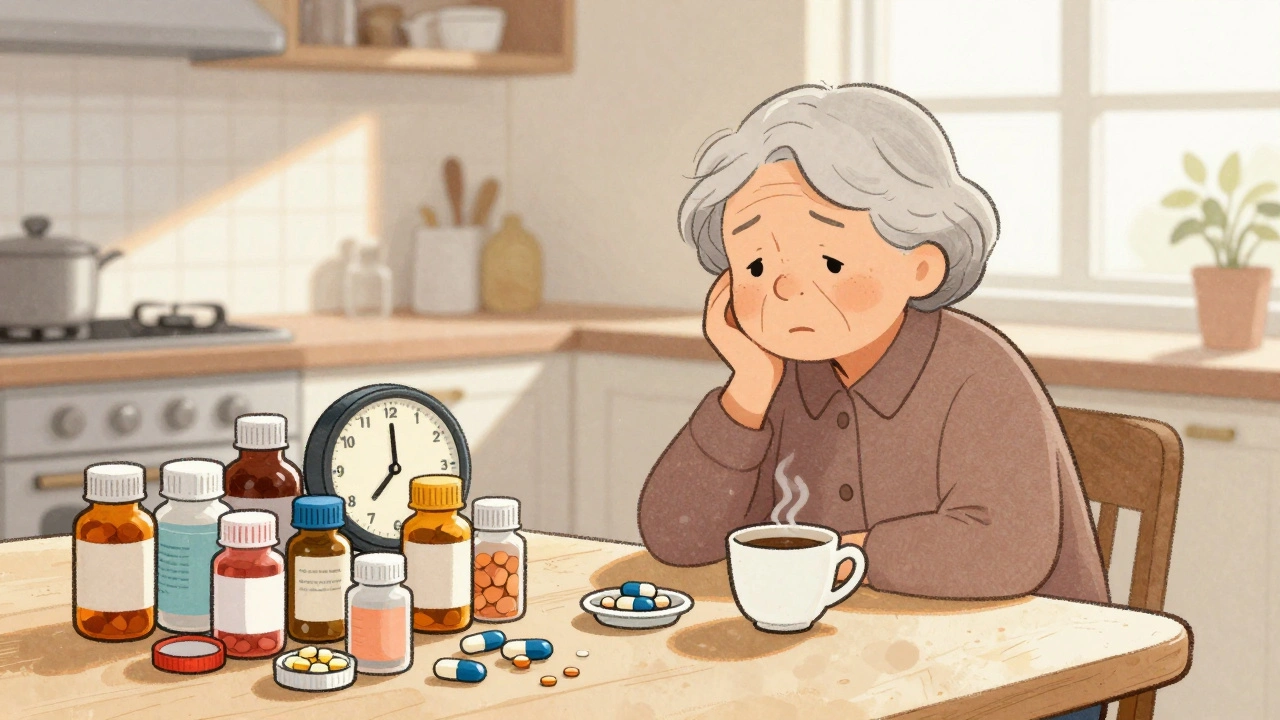
How to Reduce Pill Burden with Combination Medications for Seniors
Combination medications reduce pill burden for seniors by combining multiple drugs into one tablet, improving adherence, lowering blood pressure, and cutting healthcare costs. Learn how they work and when they're right for you.