
Potassium-Sparing Diuretics: What They Are, How They Work, and Who Needs Them
When your body holds onto too much fluid, it can raise blood pressure, swell your legs, or make heart failure worse. That’s where potassium-sparing diuretics, a type of medication that helps your kidneys remove excess water without flushing out potassium. Also known as K-sparing diuretics, they’re often used when other diuretics cause low potassium levels that can lead to muscle cramps, irregular heartbeat, or fatigue. Unlike loop or thiazide diuretics that make you lose potassium, these drugs let your body keep it—making them a smart choice for people with heart disease, kidney issues, or those already on meds that lower potassium.
They’re not magic bullets. These drugs work slowly, and they don’t remove as much fluid as stronger diuretics. That’s why they’re usually paired with other diuretics—not as a standalone fix. For example, someone with heart failure might take a low dose of furosemide (a loop diuretic) along with spironolactone (a potassium-sparing one) to get the fluid out without crashing their potassium. Spironolactone and eplerenone are the most common ones, and both block a hormone called aldosterone that tells your kidneys to hang onto salt and water. Amiloride and triamterene are other types that work differently but have the same goal: keep the potassium in.
But they’re not risk-free. If your kidneys aren’t working well, or you’re taking ACE inhibitors, NSAIDs, or potassium supplements, you could end up with too much potassium—something called hyperkalemia. That can be dangerous, even life-threatening. That’s why your doctor will check your blood levels regularly, especially when you start or change doses. These drugs are also used in people with liver scarring (cirrhosis) or a hormone condition called primary aldosteronism, where the body makes too much aldosterone on its own.
What you’ll find below are real, practical articles that connect directly to how potassium-sparing diuretics fit into daily health. You’ll read about how they interact with other meds like warfarin or statins, how they affect kidney function in older adults, and why some people need them more than others. There’s no fluff—just clear info on when they help, when they don’t, and what you need to watch for. Whether you’re managing high blood pressure, heart failure, or just trying to understand why your doctor picked this specific pill, these posts give you the facts without the jargon.
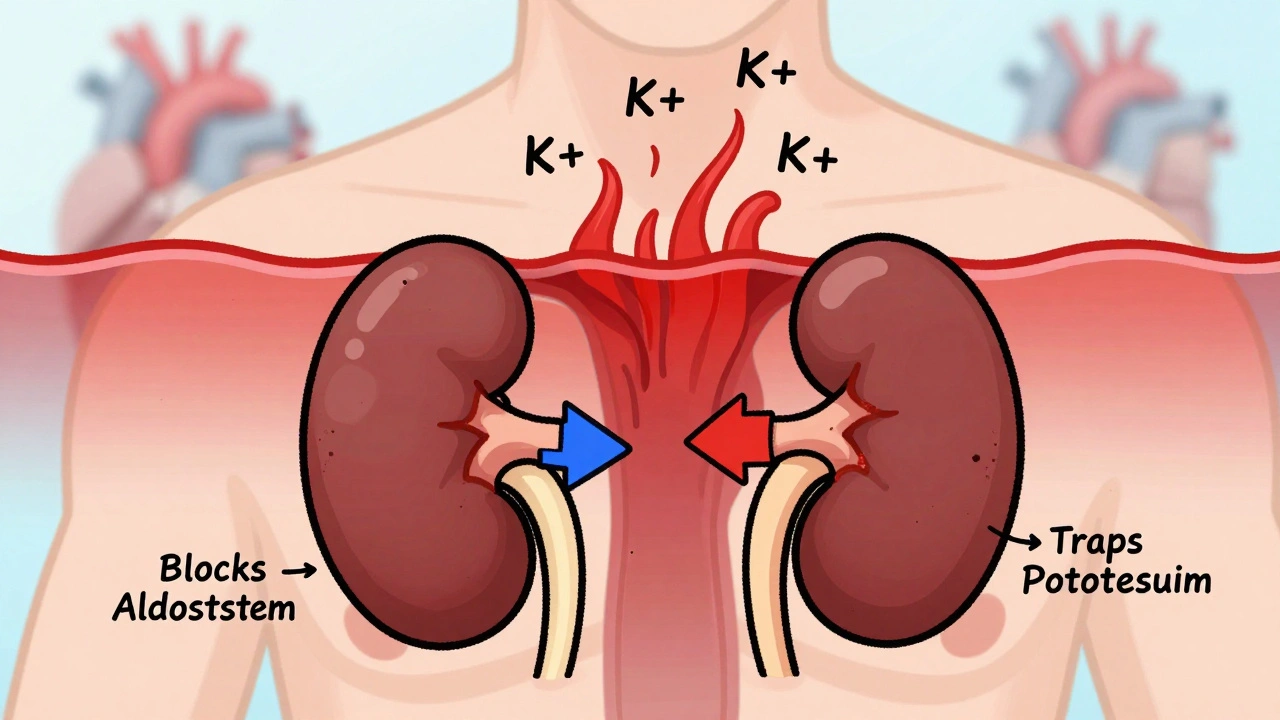
ACE Inhibitors and Potassium-Sparing Diuretics: Understanding the Hyperkalemia Risk
Combining ACE inhibitors and potassium-sparing diuretics can dangerously raise potassium levels, leading to life-threatening heart rhythms. Learn who's at risk, how to monitor, and what to do if levels climb.