
Pill Burden: How Too Many Medications Affect Your Health and Daily Life
When you're managing multiple health conditions, pill burden, the physical and mental weight of taking many medications daily. Also known as polypharmacy, it's not just a number—it's a daily grind that can break your routine, mess with your memory, and even make you sicker. It's not uncommon for someone with diabetes, high blood pressure, and arthritis to be on seven or eight pills a day. Add in supplements, pain relievers, and sleep aids, and you're staring at a handful of pills before breakfast. This isn't just inconvenient—it's risky.
Every extra pill increases the chance of a drug interaction, when two or more medications react in harmful ways inside your body. For example, mixing an ACE inhibitor with a potassium-sparing diuretic can spike your potassium to dangerous levels. Or taking acetaminophen with liver disease might cause hidden damage you won’t feel until it’s too late. Even something as simple as antidepressants and alcohol can lower your mood instead of lifting it. These aren’t rare edge cases—they show up again and again in real lives. And when you’re juggling pills, it’s easy to miss a dose, double up, or take something at the wrong time. That’s where medication adherence, how consistently you take your drugs as prescribed starts to slip. Cost, side effects, confusion over labels, and sheer exhaustion all chip away at your ability to stick to the plan.
The real problem isn’t the medicines themselves—it’s the system. Doctors prescribe based on guidelines, pharmacists fill the scripts, and patients are left to untangle the mess. But you don’t have to accept this as normal. You can ask: "Can any of these be stopped?" "Is there a combo pill?" "What happens if I skip this one?" The goal isn’t to take fewer pills for the sake of it—it’s to take only what truly improves your life. The articles below show you how real people have cut down their pill count, avoided dangerous mix-ups, read labels clearly, and regained control without giving up their health. You’ll see how pharmacists help prescribers choose generics, how OTC labels hide risks you never noticed, and why even one extra pill can tip the balance. This isn’t about being perfect. It’s about being smart, informed, and in charge.
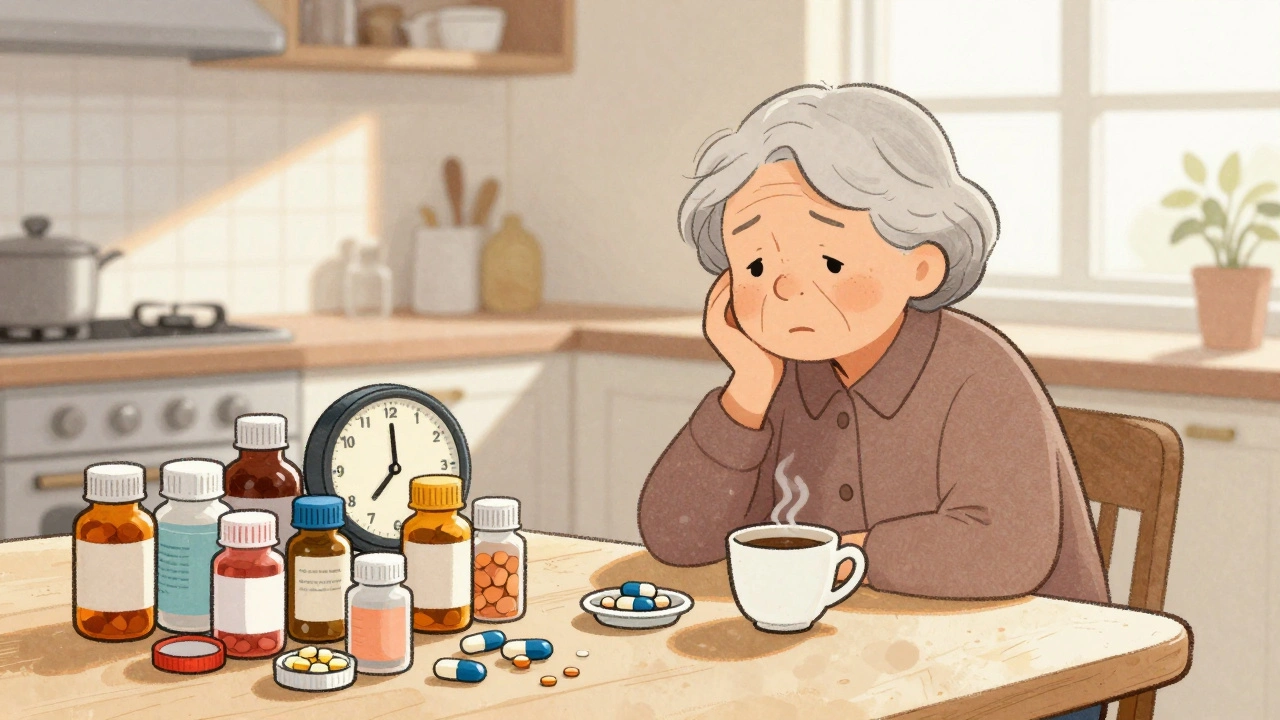
How to Reduce Pill Burden with Combination Medications for Seniors
Combination medications reduce pill burden for seniors by combining multiple drugs into one tablet, improving adherence, lowering blood pressure, and cutting healthcare costs. Learn how they work and when they're right for you.