
Peanut Allergy Prevention: What Works, What Doesn’t, and How to Stay Safe
When it comes to peanut allergy prevention, the strategy for reducing peanut allergies in children has completely flipped in the last 20 years. Also known as early peanut introduction, this approach now recommends giving infants peanut-containing foods as early as 4 to 6 months — not avoiding them. Back in the 90s, doctors told parents to keep peanuts away from kids until age three. That advice didn’t work. In fact, peanut allergies kept rising. Now we know: delaying exposure doesn’t protect kids — it makes allergies more likely.
The landmark LEAP study (Learning Early About Peanut Allergy) changed everything. Researchers found that babies at high risk for peanut allergy — those with severe eczema or egg allergy — who ate peanut butter or peanut powder regularly between 4 and 11 months had an 80% lower chance of developing a peanut allergy by age five. This wasn’t a small trend. It was a game-changer. Today, the American Academy of Pediatrics, the NIH, and the FDA all agree: early and regular exposure is key. But it’s not just about giving a spoonful of peanut butter. You need to know anaphylaxis, a sudden, life-threatening allergic reaction that can cause trouble breathing, swelling, and a drop in blood pressure signs and how to respond. That’s why many pediatricians now recommend first peanut exposure under medical supervision for high-risk infants.
It’s not just about babies, either. Parents of older kids with mild reactions or unclear histories need to know the difference between a true allergy and a false alarm. Skin tests and blood tests can be misleading — they show sensitivity, not always clinical allergy. An oral food challenge, done in a clinic with a doctor watching, is still the gold standard. And if your child already has a peanut allergy, food allergy guidelines, including strict avoidance, carrying epinephrine, and reading labels every time are non-negotiable. Even trace amounts can trigger a reaction. Cross-contamination in kitchens, restaurants, and schools is a real threat.
What about siblings? If one child has a peanut allergy, should you avoid peanuts for the others? Not anymore. Studies show that introducing peanuts early to siblings — even before they show any signs — can cut their risk dramatically. The same goes for kids with eczema or other food allergies. The pattern is clear: early, consistent exposure builds tolerance. Waiting only increases risk.
And here’s the catch: it’s not enough to give peanut once. You need to keep giving it. Regular exposure — about 2 to 3 times a week — is what keeps the immune system trained not to overreact. A single taste test at six months won’t cut it. This isn’t a one-time fix. It’s a habit. And that’s where most parents struggle. They’re scared. They’ve heard stories. They worry about choking, about reactions, about doing it wrong. But the science is loud and clear: the risk of not doing it is far greater than the risk of doing it right.
Below, you’ll find real-world advice from parents who’ve navigated this, doctors who’ve studied it, and emergency protocols that could save a life. You’ll see how peanut allergy prevention connects to broader food allergy trends, how to safely introduce peanuts at home, and what to do if things go wrong. This isn’t theory. It’s practice. And it’s changing how families live.
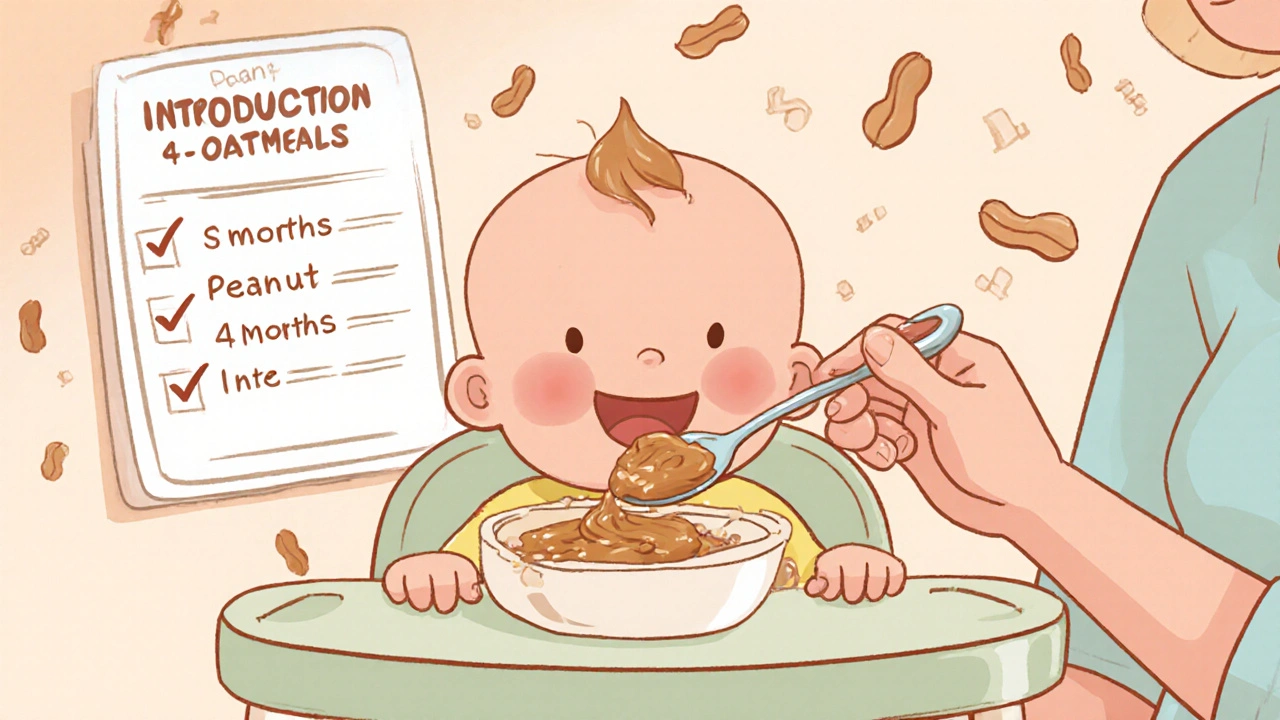
Peanut Allergy Prevention: When and How to Introduce Peanuts to Infants
Learn how early peanut introduction can prevent peanut allergy in infants, based on the latest NIAID guidelines. Discover the science behind LEAP study results, safe methods, risk levels, and what to avoid.