
Kidney Disease in African Ancestry: Risks, Medications, and What You Need to Know
When it comes to kidney disease, a condition where the kidneys lose their ability to filter waste and fluid from the blood. It's not just a health issue—it's a disparity. People of African ancestry are up to three times more likely to develop kidney failure than others, and it often shows up younger and progresses faster. This isn't random. It's tied to higher rates of hypertension, chronic high blood pressure that damages blood vessels in the kidneys over time, which is the top cause of kidney failure in this group. Genetics play a role too—certain variants like APOL1 increase risk, and they’re more common in people with West African roots.
That’s why ACE inhibitors, a class of blood pressure drugs that protect kidney function by reducing pressure inside the filtering units are often the first-line treatment. But here’s the catch: they can raise potassium levels, especially when paired with certain diuretics. That’s where hyperkalemia, dangerously high potassium in the blood that can trigger irregular heartbeats becomes a real concern. Many people don’t realize that what’s meant to protect their kidneys can also put their heart at risk if not monitored. Regular blood tests aren’t optional—they’re life-saving.
It’s not just about drugs. Diet, access to care, and delays in diagnosis all stack up. A person with kidney disease in this group might wait longer for a specialist, get less aggressive treatment, or be prescribed meds that don’t match their needs. But knowing your risks changes the game. If you have high blood pressure, diabetes, or a family history of kidney failure, you need to be proactive. Ask for urine tests for protein, check your eGFR, and push back if your doctor dismisses symptoms as "just aging."
What You’ll Find in This Collection
Below are real, practical guides from people who’ve been there. You’ll see how ACE inhibitors and potassium-sparing diuretics interact, why some meds are safer than others for African ancestry patients, and how to avoid hidden dangers like accidental overdose or ignored warning signs. No fluff. No theory. Just what works when your kidneys are under stress and your life depends on getting it right.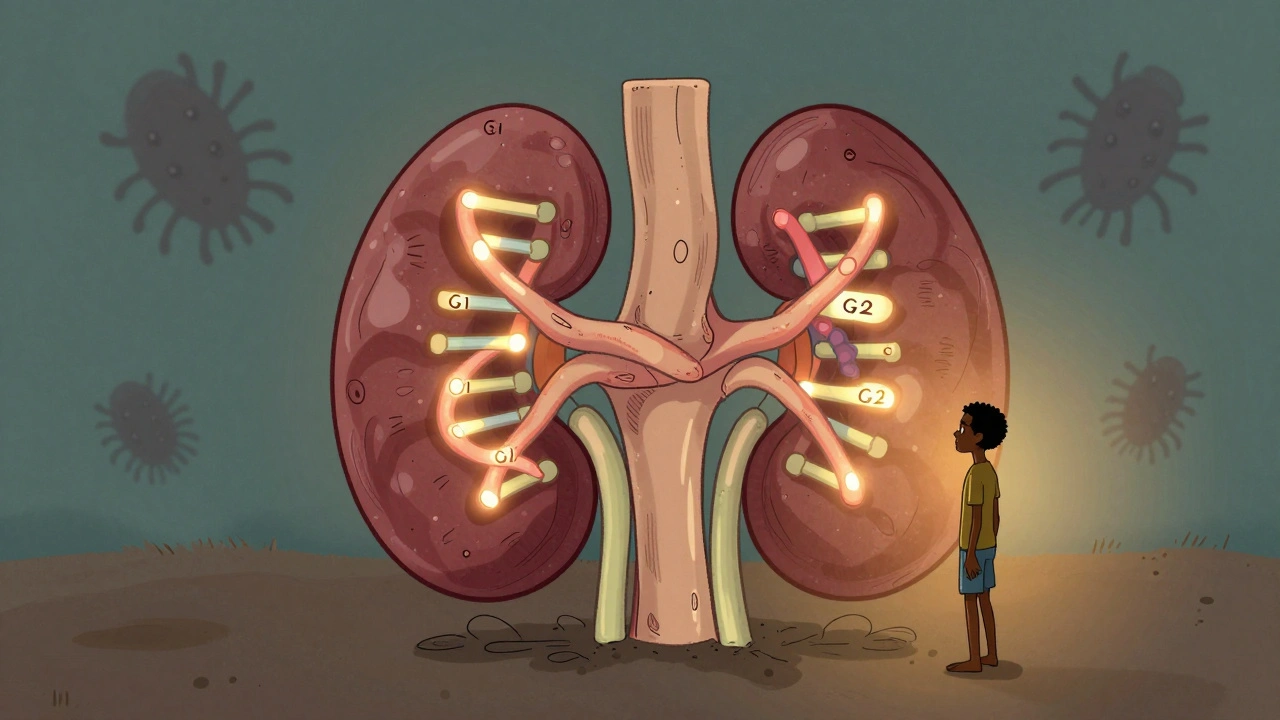
APOL1 Genetic Risk: Understanding Kidney Disease in African Ancestry
APOL1 genetic variants explain most of the higher kidney disease risk in people with African ancestry. Learn how these genes work, who should be tested, and what steps can protect kidney health.