
Hyperkalemia: What It Is, Why It Matters, and How It Connects to Your Medications
When your blood holds too much potassium, a mineral that helps your heart and muscles work properly. Also known as high potassium, it’s not something you feel until it’s already dangerous—like a silent alarm for your heart. Hyperkalemia isn’t a disease on its own. It’s a warning sign, often tied to how your kidneys are working, what meds you’re taking, or both. Many people don’t know they have it until they have an abnormal ECG or end up in the ER. That’s because symptoms are vague: muscle weakness, a fluttering heart, or just feeling off. But when potassium climbs above 5.5 mmol/L, your heart rhythm can go haywire—and that’s life-threatening.
It’s not just about eating too many bananas. The real culprits are often kidney disease, a condition where kidneys can’t filter out extra potassium, or drugs like ACE inhibitors, ARBs, or spironolactone—medications many take for high blood pressure or heart failure. Even over-the-counter salt substitutes can sneak in extra potassium. If you’re on multiple meds, especially with reduced kidney function, you’re at higher risk. That’s why doctors check potassium levels regularly in people with diabetes, heart disease, or chronic kidney disease. It’s not a one-time test—it’s part of ongoing care.
And here’s what matters most: medication interactions, how one drug changes how another behaves in your body can push potassium levels into danger zones without you realizing it. For example, combining a diuretic that saves potassium with an ACE inhibitor? That’s a common combo that can backfire. Or taking NSAIDs like ibuprofen while on a blood pressure med? That can reduce kidney function just enough to let potassium build up. It’s not about avoiding meds—it’s about knowing how they work together. That’s why pharmacists now flag these risks during refill reviews, and why your doctor needs to know every pill you take, even herbal ones.
What you’ll find in the articles below isn’t just theory. These are real-world stories of how people manage high potassium without giving up their essential treatments. You’ll see how kidney health ties into drug safety, how common medications can quietly raise your risk, and what steps actually work to keep potassium in check—without drastic diets or panic. No fluff. Just clear connections between what you take, how your body responds, and what to watch for before it’s too late.
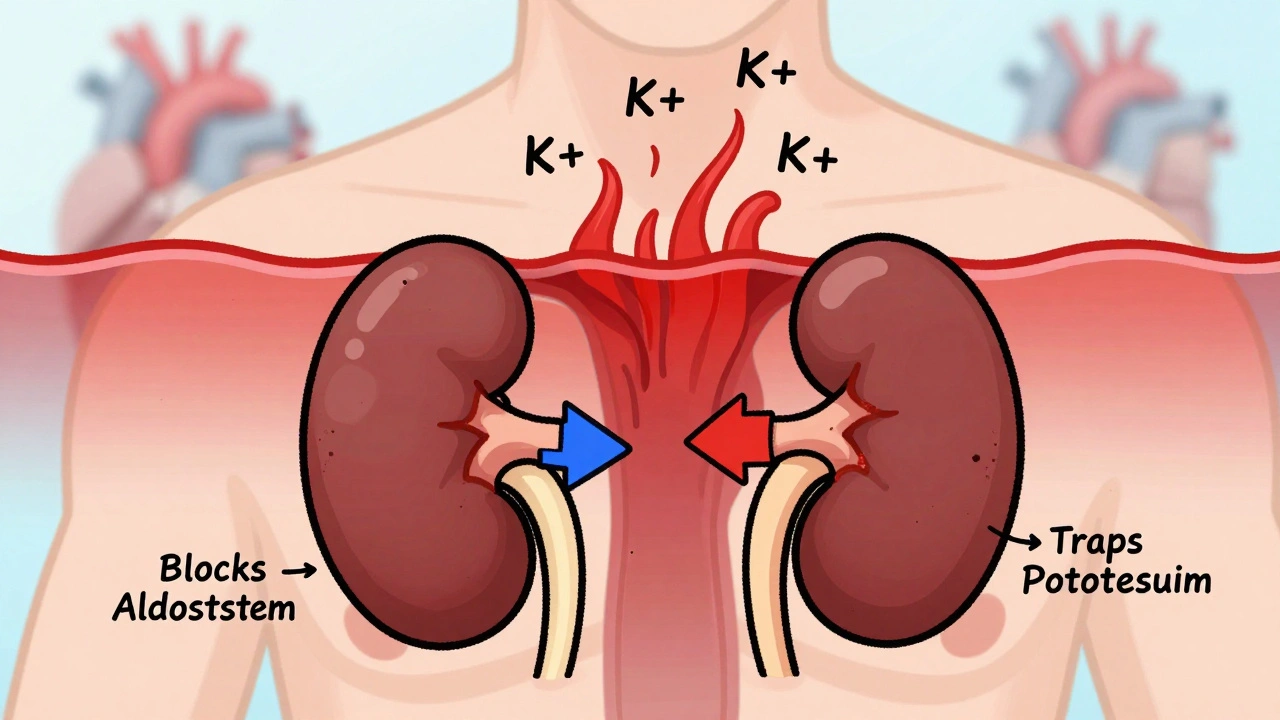
ACE Inhibitors and Potassium-Sparing Diuretics: Understanding the Hyperkalemia Risk
Combining ACE inhibitors and potassium-sparing diuretics can dangerously raise potassium levels, leading to life-threatening heart rhythms. Learn who's at risk, how to monitor, and what to do if levels climb.