
HIV Drug Interactions: What You Need to Know About Medication Risks
When you’re taking HIV drug interactions, the unintended effects that occur when HIV medications react with other drugs, supplements, or substances. Also known as HIV medication conflicts, these interactions can lower the effectiveness of your treatment or lead to dangerous side effects like liver damage, heart rhythm problems, or toxic buildup in your body. Unlike some medications that are safe to mix casually, HIV drugs—especially antiretroviral therapy, the combination of drugs used to suppress HIV and prevent progression to AIDS—are highly sensitive to what else you take. Even something as simple as an over-the-counter painkiller, a herbal supplement, or grapefruit juice can throw off your entire treatment plan.
Many people on HIV treatment also manage other conditions—like high blood pressure, depression, or diabetes—and that’s where things get risky. For example, some HIV medications, specific drugs like protease inhibitors and non-nucleoside reverse transcriptase inhibitors that target different stages of the HIV life cycle slow down how your liver breaks down other drugs. This means those other drugs can build up to unsafe levels in your blood. On the flip side, some medications can make HIV drugs break down too fast, leaving you with not enough of the drug to control the virus. This isn’t theoretical—it’s why pharmacists check every new prescription for people on HIV therapy. Even common things like St. John’s wort, certain antibiotics, or acid reducers can interfere. And it’s not just pills: alcohol, recreational drugs, and even some energy drinks can mess with how your body handles these medications.
What makes this even more urgent is that HIV treatment is lifelong. You can’t afford to have your meds work less well over time because of an unnoticed interaction. That’s why knowing your exact drug names, keeping a list of everything you take—including vitamins and CBD—and talking to your pharmacist before trying anything new is non-negotiable. The goal isn’t just to keep the virus under control—it’s to keep you healthy, alive, and free from preventable complications. Below, you’ll find real-world examples of how these interactions play out, what to avoid, and how to spot warning signs before it’s too late.
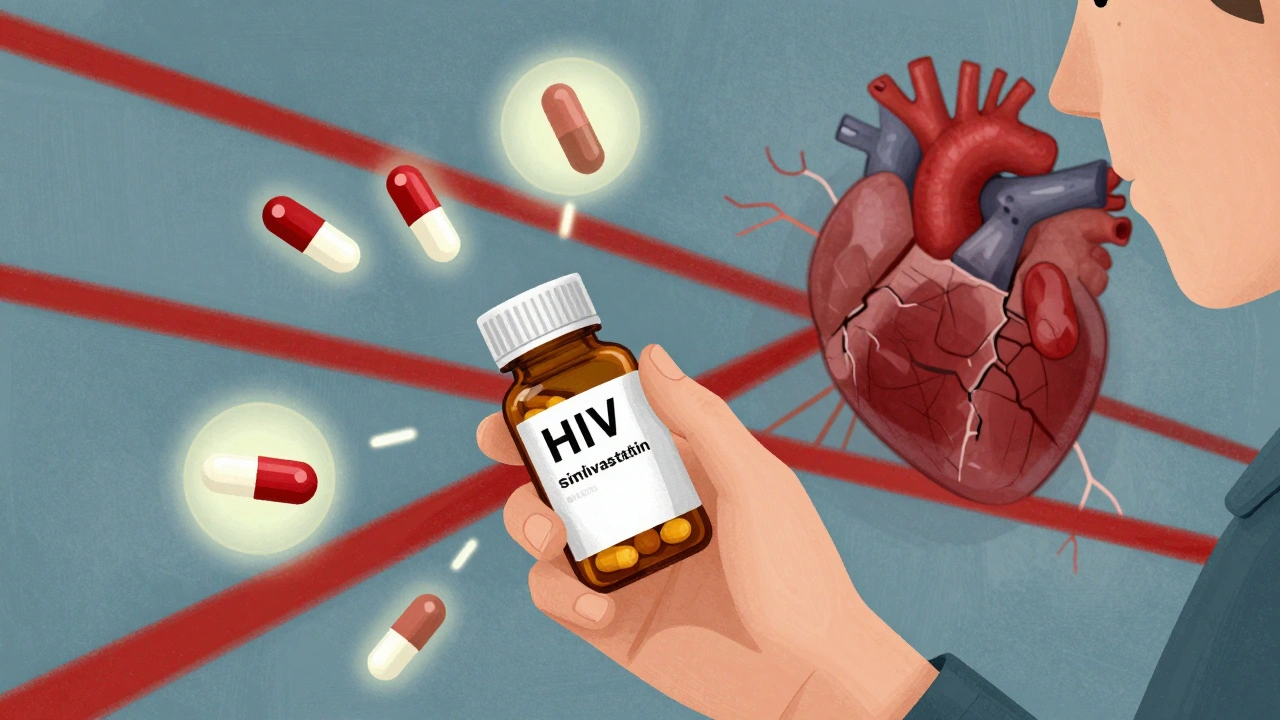
Antiretroviral Therapy and Common Medications: High-Risk Interactions You Can't Ignore
Antiretroviral therapy can interact dangerously with common medications like statins, steroids, and painkillers. Learn which combinations are life-threatening and how to stay safe with HIV treatment.