
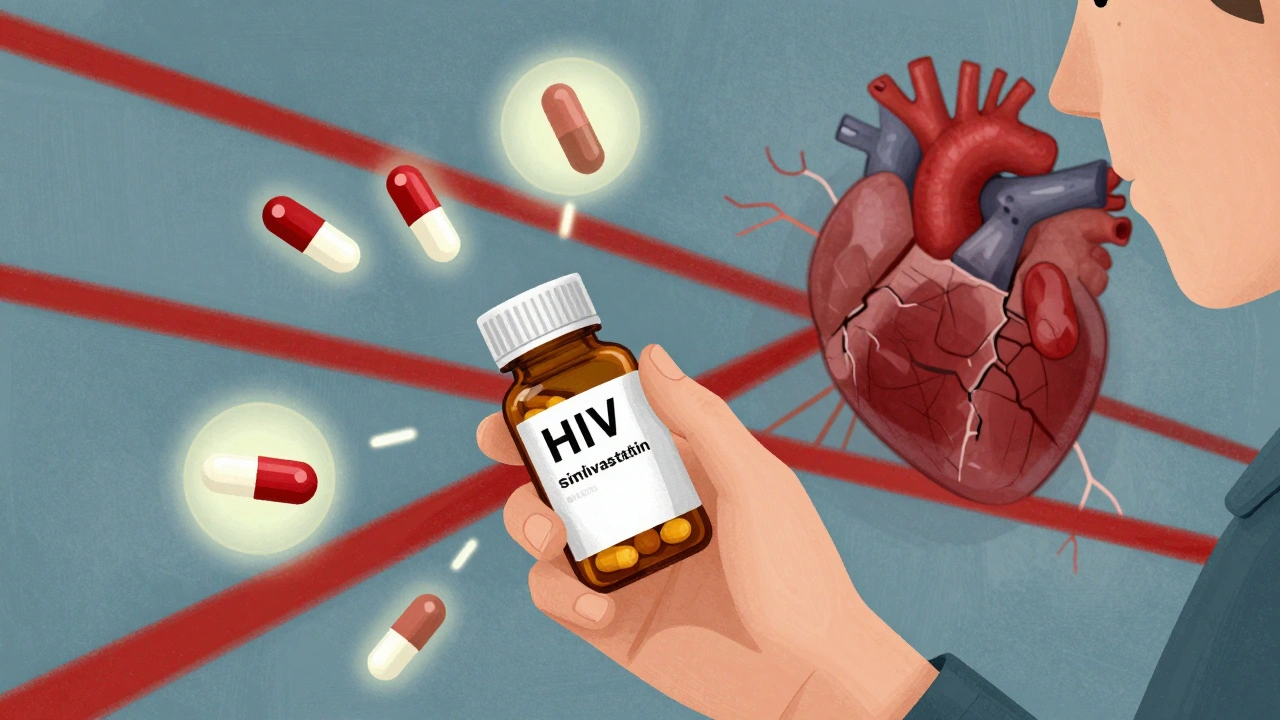
When you’re on antiretroviral therapy (ART) for HIV, taking a few extra pills for high blood pressure, cholesterol, or even a common cold can turn dangerous. It’s not just about forgetting a dose-it’s about what happens when those pills talk to each other inside your body. Some combinations can cause your heart to fail, your muscles to break down, or your liver to shut down. And most people don’t even know it’s happening until it’s too late.
Why ART Interactions Are Different
Not all drugs interact the same way. Antiretrovirals are especially tricky because they’re designed to work at very specific levels in your blood. Too little, and the virus comes back. Too much, and you get poisoned. The problem isn’t the HIV meds themselves-it’s how they mess with your body’s natural drug-processing system. Most ART drugs are processed by an enzyme called CYP3A4. Think of it like a factory worker that breaks down medicines so your body can get rid of them. Some HIV drugs, like ritonavir and cobicistat, don’t just use this factory-they shut it down completely. Others, like efavirenz, turn it on full blast. That means any other drug you take-whether it’s a statin, a painkiller, or a supplement-gets either trapped in your system or flushed out too fast. This isn’t theoretical. A 2022 study found that nearly 4 out of 10 people with HIV over 50 are taking five or more medications. That’s a recipe for disaster if you don’t know what’s interacting with what.The Worst Offenders: Boosted PIs and Their Dangerous Partners
Protease inhibitors (PIs), especially when boosted with ritonavir or cobicistat, are the most dangerous in terms of interactions. Ritonavir alone has over 200 documented interactions. Cobicistat isn’t much better. Simvastatin and lovastatin-two common cholesterol drugs-are absolutely off-limits. When taken with ritonavir, their levels can spike 20 to 30 times higher than normal. That doesn’t just mean muscle pain. It means rhabdomyolysis: your muscles literally start dissolving, clogging your kidneys, and possibly killing you. The HHS Guidelines call this combination “contraindicated,” meaning no doctor should ever prescribe them together. Inhaled steroids like fluticasone (used for asthma and allergies) are another silent killer. With ritonavir, they don’t just stay in your lungs-they flood your bloodstream. That can lead to Cushing’s syndrome: weight gain, moon face, high blood sugar, and adrenal failure. One study found that 17% of patients on boosted PIs who used inhaled steroids ended up hospitalized. Erectile dysfunction drugs like avanafil (Spedra) are completely banned with ritonavir or cobicistat. Even sildenafil (Viagra) needs a drastic dose cut-from 100mg down to 25mg every 48 hours. Take the full dose, and you risk sudden, dangerous drops in blood pressure.INSTIs: The Safer Alternative?
Integrase strand transfer inhibitors (INSTIs) like dolutegravir and bictegravir are now the first-line treatment for most people with HIV. Why? Because they barely touch CYP3A4. Bictegravir has only 7 major interactions. Dolutegravir has about 8. That’s a massive drop from ritonavir’s 217. But don’t get complacent. Dolutegravir still messes with metformin, a common diabetes drug. It lowers metformin levels by 33%, which can make your blood sugar harder to control. And bictegravir? It crashes when you take rifampin (a TB drug), dropping its concentration by 71%. That’s enough to let HIV rebound. So while INSTIs are safer, they’re not interaction-free. You still need to check every new medication-even if your doctor says, “This one’s fine.”
The Hidden Culprits: Supplements, Herbs, and Recreational Drugs
Most people think only prescription drugs matter. They’re wrong. St. John’s Wort-a popular herbal remedy for depression-is a CYP3A4 inducer. It can slash efavirenz levels by half. That means your HIV treatment stops working. One patient I read about went from undetectable to viral load over 100,000 in six weeks after starting St. John’s Wort. Ketamine, sometimes used recreationally or for depression, becomes much stronger and lasts longer when mixed with ritonavir. The liver can’t break it down, so it builds up. That increases the risk of hallucinations, high blood pressure, and even seizures. Even over-the-counter painkillers like ibuprofen or naproxen can be risky. While they don’t directly interact with ART, they’re often taken with statins or blood pressure meds-which do interact. Add it all up, and you’ve got a cocktail you didn’t even know you were drinking.What You Should Do Right Now
If you’re on ART, here’s what you need to do:- Make a full list of everything you take: prescriptions, OTC meds, vitamins, herbal supplements, and even occasional recreational drugs.
- Go to the University of Liverpool HIV Drug Interactions Checker (yes, it’s free and public) and plug in every drug on your list.
- Bring that list to every doctor visit-your HIV specialist, your GP, your cardiologist, your dentist.
- If you’re on a boosted PI, ask if switching to dolutegravir or bictegravir is possible. The benefits are huge.
- Never start or stop a supplement without checking. Even “natural” doesn’t mean safe.
What Happens When You Don’t Check
A 68-year-old man in Ohio was on darunavir/ritonavir for HIV. He also took simvastatin for cholesterol. He didn’t know the two couldn’t be combined. After three months, he developed severe muscle pain, dark urine, and kidney failure. He spent six weeks in the hospital. His HIV was still controlled-but his body nearly gave out. Another woman in Florida was on dolutegravir and metformin. Her blood sugar started climbing. Her endocrinologist blamed her diet. It wasn’t until her HIV doctor checked her meds that they realized dolutegravir was lowering her metformin levels. A simple dose adjustment fixed it. These aren’t rare cases. They’re happening every day.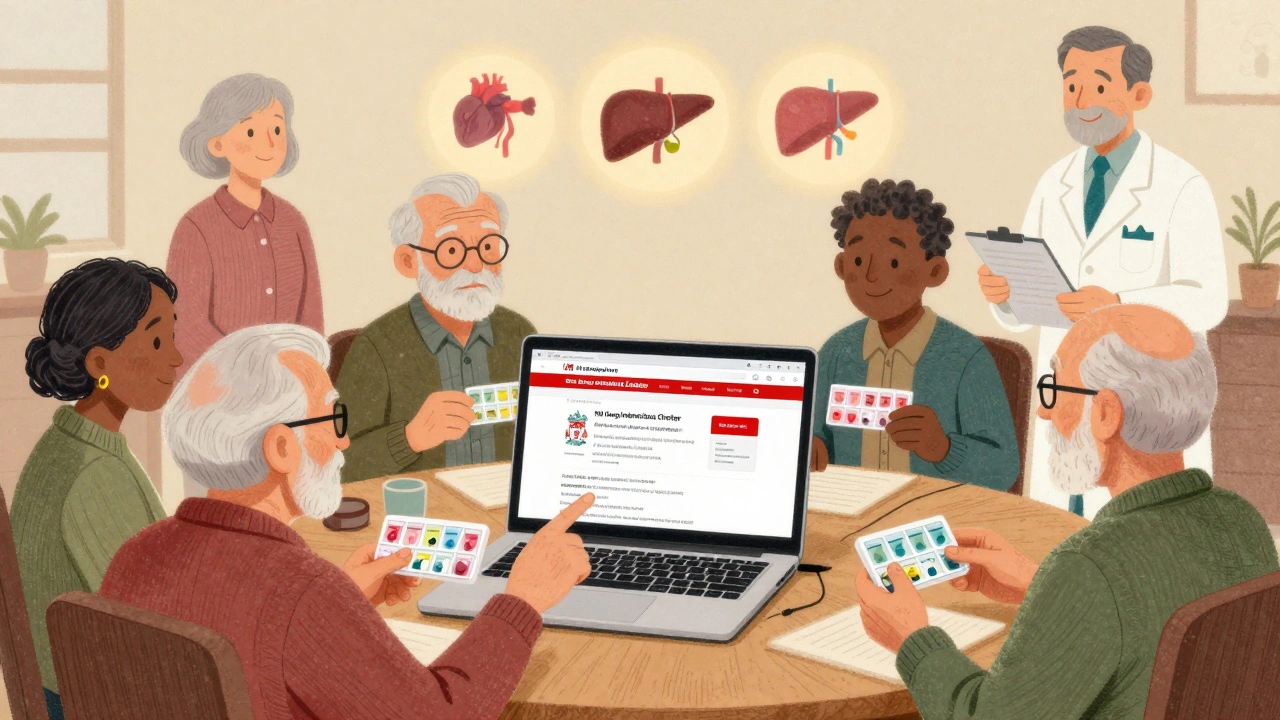
The Bigger Picture: Aging With HIV
More than half of people living with HIV in the U.S. are now over 50. That means more heart disease, more diabetes, more arthritis, more depression-and more meds. Each extra pill increases your interaction risk by 18%. Each year since your diagnosis adds another 7%. The old model-take one pill, live well-is outdated. Today, managing HIV means managing a web of drugs. And that web gets more tangled every year. That’s why new HIV drugs like lenacapavir (given every six months) are so important. They don’t rely on CYP3A4. They’re designed to play nice with other meds. The NIH is investing $12.7 million in 2024 to develop even cleaner drugs. The goal? By 2030, the next generation of ART will have 80% fewer dangerous interactions. But we’re not there yet. Right now, your safety depends on you knowing what you’re taking-and asking the right questions.What to Ask Your Doctor
Don’t wait for them to bring it up. Ask:- “Is this new medication safe with my HIV drugs?”
- “Could this cause muscle pain, liver issues, or dizziness?”
- “Is there a version of this drug that doesn’t interact with ART?”
- “Should I switch from my current regimen to something safer?”
Living with HIV doesn’t mean giving up on other health needs. But it does mean being smarter about how you manage them. Your life depends on it.
Can I take ibuprofen with antiretroviral therapy?
Yes, ibuprofen is generally safe with most antiretrovirals. But it’s not risk-free. If you’re also taking statins, blood pressure meds, or kidney-affecting drugs, ibuprofen can worsen side effects like high blood pressure or kidney strain. Always check your full list of medications with a pharmacist or HIV specialist before using it regularly.
Is it safe to take St. John’s Wort with HIV meds?
No. St. John’s Wort is a strong inducer of CYP3A4 and can reduce levels of efavirenz, nevirapine, and some PIs by up to 60%. This can cause HIV to rebound and lead to drug resistance. Even if you feel fine, stopping your HIV treatment-even briefly-can have long-term consequences. Never take it without checking with your HIV provider.
What’s the safest statin to take with ART?
Pitavastatin and fluvastatin are the safest options for people on protease inhibitors. Simvastatin and lovastatin are absolutely contraindicated. Atorvastatin can be used at lower doses with caution, but it still carries risk. Always start low and monitor for muscle pain or dark urine. Your doctor should check your CK levels regularly if you’re on any statin with ART.
Can I use Viagra if I’m on HIV meds?
You can, but only if you’re not on ritonavir or cobicistat. If you are, sildenafil (Viagra) must be limited to 25mg every 48 hours. If you’re on an INSTI like dolutegravir, you can usually take the full 50-100mg dose safely. Never take avanafil (Spedra) with a boosted PI-it’s dangerous. Always tell your doctor which HIV meds you’re on before getting a prescription.
Why do some HIV drugs cause Cushing’s syndrome?
Boosted protease inhibitors like ritonavir block the breakdown of steroid medications. When you use inhaled steroids like fluticasone, they’re meant to stay in your lungs. But with ritonavir, they leak into your bloodstream and act like high-dose oral steroids. This can cause weight gain, high blood sugar, thin skin, and adrenal suppression. In severe cases, it leads to adrenal crisis-where your body can’t respond to stress, which can be fatal. Switching to a non-boosted regimen or using alternative inhalers like budesonide (at lower doses) can help.

Ali Bradshaw
December 4, 2025 AT 16:17Man, I read this and just thought about my uncle who’s been on ART for 15 years. He takes like 12 pills a day and still hikes every weekend. The key? He brings his whole pill bottle to every doc appointment-even the dentist. No guesswork. Just facts. If you’re on ART, treat your meds like a bomb squad manual. One wrong move and boom.
an mo
December 5, 2025 AT 05:32Let’s be clear: the CDC and NIH are still underreporting the true scale of ART-drug interactions. The data is cherry-picked to favor pharmaceutical interests. Ritonavir’s 200+ interactions? That’s just the tip. The real numbers are buried in FDA MAUDE reports and private hospital audits. You think your doctor knows? They’re reading pharma-funded guidelines written by people who get kickbacks from boosted PI manufacturers.
Lynette Myles
December 7, 2025 AT 04:44St. John’s Wort kills ART. Period. No exceptions. No ‘maybe.’ Research confirms it. End of story.
Annie Grajewski
December 7, 2025 AT 18:26Okay but like… why are we still using ritonavir in 2024? It’s basically the VHS of HIV meds. I get it, it’s cheap and it works, but it’s also the reason my cousin had to go to the ER because she took melatonin and her liver looked like a raisin. Like, can we just… upgrade? I’m not asking for magic, I’m asking for not dying from a drug that was cool in 2007.
Jimmy Jude
December 9, 2025 AT 18:24This isn’t just about drugs. This is about systemic neglect. People with HIV are being treated like walking pharmacy checklists. They’re not people-they’re data points in a cost-benefit analysis. And now we’re told to just ‘check the Liverpool tool’ like it’s a fucking app. What about the 70-year-old with no internet? The single mom working two jobs? The guy who can’t afford to miss work for a pharmacist consult? This post reads like a privilege pamphlet wrapped in medical jargon. The real crisis isn’t the interactions-it’s the system that lets them happen.
Rupa DasGupta
December 11, 2025 AT 08:43Wait so you're saying I can't take turmeric with my ART?? 😭 I've been taking it for my arthritis and now I feel like my whole life is a lie... also I think my cat is judging me. 🐱💔
Marvin Gordon
December 11, 2025 AT 20:55Good breakdown. I’ve worked in HIV clinics for 12 years and this is exactly what we drill into new patients. The Liverpool tool is free, accurate, and updated daily. If your provider doesn’t use it, find one who does. Also-switching from a boosted PI to an INSTI isn’t just safer, it’s often life-changing. Less side effects, fewer interactions, better sleep, better mood. Don’t settle for ‘it’s fine.’ You deserve better.
ashlie perry
December 12, 2025 AT 01:15They’re hiding the truth about Cobicistat. It’s not just the liver. The government is using it to track our DNA through the metabolites. That’s why they push it so hard. You think the ‘dose adjustment’ is for your safety? It’s for the algorithm. Don’t trust the system. Burn your pill bottles.