
High Potassium: What It Means, Why It Matters, and How to Manage It
When your blood has too much high potassium, a condition called hyperkalemia where potassium levels rise above the safe range. Also known as hyperkalemia, it doesn’t always cause symptoms—but when it does, it can mess with your heartbeat, make you feel weak, or even trigger a heart attack. Most people don’t realize their potassium is high until a routine blood test shows it. That’s because the kidneys usually keep potassium in check. But if your kidneys aren’t working right—like in chronic kidney disease—that balance breaks down fast.
Kidney disease, a condition where the kidneys lose their ability to filter waste and regulate electrolytes like potassium is the most common cause of high potassium. People on dialysis or with advanced kidney damage are especially at risk. But it’s not just kidney problems. Some blood pressure meds, like ACE inhibitors or ARBs, can raise potassium too. Even natural supplements, like salt substitutes or potassium-based herbal remedies, can push levels up if you’re not careful. And if you eat a lot of potassium-rich foods, foods like bananas, potatoes, spinach, and oranges that naturally contain high amounts of this mineral—especially if your kidneys are already struggling—you’re adding fuel to the fire.
High potassium doesn’t always need emergency treatment. Sometimes, it’s just a sign you need to adjust your diet or meds. But ignoring it can be deadly. A sudden spike can cause your heart to beat irregularly or stop altogether. That’s why doctors test potassium levels often in people with kidney disease, diabetes, or heart failure. The goal isn’t to cut out all potassium—it’s to find your personal safe zone. For most, that’s between 3.5 and 5.0 mEq/L. Above 5.5? That’s a red flag.
You don’t need to avoid healthy foods completely. But knowing which ones pack the most potassium helps. Sweet potatoes, tomatoes, beans, and dried fruit are big ones. Even some salt substitutes say "no sodium" but are loaded with potassium chloride. Read labels. Talk to your pharmacist. And if you’re on a diuretic or have been told to watch your potassium, don’t skip your blood tests. Small changes—like swapping a banana for an apple, or rinsing canned beans before eating—can make a real difference.
The posts below cover what you need to know: how kidney health ties into potassium, how medications can push levels up, and how to manage your diet without feeling deprived. You’ll find real advice from people who’ve been there—whether it’s understanding how pravastatin affects seniors, why acetaminophen can be risky with liver issues, or how to read OTC labels to avoid hidden dangers. This isn’t about fear. It’s about control. You can live well with high potassium. You just need the right info—and the right plan.
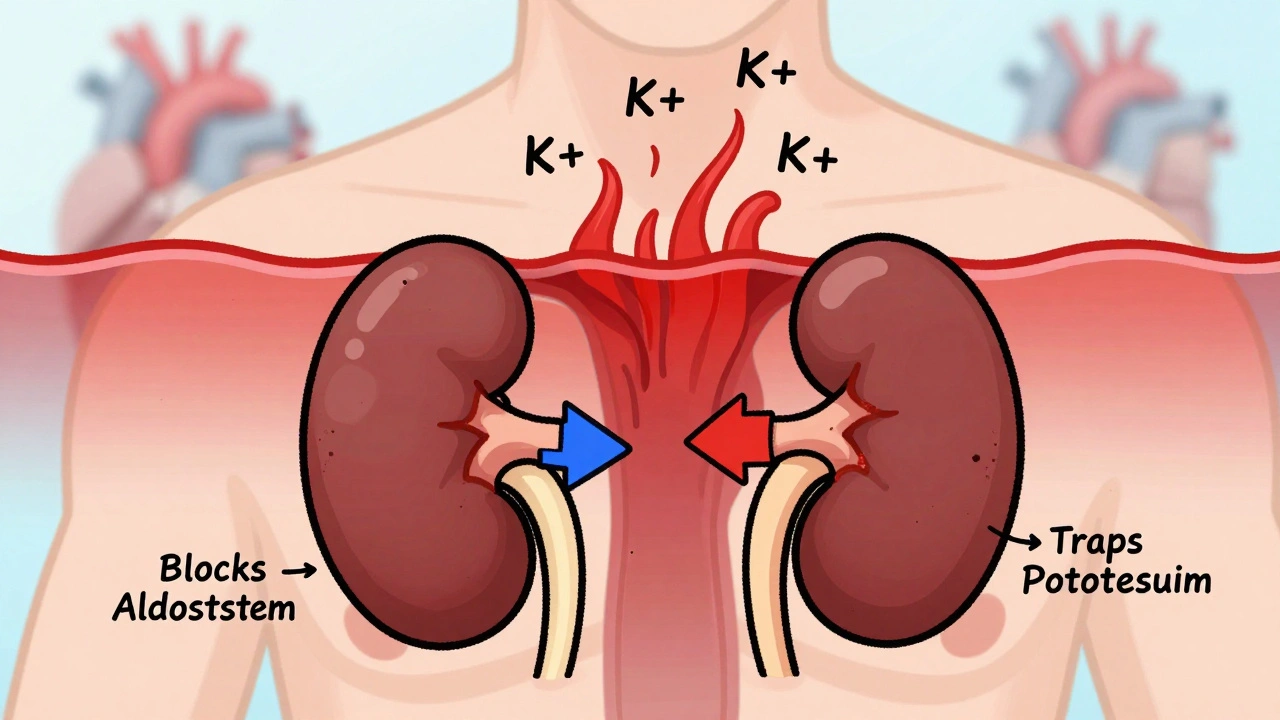
ACE Inhibitors and Potassium-Sparing Diuretics: Understanding the Hyperkalemia Risk
Combining ACE inhibitors and potassium-sparing diuretics can dangerously raise potassium levels, leading to life-threatening heart rhythms. Learn who's at risk, how to monitor, and what to do if levels climb.