
GLP-1 RA: What They Are, How They Work, and Why They're Changing Diabetes and Weight Loss
When you hear GLP-1 RA, a class of medications that mimic the body's natural GLP-1 hormone to control blood sugar and appetite. Also known as GLP-1 agonists, these drugs don't just lower glucose—they reshape how doctors think about obesity, heart health, and long-term metabolic disease. They're not insulin. They're not metformin. They work by telling your brain you're full, slowing down your stomach, and helping your pancreas release just the right amount of insulin when you eat. This makes them uniquely powerful for people with type 2 diabetes who also struggle with weight.
These drugs are built on a simple biological truth: your gut releases a hormone called GLP-1 after meals, and it does three things—curbs hunger, boosts insulin, and blocks glucagon. But in people with diabetes, this system doesn't work well. GLP-1 RA drugs replace what's missing. Semaglutide, the active ingredient in Ozempic and Wegovy, is one of the most studied. Tirzepatide, found in Mounjaro and Zepbound, goes even further by adding a second hormone signal. Together, they’ve helped people lose 15%, 20%, even 25% of their body weight in clinical trials—not by starving, but by resetting appetite control.
But they’re not magic. Side effects like nausea, vomiting, and diarrhea are common at first. They’re expensive. And they don’t work if you stop taking them. That’s why understanding them matters. You can’t just grab one off the shelf. These drugs require monitoring, lifestyle support, and sometimes insurance battles. They’re not for everyone, but for the right person, they’re life-changing. The posts below dig into exactly that: how these drugs affect real people, what the science says about heart protection, why some patients gain weight back after stopping, and how pharmacists help navigate the confusion between brand names and generics. You’ll also find real talk about cost, access, and what to expect when your doctor says, "Let’s try a GLP-1 RA." This isn’t hype. It’s the practical truth behind the headlines.
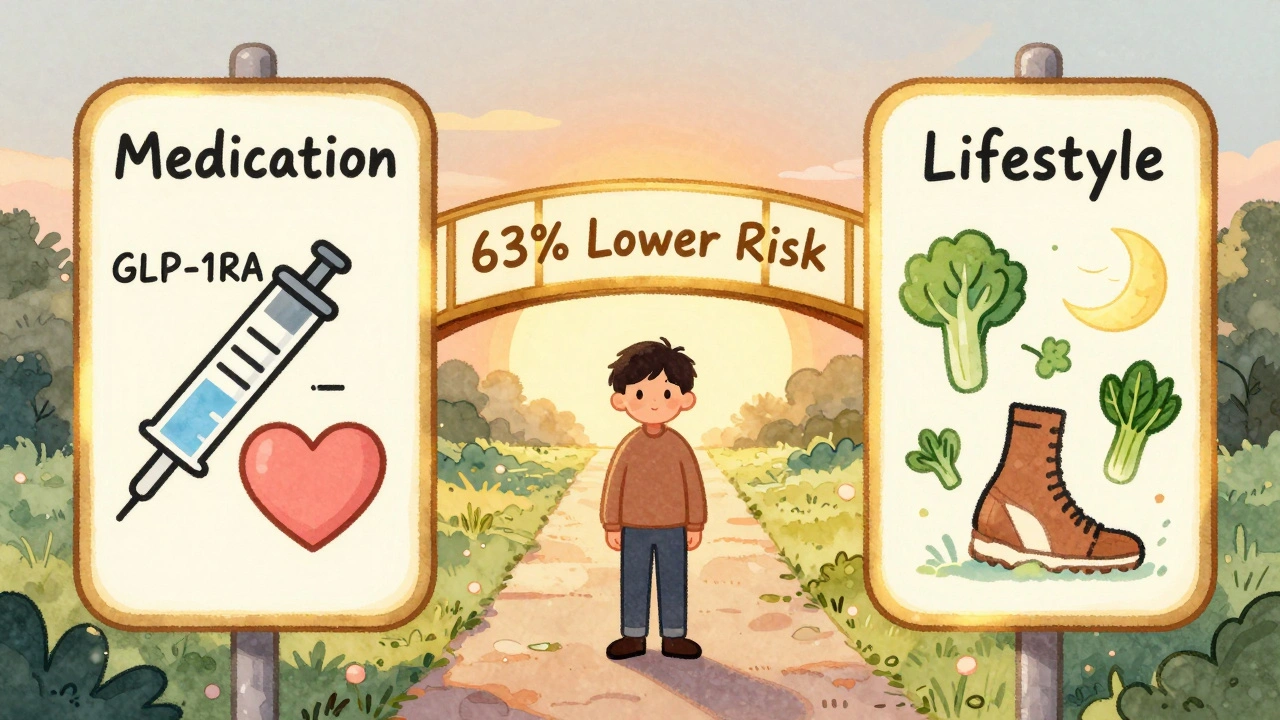
Diabetes and Heart Disease: How Medications and Lifestyle Together Lower Risk
Diabetes greatly increases heart disease risk, but combining GLP-1 RA medications like semaglutide with lifestyle changes-diet, exercise, and weight loss-can cut cardiovascular risk by up to 63%. This is the most effective strategy proven today.