
Drug Interaction: What You Need to Know About Medications That Don’t Mix
When you take more than one medication—or even a supplement or food—it’s not just about what’s in the pill. It’s about how those things drug interaction, a change in how a medicine works because of another substance. Also known as medication interaction, it can make a drug stronger, weaker, or cause side effects you didn’t expect. This isn’t theory. It’s why someone on blood thinners might bleed after eating pomegranate juice, or why a simple antacid can ruin your antibiotic. These aren’t rare mistakes—they happen every day because people don’t know what to look for.
One of the biggest players in drug interaction is the CYP450 enzyme system, a group of liver enzymes that break down most medications. If something blocks or speeds up these enzymes, your drug levels go wild. Grapefruit juice is famous for this, but so are certain antibiotics, antidepressants, and even St. John’s wort. Then there’s warfarin, a blood thinner that’s extremely sensitive to changes in diet, other drugs, and even genetics. Estrogen from birth control or hormone therapy can swing your INR numbers up or down—no warning, no symptoms until you’re bleeding internally. And it’s not just pills. Over-the-counter painkillers like acetaminophen can wreck your liver if you’re already dealing with liver disease. Even herbal supplements like Ayurslim or pomegranate juice, marketed as "natural," can interfere with how your body handles meds.
What makes this worse is that most people don’t check. They grab a new OTC medicine because their head hurts, or they start a supplement because they read about it online. They don’t realize their blood pressure pill, their cholesterol drug, and that turmeric capsule are all talking to each other inside their body. Pharmacists catch these mistakes all the time—but you shouldn’t wait for them to find it. Knowing the basics of drug interaction isn’t just smart—it’s life-saving. Below, you’ll find real cases, clear explanations, and practical steps to avoid dangerous combinations. From how to read OTC labels to why pravastatin is safer for seniors, these posts give you the tools to spot trouble before it starts.
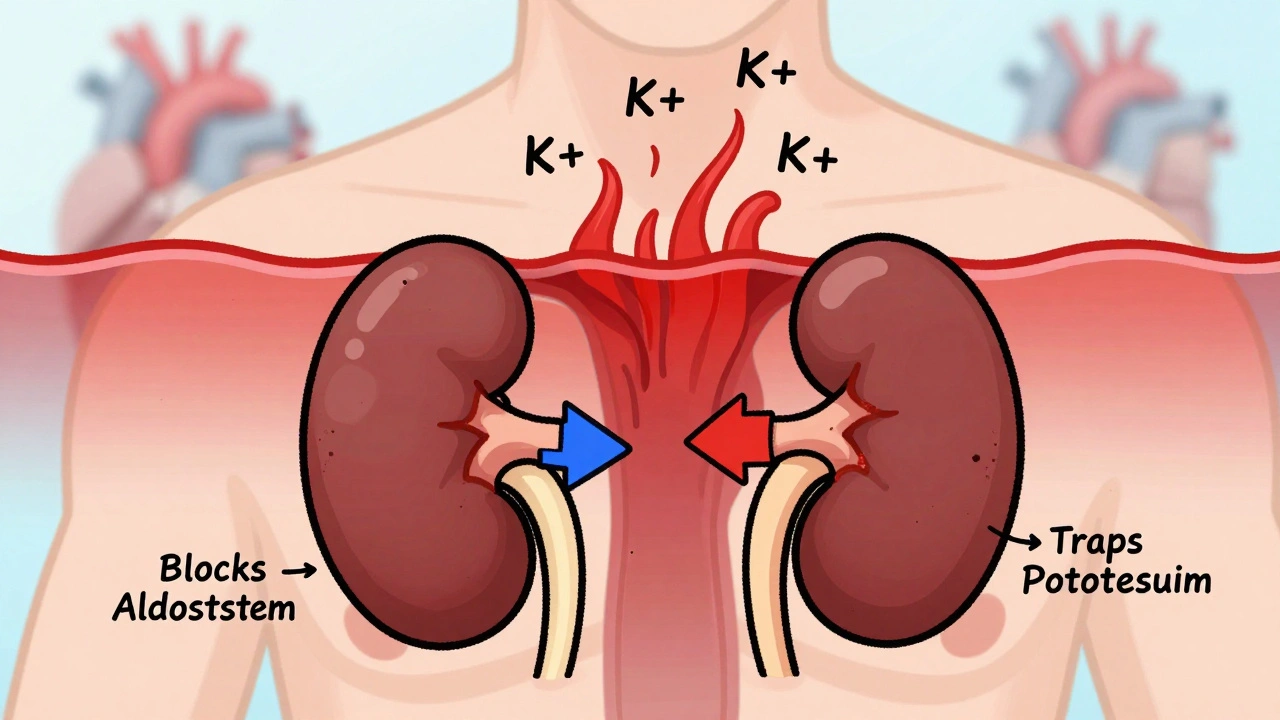
ACE Inhibitors and Potassium-Sparing Diuretics: Understanding the Hyperkalemia Risk
Combining ACE inhibitors and potassium-sparing diuretics can dangerously raise potassium levels, leading to life-threatening heart rhythms. Learn who's at risk, how to monitor, and what to do if levels climb.