
Diabetes and Heart Disease: How They Connect and What You Can Do
When you have diabetes, a condition where the body can’t properly use or make insulin, leading to high blood sugar levels, your risk for heart disease, a group of conditions affecting the heart and blood vessels, including heart attacks and stroke jumps dramatically. This isn’t just a coincidence—it’s biology. High blood sugar slowly damages the lining of your blood vessels, making them stiff and prone to plaque buildup. At the same time, many people with diabetes also have high blood pressure, unhealthy cholesterol levels, and extra body weight—all of which push your heart harder and faster. The result? Your heart gets worn down over time, even if you feel fine today.
It’s not just about sugar. cholesterol, a waxy substance in your blood that can clog arteries when levels are too high becomes a silent partner in this danger. People with diabetes often have low HDL (the good kind) and high triglycerides, which makes plaque form faster. And if you’re taking meds like ACE inhibitors, a class of drugs used to lower blood pressure and protect the heart and kidneys in people with diabetes, you’re already in the middle of this fight—because these drugs don’t just lower pressure, they help your heart survive the damage caused by years of high glucose.
What you do now changes what happens next. Cutting back on sugar helps, but it’s not enough. You need to move more, manage your weight, and get your numbers checked regularly—not just your blood sugar, but your blood pressure, cholesterol, and kidney function too. Many people with diabetes don’t realize their heart is under stress until it’s too late. The good news? Small, consistent changes—like walking 30 minutes a day, choosing whole foods over processed ones, and taking meds as prescribed—can cut your risk of heart problems in half. You don’t need to be perfect. You just need to be consistent.
Below, you’ll find real, practical guides on how to protect your heart while managing diabetes. From understanding how certain drugs affect your potassium levels to learning why some weight-loss medications actually help your heart, these articles give you the tools—not just the theory. You’ll see what works, what doesn’t, and what you should ask your doctor about next.
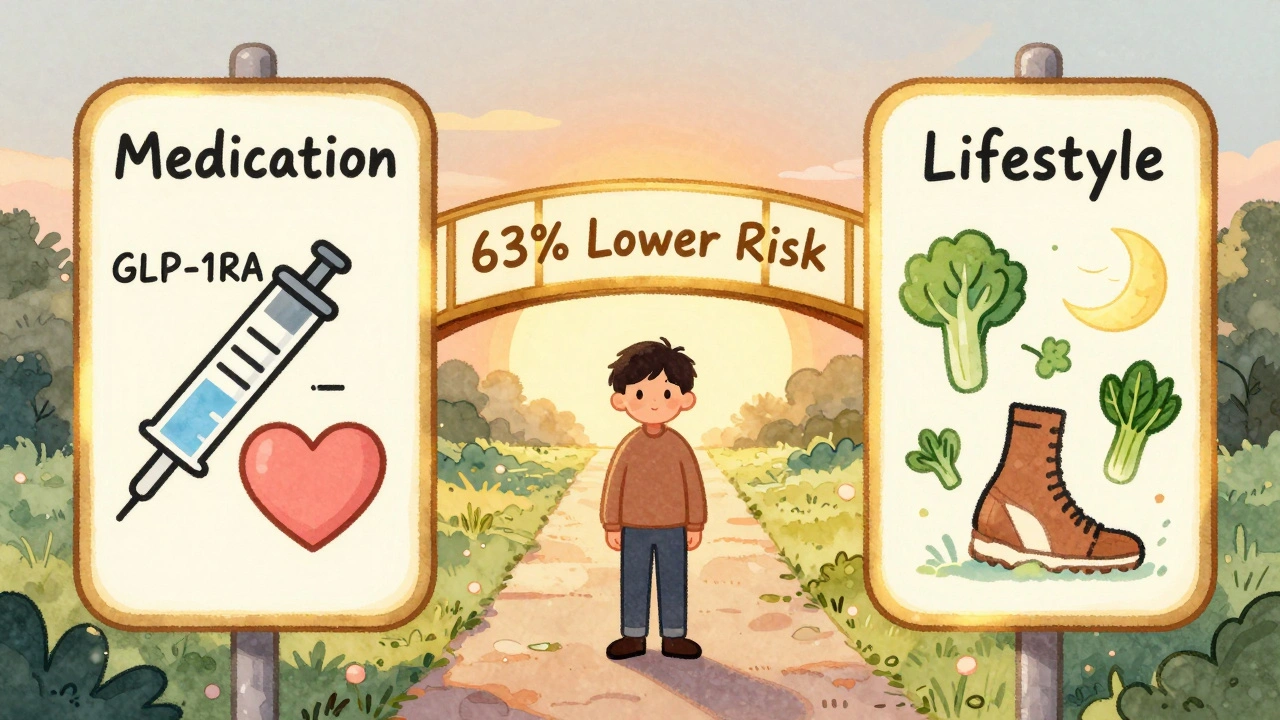
Diabetes and Heart Disease: How Medications and Lifestyle Together Lower Risk
Diabetes greatly increases heart disease risk, but combining GLP-1 RA medications like semaglutide with lifestyle changes-diet, exercise, and weight loss-can cut cardiovascular risk by up to 63%. This is the most effective strategy proven today.