
Chronic Tension Headaches: Causes, Triggers, and What Actually Helps
When you have a chronic tension headache, a persistent, dull ache that feels like a tight band around your head. Also known as tension-type headache, it’s the most common type of headache affecting adults—yet many people treat it like a normal part of life instead of a condition that can be managed. Unlike migraines, these headaches don’t usually come with nausea or light sensitivity, but they last longer, often for days or weeks, and can sneak up after stress, poor posture, or even too much screen time.
What makes chronic tension headaches, headaches occurring 15 or more days per month for at least three months different from occasional ones? It’s not just frequency—it’s how your body adapts. Muscle tension in the neck, scalp, and shoulders becomes a habit, not a reaction. Over-the-counter painkillers might help at first, but using them too often can make things worse, leading to medication-overuse headaches. This is why simply popping pills isn’t a fix. The real solution often involves breaking the cycle: improving sleep, managing stress, correcting posture, and sometimes using low-dose antidepressants—not to treat depression, but because they help regulate pain signals in the brain.
Many people don’t realize that muscle tension headaches, a subtype of chronic tension headaches caused by sustained muscle tightness are closely tied to how you sit, stand, and move throughout the day. Slouching at a desk, cradling a phone between your ear and shoulder, or clenching your jaw while working can all feed into the problem. Physical therapy, gentle stretching, and even massage can be more effective long-term than any pill. And while some turn to supplements like magnesium or riboflavin, the strongest evidence still points to behavioral changes and consistent routines.
You won’t find a magic cure here, but you will find real strategies that work. The posts below cover what medications actually help without causing rebound headaches, how antidepressants can be used for pain control, how to read OTC labels to avoid dangerous combinations, and why some people benefit from simple breathing techniques while others need targeted physical therapy. There’s no one-size-fits-all fix, but there are proven paths forward—once you understand what’s really going on behind the ache.
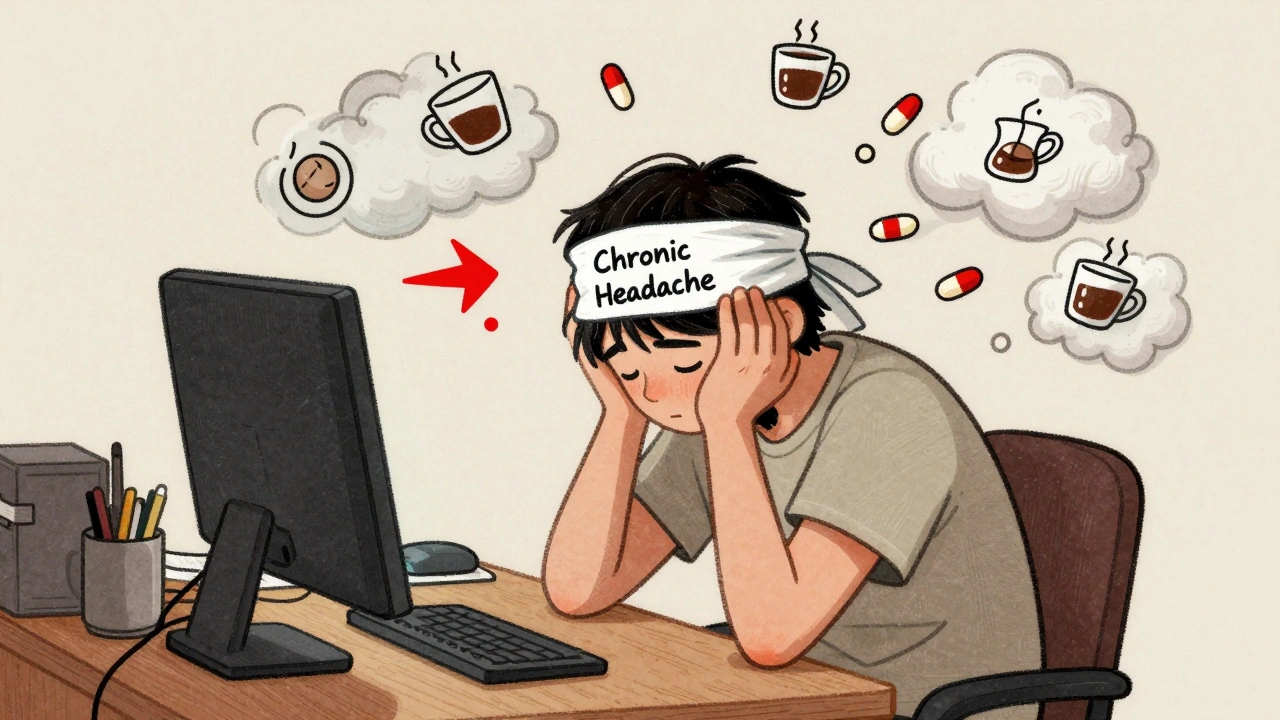
Chronic Tension Headaches: What Triggers Them and How to Stop Them for Good
Chronic tension headaches affect millions, but most don't know the real triggers or effective treatments. Learn what causes them, what actually works, and how to break the cycle - backed by science, not myths.