
Chronic Headache Relief: What Works, What Doesn’t, and How to Find Safe Solutions
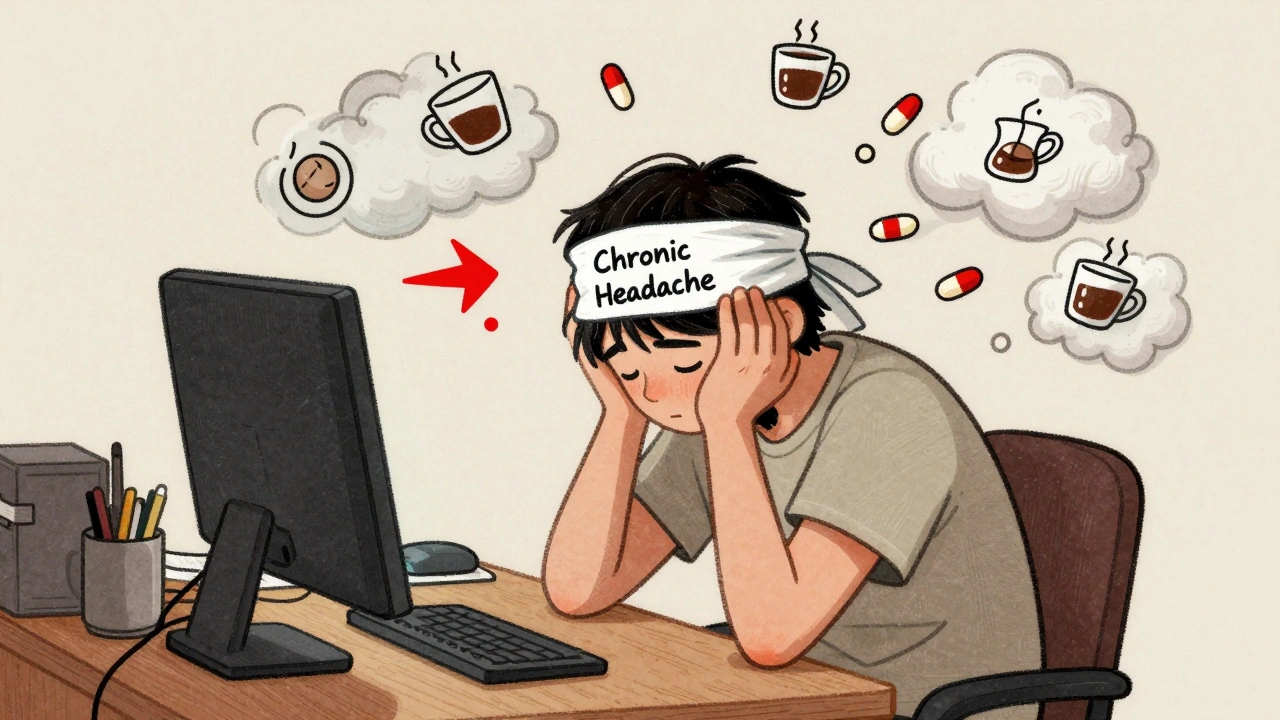
When you have a chronic headache, a headache that happens 15 or more days a month for at least three months. Also known as chronic daily headache, it’s not just bad luck—it’s often a sign your body is stuck in a cycle of pain and over-treatment. Most people reach for painkillers at the first sign of pressure behind the eyes or a dull throb in the temples. But if you’re taking those pills more than two or three days a week, you might be making it worse. This is called medication overuse headache, a condition where frequent use of headache meds turns occasional pain into a daily problem. It’s not addiction—it’s physiology. Your brain gets used to the drug, and when it wears off, the pain comes back harder.
Chronic headaches aren’t one thing. They can be tension headaches, a tight band of pressure around the head, often tied to stress, poor posture, or jaw clenching. Or they might be migraines, a neurological disorder with throbbing pain, nausea, and sensitivity to light or sound. The difference matters because treating them the same way fails. A pill that helps a tension headache might do nothing for a migraine—and could even trigger one. And if you’re using OTC meds like ibuprofen or acetaminophen daily, you’re risking liver damage, stomach bleeding, or rebound pain. Even caffeine, which seems harmless, can become part of the problem if you’re drinking multiple cups a day.
Real relief doesn’t come from more pills. It comes from breaking the cycle. That means identifying your triggers—sleep loss, dehydration, certain foods, screen time, or hormonal shifts—and learning how to manage them. Some people find relief with physical therapy for neck tension. Others benefit from biofeedback or cognitive behavioral therapy to handle stress. Prescription preventatives like beta-blockers or antidepressants aren’t for everyone, but they’ve helped thousands break free from daily pain. The key is not to guess. It’s to understand what’s really going on in your body.
Below, you’ll find real-world advice from people who’ve been where you are. We cover how to read drug labels so you don’t accidentally overdose on acetaminophen, why some painkillers make headaches worse, and how to talk to your doctor about switching treatments without feeling dismissed. No fluff. No hype. Just what works—and what to avoid.
Chronic Tension Headaches: What Triggers Them and How to Stop Them for Good
Chronic tension headaches affect millions, but most don't know the real triggers or effective treatments. Learn what causes them, what actually works, and how to break the cycle - backed by science, not myths.