
Child Eye Health: Protecting Vision in Kids with Safe Practices and Early Care
When it comes to child eye health, the critical period for visual development happens before age eight. Also known as pediatric vision, it’s not just about seeing the board in school—it’s about how the brain learns to process what the eyes see. If something goes wrong during this window, it can lead to permanent vision loss, even if the eyes themselves look fine. Most parents don’t realize that kids can have serious eye problems without complaining. No child says, "My depth perception is off" or "I see double when I read." They just struggle in class, squint at the TV, or avoid reading altogether.
Children's eye exams, a simple, non-invasive checkup that screens for lazy eye, misalignment, and refractive errors. Also known as pediatric vision screening, these should start by age three and repeat before kindergarten—no symptoms needed. The American Optometric Association says one in four kids has an undiagnosed vision problem. That’s why school screenings aren’t enough. They catch only the obvious cases. A full exam by an eye care professional checks how well the eyes work together, track moving objects, and focus up close—all things that matter for learning and play.
Eye safety for kids, means protecting young eyes from injury, screen strain, and UV damage. Also known as children’s ocular protection, it’s not just about sunglasses or helmets—it’s about how you set up their environment. Too much screen time doesn’t cause nearsightedness by itself, but it does reduce outdoor time, which does. Studies show kids who spend at least two hours a day outside are less likely to develop myopia. And while blue light filters get marketed heavily, the real issue is blink rate—kids forget to blink when glued to screens, leading to dry, tired eyes. Simple fixes: 20-20-20 rule (every 20 minutes, look 20 feet away for 20 seconds), no screens an hour before bed, and proper lighting.
Signs you shouldn’t ignore: one eye turning in or out, frequent rubbing, holding books too close, or complaints of headaches after reading. These aren’t "phases." They’re signals. And catching them early—before age six—can mean the difference between corrective glasses and lifelong vision therapy.
Below, you’ll find real, practical advice from trusted sources on what works, what doesn’t, and what to watch for as your child grows. From how to prepare for their first eye exam to understanding when a vision problem might be linked to something deeper, these posts give you the facts—not the fluff.
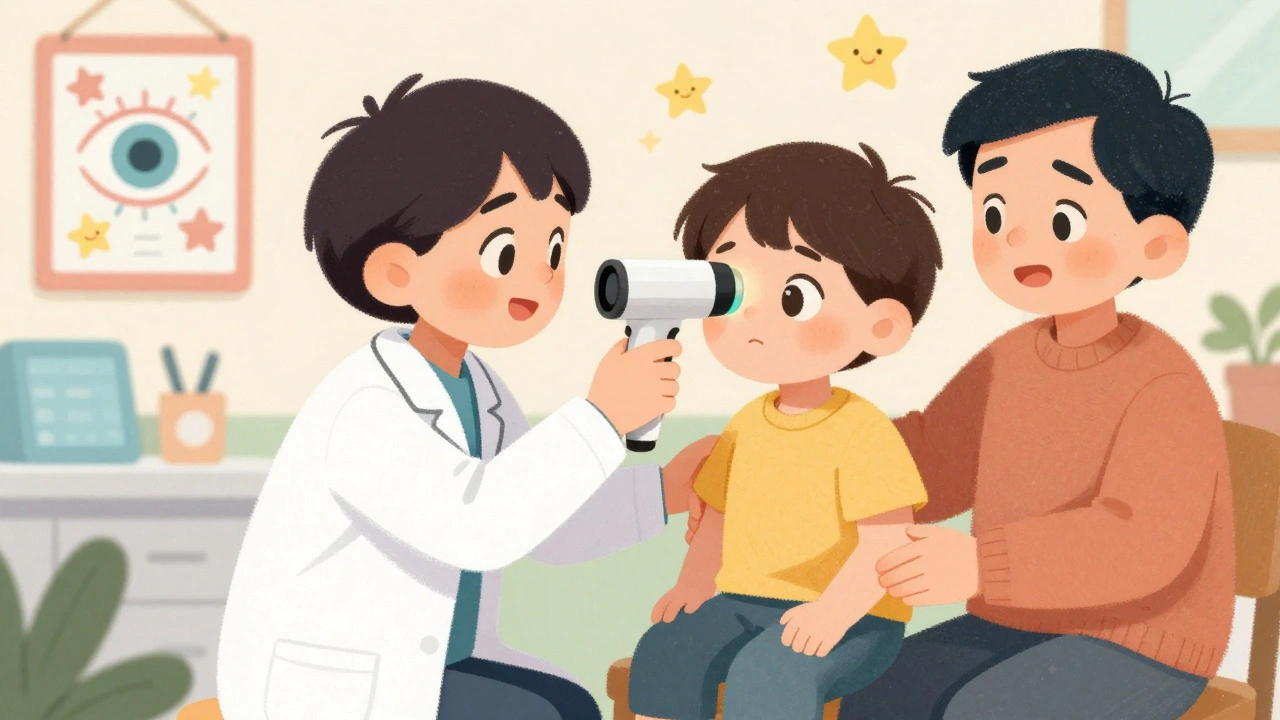
Pediatric Vision Screening: How Early Detection Prevents Lifelong Vision Problems
Pediatric vision screening catches treatable eye problems like amblyopia and strabismus before age 5, preventing lifelong vision loss. Early detection works in up to 95% of cases-delaying screening can make treatment ineffective.