
Cardiovascular Risk Reduction: What Works, What Doesn't, and How to Stay Safe
When it comes to cardiovascular risk reduction, the set of strategies and treatments aimed at lowering the chance of heart attack, stroke, or other heart-related events. Also known as heart disease prevention, it’s not just about popping a pill—it’s about understanding what’s actually working behind the scenes. Many people think taking a statin or lowering blood pressure is enough. But the real story is messier. Some medications help, others can hurt if mixed wrong, and a lot of what’s sold as "heart-healthy" does nothing at all.
Take statins, a class of drugs that lower LDL cholesterol by blocking its production in the liver. Also known as cholesterol-lowering meds, they’re among the most studied drugs for preventing heart events. Pravastatin, for example, is often chosen for older adults because it has fewer muscle side effects than other statins. But statins alone won’t fix everything. If you’re also on a potassium-sparing diuretic, a type of water pill that keeps potassium in your body instead of flushing it out. Often used with high blood pressure or heart failure meds, you could be setting yourself up for dangerous high potassium levels—especially if you’re also taking an ACE inhibitor. That combo? It’s a silent killer. No symptoms until your heart rhythm goes haywire.
And then there’s the hidden stuff. Like how acetaminophen, a common painkiller, can wreck your liver if you already have liver disease—and your heart suffers when your liver can’t process meds right. Or how estrogen from birth control or HRT can throw off warfarin, making your blood too thin or too thick. These aren’t edge cases. They’re everyday risks. The same goes for OTC labels. Most people don’t read them. But if you’re taking multiple meds, that little "do not use with other cold medicines" warning? It could mean the difference between a quiet night and an ER trip.
Cardiovascular risk reduction isn’t a one-size-fits-all checklist. It’s a balancing act. Your diet, your other meds, your age, your genetics—all of it matters. Some people need a statin. Others need better blood pressure control. A few need to avoid certain drugs entirely. The posts below don’t just list options—they show you the real trade-offs, the dangerous combos, the myths that cost lives, and the simple steps that actually work. You’ll find out why some supplements do nothing, why generic drugs can be safer than brand names, and how to talk to your pharmacist so you don’t end up on a dangerous cocktail. This isn’t theory. It’s what you need to know before your next doctor visit.
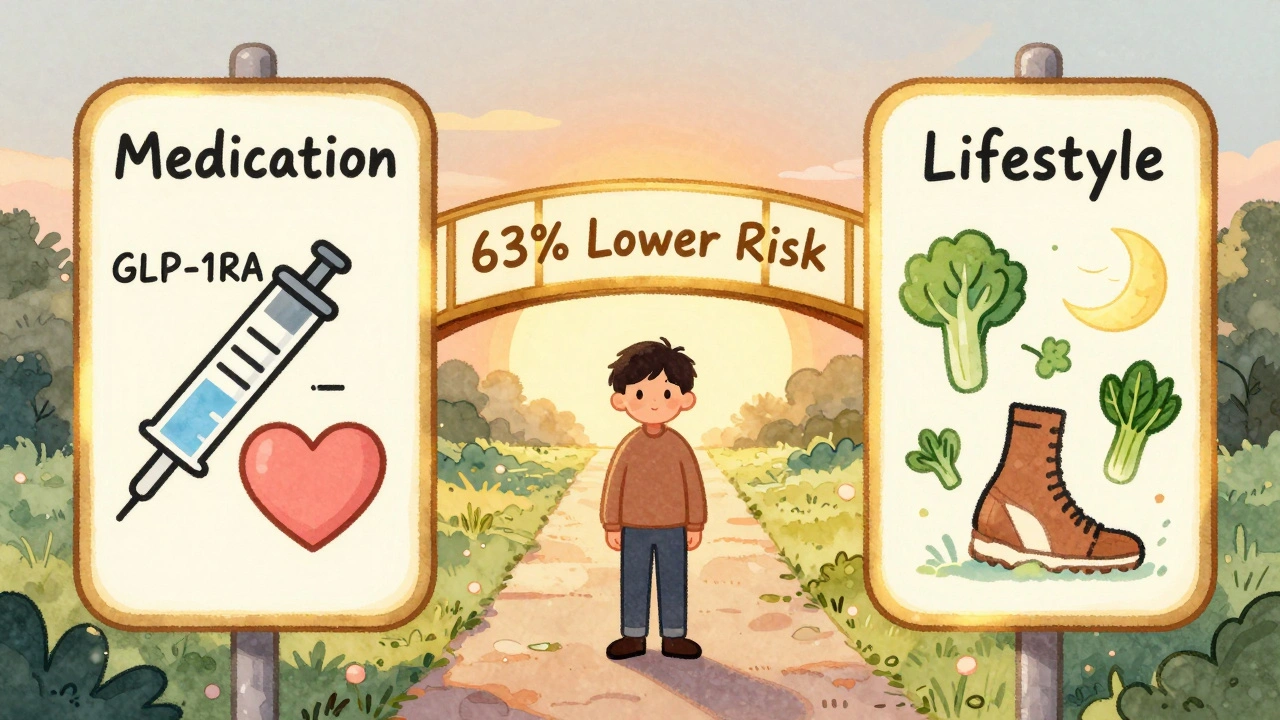
Diabetes and Heart Disease: How Medications and Lifestyle Together Lower Risk
Diabetes greatly increases heart disease risk, but combining GLP-1 RA medications like semaglutide with lifestyle changes-diet, exercise, and weight loss-can cut cardiovascular risk by up to 63%. This is the most effective strategy proven today.