
APOL1 Variants: What They Mean for Kidney Health and Drug Response
When it comes to kidney disease, not all risks are created equal. APOL1 variants, genetic changes in the APOL1 gene that raise the risk of kidney damage. Also known as APOL1 risk alleles, these variants are found mostly in people with recent African ancestry and can turn a mild kidney issue into a fast-moving, life-threatening condition. Unlike high blood pressure or diabetes, which affect millions, APOL1 variants are a hidden trigger—silent until kidney function starts to drop, often without warning.
These variants don’t cause disease on their own. They need a second hit—like viral infections, inflammation, or certain medications—to push the kidneys into failure. That’s why someone with APOL1 variants might handle blood pressure meds fine for years, then suddenly develop focal segmental glomerulosclerosis, a type of kidney scarring that leads to protein loss and kidney failure after a bout of COVID or while taking NSAIDs. And here’s the kicker: standard kidney treatments often work less well in people with these variants. Drugs like ACE inhibitors or SGLT2 inhibitors still help, but the protection isn’t as strong. That’s why genetic testing for APOL1, a blood or saliva test that identifies high-risk gene versions is becoming more common in nephrology clinics, especially for patients with unexplained kidney damage or a family history of kidney failure.
What’s clear now is that APOL1 isn’t just a marker—it’s a modifier. It changes how your body responds to stress, infection, and even medication. For example, people with two risk variants may need lower doses of certain drugs or avoid others entirely. It also explains why kidney transplants from donors with APOL1 variants sometimes fail faster, even when the donor seems healthy. This isn’t theoretical. Studies show people with two APOL1 risk variants are 7 to 10 times more likely to develop kidney failure than those without them. And while there’s no cure yet, knowing your status lets you act earlier—watching blood pressure tighter, avoiding kidney-toxic drugs, and getting regular urine tests to catch damage before it’s too late.
The posts below cover real-world cases where APOL1 variants played a role—from drug interactions that worsened kidney function to how genetic insights changed treatment plans. You’ll find practical advice on testing, managing risk, and working with your doctor when genetics are part of the story. This isn’t about fear. It’s about control. If you or someone you know has unexplained kidney issues, especially with African ancestry, this information could change everything.
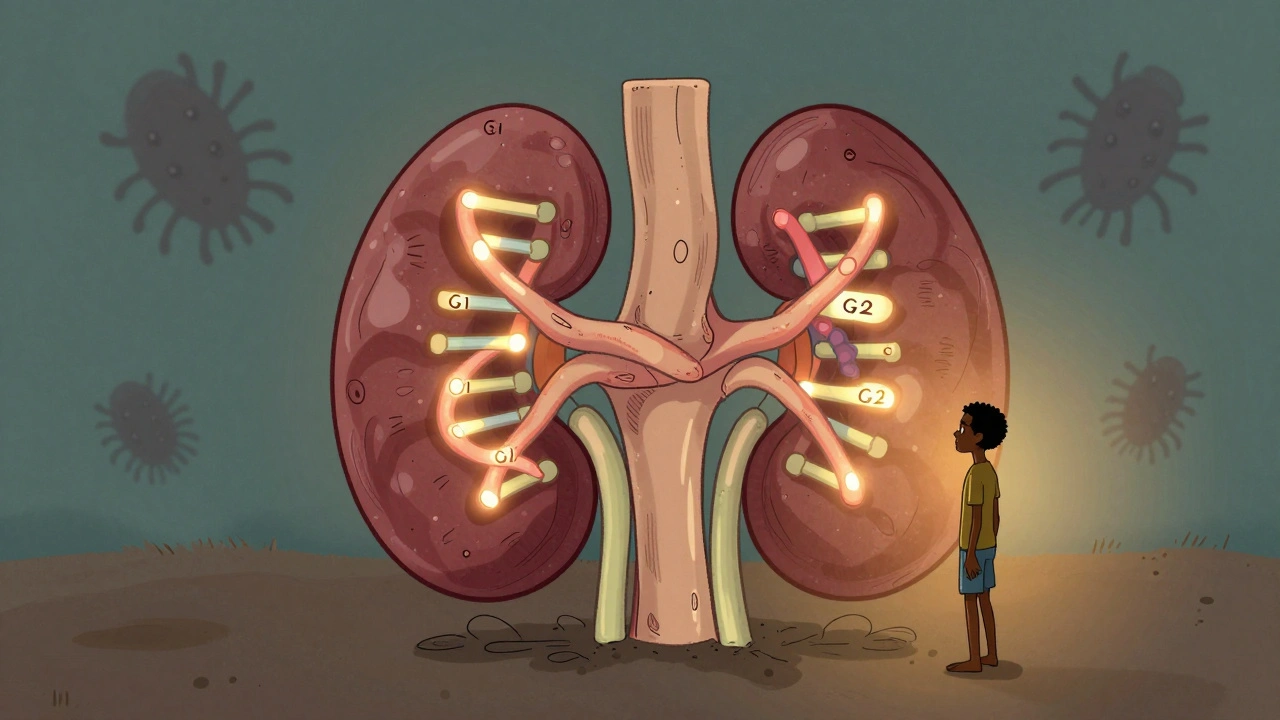
APOL1 Genetic Risk: Understanding Kidney Disease in African Ancestry
APOL1 genetic variants explain most of the higher kidney disease risk in people with African ancestry. Learn how these genes work, who should be tested, and what steps can protect kidney health.