
APOL1 Testing: What It Is, Who Needs It, and Why It Matters
When it comes to kidney disease, not everyone has the same risk. APOL1 testing, a genetic test that identifies specific variants in the APOL1 gene linked to higher kidney disease risk. Also known as APOL1 genotyping, it helps explain why some people—especially those with recent African ancestry—develop kidney failure faster, even with normal blood pressure or diabetes. This isn’t about general health screening. It’s a targeted tool used by doctors when kidney damage shows up without a clear cause.
People with two copies of certain APOL1 gene variants (G1 or G2) have up to a 10x higher risk of developing focal segmental glomerulosclerosis (FSGS) or HIV-associated nephropathy. These variants evolved to protect against African sleeping sickness, but today they increase kidney vulnerability. The test doesn’t predict when kidney disease will start, but it tells you how likely it is to progress quickly once it does. That’s why it matters for treatment decisions. For example, if you’re a candidate for a kidney transplant, knowing your APOL1 status helps doctors decide whether to accept a kidney from a donor with the same high-risk variants. It also influences whether you get certain immunosuppressants or how aggressively you manage blood pressure and protein in urine.
APOL1 testing is most relevant for people of recent African descent—Black Americans, Afro-Caribbeans, or those with roots in sub-Saharan Africa—who have unexplained kidney damage, proteinuria, or a family history of kidney failure. It’s not recommended for everyone. But if you’ve been told your kidney disease "has no clear cause," this test might finally give you an answer. It’s also becoming part of pre-transplant evaluations and clinical trials for new kidney drugs. What you learn from APOL1 testing doesn’t change your genes, but it can change how you and your doctor approach your care—helping you avoid unnecessary treatments, choose better medications, and plan ahead.
Below, you’ll find real-world insights from articles that connect APOL1 testing to broader health topics: how genetics influence drug responses, why some medications work differently in certain populations, and how lifestyle choices interact with inherited risks. These aren’t abstract science pieces—they’re practical guides for people managing kidney health, navigating treatment options, or trying to understand why their body reacts the way it does.
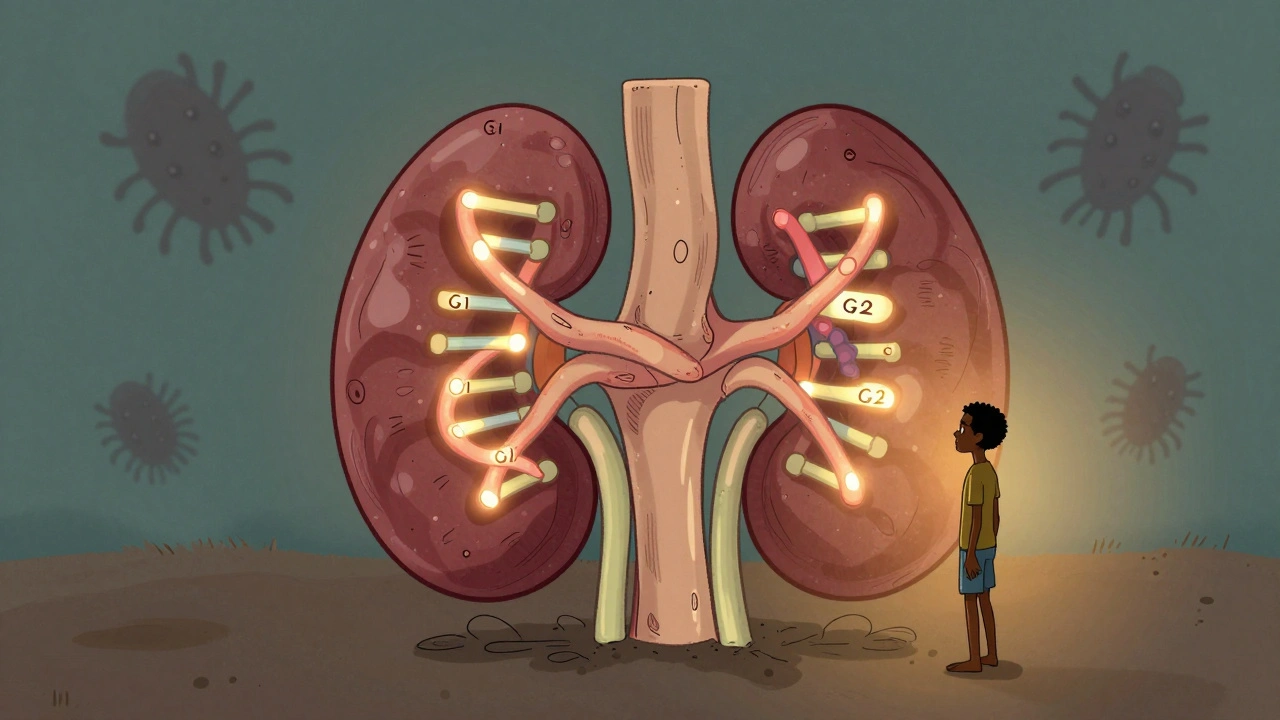
APOL1 Genetic Risk: Understanding Kidney Disease in African Ancestry
APOL1 genetic variants explain most of the higher kidney disease risk in people with African ancestry. Learn how these genes work, who should be tested, and what steps can protect kidney health.