
APOL1 Genetic Risk: What It Means for Kidney Health and Who Should Care
When it comes to kidney disease, not all risks are created equal. One of the most powerful genetic factors driving kidney failure in certain populations is the APOL1 genetic risk, a set of inherited gene variants that significantly raise the chance of kidney damage, especially in people with recent African ancestry. Also known as APOL1 high-risk genotypes, these variants don’t cause disease on their own—but when paired with other triggers like viral infections, high blood pressure, or obesity, they can speed up kidney damage dramatically.
This isn’t theoretical. Studies show people with two copies of these APOL1 variants have up to a 7 times higher risk of developing focal segmental glomerulosclerosis (FSGS) and hypertension-attributed kidney disease. These conditions often show up earlier and progress faster than other forms of kidney damage. What makes APOL1 especially tricky is that you can carry these variants and feel perfectly fine for years—until your kidneys start failing. That’s why knowing your status matters, especially if you’re of African descent and have a family history of kidney disease or high blood pressure. It’s not about fear—it’s about awareness. If you’re on dialysis or have unexplained kidney damage, your doctor might test for APOL1 to help explain why. And if you’re healthy but at risk, this knowledge can guide better monitoring, earlier intervention, and smarter choices about medications that could stress your kidneys.
APOL1 doesn’t act alone. It interacts with other health factors you can control. For example, if you have high blood pressure and carry the APOL1 risk variants, tight control of your blood pressure isn’t just helpful—it’s critical. The same goes for avoiding NSAIDs like ibuprofen, which can be extra dangerous for people with these variants. Even something as simple as staying hydrated and avoiding dehydration during illness can make a difference. This is where the real power of knowing your genetics lies: not in changing your DNA, but in changing how you live with it. The posts below dive into how APOL1 fits into the bigger picture of kidney health, drug safety, and personalized medicine. You’ll find real-world guidance on testing, managing risk, and what to ask your doctor if you’re concerned about your kidneys.
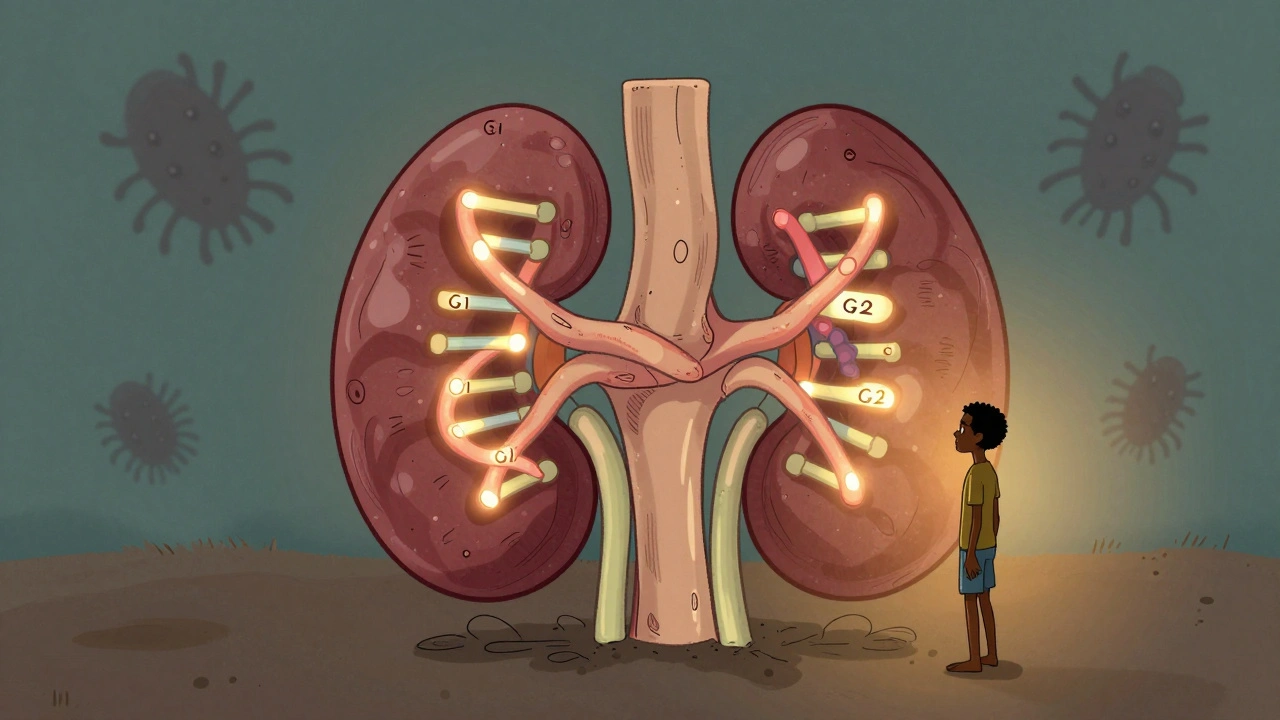
APOL1 Genetic Risk: Understanding Kidney Disease in African Ancestry
APOL1 genetic variants explain most of the higher kidney disease risk in people with African ancestry. Learn how these genes work, who should be tested, and what steps can protect kidney health.