
ANDA Process: What It Is and How Generic Drugs Get Approved
When you pick up a generic pill at the pharmacy, chances are it went through the ANDA process, a streamlined FDA pathway for approving generic versions of brand-name drugs without repeating full clinical trials. Also known as the Abbreviated New Drug Application, it’s the reason generic drugs cost up to 85% less than the originals. This isn’t magic—it’s a carefully designed system that balances innovation with access.
The Hatch-Waxman Act, a 1984 U.S. law that created the modern framework for generic drug approval made this possible. Before it, generic makers had to prove safety and effectiveness from scratch—just like the brand-name company did. That was expensive, slow, and kept generics off the market for years. The Hatch-Waxman Act changed that by letting generics rely on the brand’s existing data, as long as they prove they’re the same in active ingredients, strength, dosage form, and how the body absorbs them. That’s called bioequivalence. No need to test on thousands of patients again. Just prove your pill behaves like the original in your bloodstream.
But it’s not just about copying. The FDA approval, the official green light from the U.S. Food and Drug Administration for drug manufacturing and sale still demands strict quality control. Every generic factory must meet the same standards as brand-name plants. Inspections happen. Batch testing is required. If a generic fails, it’s pulled. That’s why some people still worry—especially after supply chain issues or recalls. But the system works: over 90% of prescriptions in the U.S. are filled with generics, and they’re just as safe and effective as the brand names.
Here’s the catch: generics can’t enter the market until the brand’s patent expires. That’s where the pharmaceutical regulation, the legal and scientific rules governing drug development, approval, and marketing gets complicated. Patents can be extended. Legal challenges can delay generics. That’s why some drugs stay expensive for years—even after their patent should’ve expired. But when the ANDA process kicks in, prices drop fast. Think insulin, statins, or blood pressure meds—generic versions made them affordable for millions.
You’ll find posts here that dig into how patents block generics, how authorized generics are identical to brand drugs, and why some patients get confused between true generics and brand knockoffs. There are stories about drug shortages tied to manufacturing failures, and how the same quality controls that protect brand drugs also protect generics. You’ll see how patients use this system to save money without sacrificing safety. And you’ll learn why some medications—like complex injectables or inhalers—still don’t have generics, even after patents expire.
The ANDA process isn’t perfect. But it’s the reason you can fill a 30-day supply of metformin for $4 instead of $300. It’s the quiet engine behind affordable healthcare. And understanding it helps you make smarter choices—whether you’re picking a pill, arguing with your insurer, or just wondering why your prescription cost changed last month.
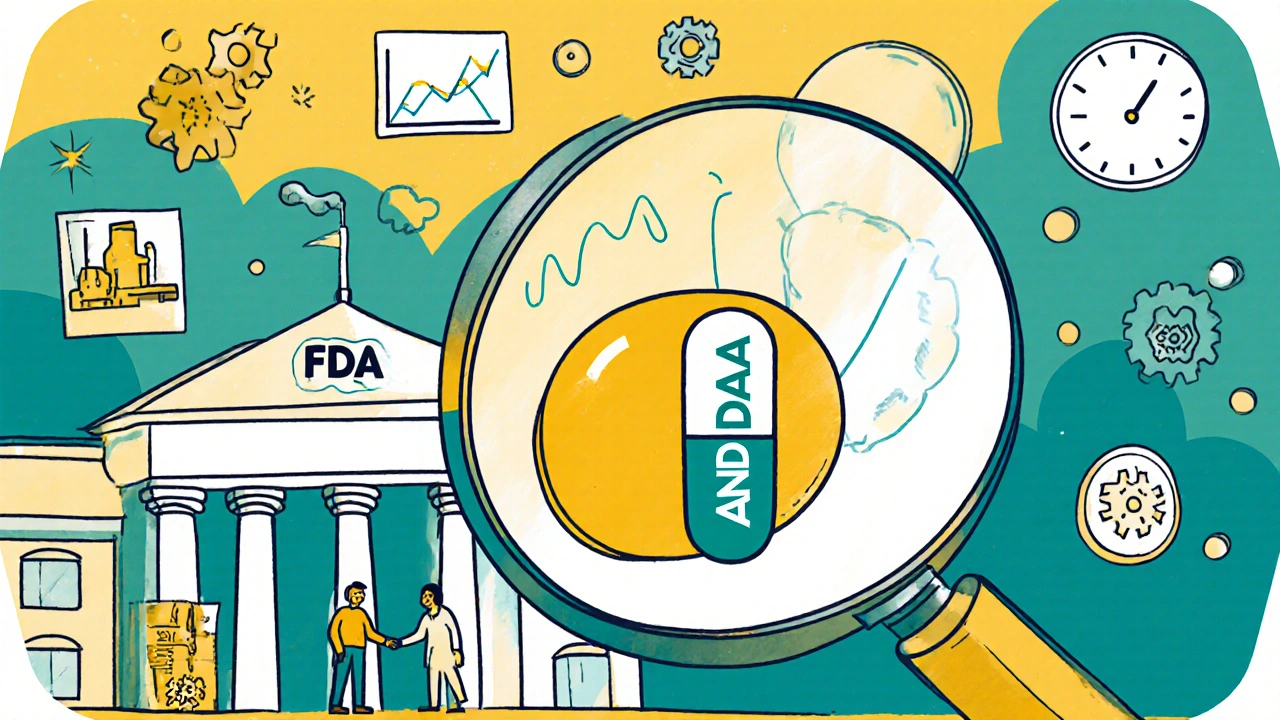
FDA’s Abbreviated New Drug Application Process Explained: How Generic Drugs Get Approved
The FDA's ANDA process lets generic drugs reach the market faster and cheaper by proving they're bioequivalent to brand-name drugs. Learn how it works, why it saves billions, and what happens behind the scenes.