
Amblyopia Screening: What It Is and Why Early Detection Matters
When a child’s brain starts ignoring signals from one eye, it’s not just a vision problem—it’s a amblyopia, a developmental vision disorder where one eye fails to achieve normal visual acuity, even with glasses. Also known as lazy eye, it’s the most common cause of preventable vision loss in kids. Unlike nearsightedness or astigmatism, amblyopia isn’t fixed with lenses alone. It’s a wiring issue in the brain, and if left untreated, that weaker eye can lose function for good.
Amblyopia screening isn’t optional—it’s essential. The American Academy of Pediatrics and the U.S. Preventive Services Task Force both recommend vision screening for all children between ages 3 and 5. Why then? Because the visual system develops rapidly before age 8. After that, the brain’s ability to rewire itself drops sharply. Screening tools like photoscreeners, autorefractors, and simple cover tests catch asymmetry in eye alignment, focus, or light response long before a child can say, "I can’t see well with one eye." Many kids with amblyopia show no symptoms. They don’t complain. They just adapt, using the stronger eye while the weaker one fades.
Screening leads to treatment—and treatment works. Patching the stronger eye, using atropine drops to blur it temporarily, or correcting refractive errors with glasses can restore vision in up to 90% of cases if started early. But none of that happens without detection. That’s why schools, pediatricians, and eye clinics are pushing for routine screening. It’s not about fancy equipment—it’s about catching a silent problem before it becomes permanent.
Related conditions like strabismus (crossed eyes), cataracts, or severe refractive errors often trigger amblyopia. That’s why screening isn’t just checking for lazy eye—it’s checking for the root causes. A child with a family history of vision problems, premature birth, or developmental delays needs even more attention. And while most cases are caught in early childhood, some slip through. Adults with undiagnosed amblyopia often realize it only after losing vision in their good eye.
What you’ll find below are real, practical articles on how amblyopia screening is done in clinics and schools, what tools are used, when it’s too late to fix it, and how treatments actually work in kids. You’ll also see how it connects to broader topics like pediatric eye exams, vision therapy, and why some kids still fall through the cracks—even in developed countries. This isn’t theory. It’s what parents, teachers, and doctors need to know to protect a child’s sight before it’s gone.
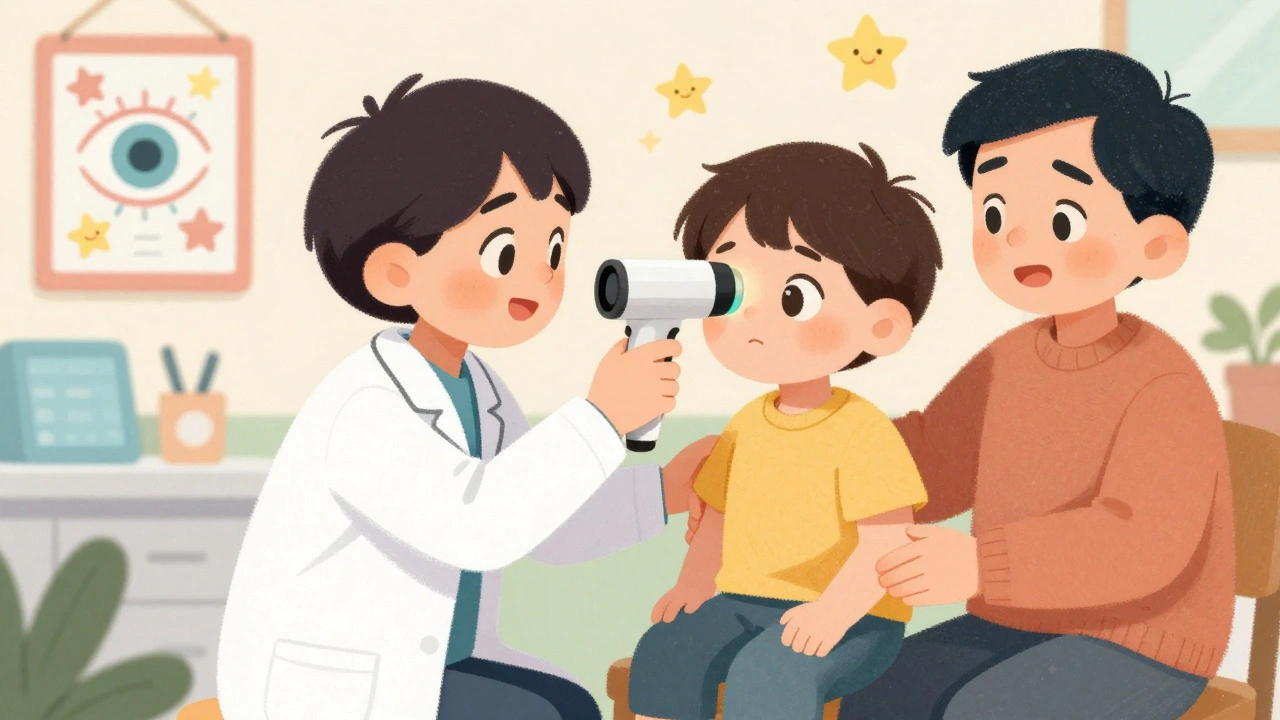
Pediatric Vision Screening: How Early Detection Prevents Lifelong Vision Problems
Pediatric vision screening catches treatable eye problems like amblyopia and strabismus before age 5, preventing lifelong vision loss. Early detection works in up to 95% of cases-delaying screening can make treatment ineffective.