
Abbreviated New Drug Application: What It Is and How Generic Drugs Get Approved
When you pick up a generic pill at the pharmacy, you’re holding a product approved through the Abbreviated New Drug Application, a streamlined FDA process that allows generic versions of brand-name drugs to be sold without repeating expensive clinical trials. Also known as an ANDA, it’s the legal backbone of affordable medicine in the U.S. This isn’t a shortcut—it’s a smart system designed to balance innovation with access. The brand-name drug company spent years and millions proving their drug works and is safe. The generic maker just has to prove theirs is the same—same active ingredient, same dose, same way it’s absorbed by your body.
The Hatch-Waxman Act, a 1984 law that created the modern ANDA pathway. Also known as Drug Price Competition and Patent Term Restoration Act, it’s what lets generic companies enter the market as soon as patents expire. Without it, you’d pay brand prices forever. But it also protects innovators by giving them extra patent time to make up for delays in FDA review. This balance keeps new drugs coming while dropping prices on old ones. That’s why generic drugs now make up 90% of prescriptions but only 20% of spending. The FDA, the U.S. agency that reviews and approves all drug applications, including ANDAs. Also known as U.S. Food and Drug Administration, it doesn’t just stamp approval—it inspects factories, checks manufacturing quality, and monitors safety after the drug hits shelves doesn’t cut corners. Every generic must meet the same strict standards as the brand. That’s why an authorized generic—made by the same company as the brand, same factory, same formula—is identical in every way. Even the inactive ingredients have to match.
What you’ll find in these articles is real-world proof of how this system works—and where it breaks. You’ll see how patent loopholes delay generics, how supply chain flaws can make even approved drugs unsafe, and why some patients still pay too much even when generics exist. You’ll learn how authorized generics differ from regular ones, how drug patents shape what’s available, and how patient choice ties into all of it. This isn’t just about paperwork. It’s about whether you can afford your next prescription. And the ANDA is the quiet engine making sure millions can get the medicine they need without going broke.
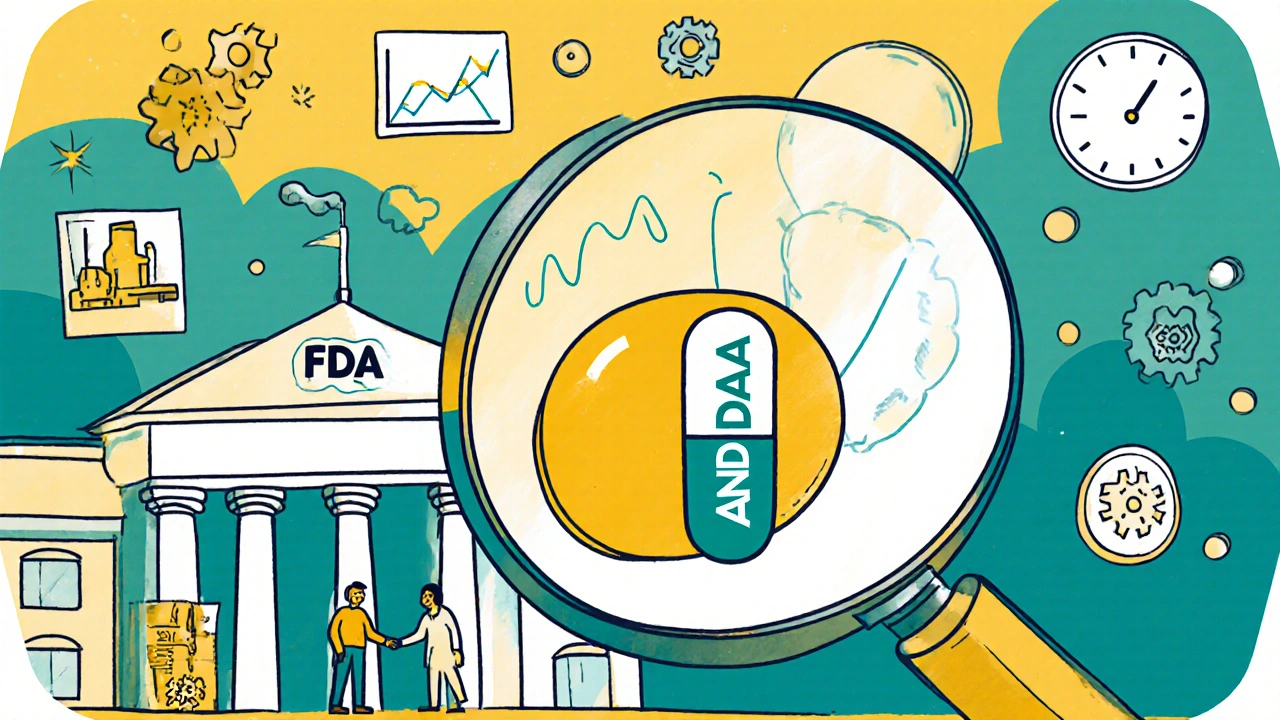
FDA’s Abbreviated New Drug Application Process Explained: How Generic Drugs Get Approved
The FDA's ANDA process lets generic drugs reach the market faster and cheaper by proving they're bioequivalent to brand-name drugs. Learn how it works, why it saves billions, and what happens behind the scenes.