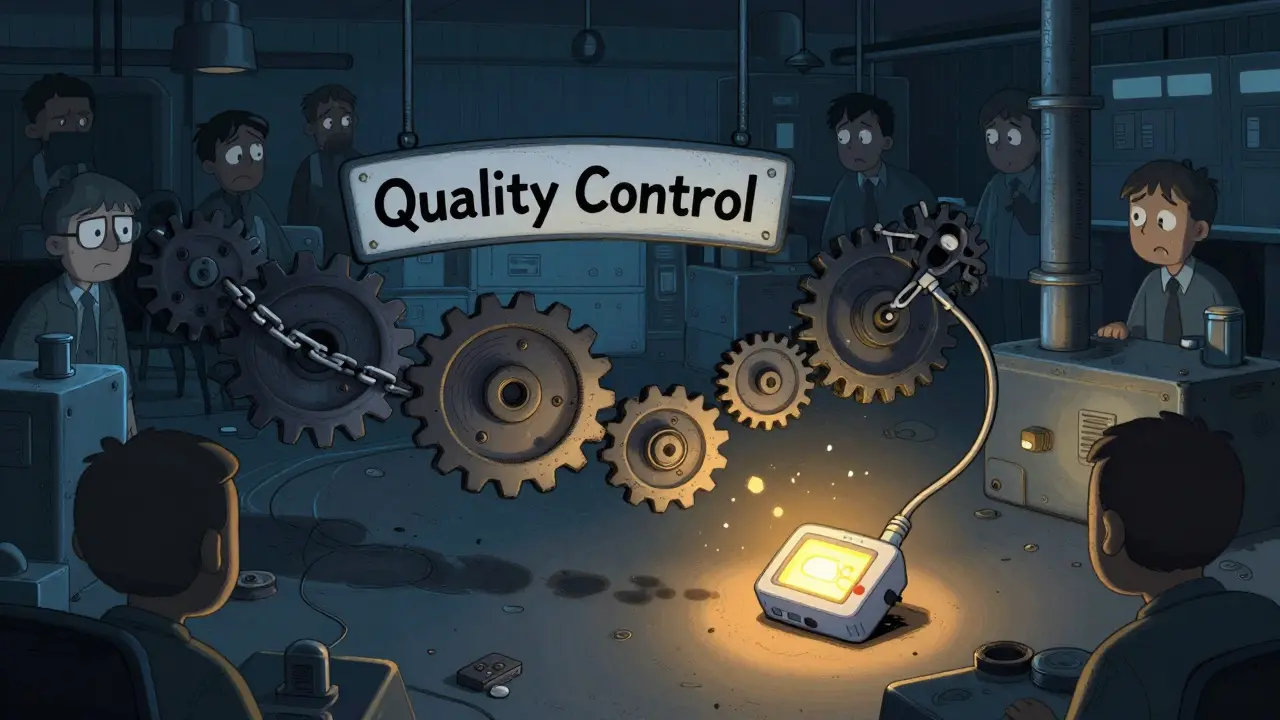
When you buy a medical device, a pacemaker, or even a simple inhaler, you assume it’s safe. You don’t think about how many checks were done before it reached you. But behind every product, there’s a fragile chain of quality control - and in 2026, that chain is under more stress than ever. Manufacturers aren’t just worried about missing a deadline or going over budget. They’re afraid that a single missed defect could cost lives, trigger recalls, or collapse trust in their brand. This isn’t theoretical. It’s happening now.
Quality Isn’t a Department - It’s the Foundation
Twenty years ago, quality assurance was a team tucked in the back of the factory, checking parts after they were made. Today, it’s the first thing executives talk about in board meetings. According to the ZEISS U.S. Manufacturing Insights Report 2025, 95% of top-level leaders in aerospace, medical, and automotive industries say quality isn’t just important - it’s mission-critical. Why? Because the cost of failure isn’t just financial. It’s reputational. It’s legal. It’s personal.
Take the medical device industry. One faulty sensor in an insulin pump can kill. In 2025, 63% of manufacturers reported stricter compliance rules compared to 2024. That’s not bureaucracy - that’s fear. Fear that regulators will shut them down. Fear that a patient will die because a measurement was off by 0.02 millimeters. Fear that their name will be in headlines, not for innovation, but for negligence.
The Hidden Cost of Rework
Most people think quality control means more inspections. But the real problem isn’t inspection - it’s rework. And rework is expensive. In 2025, 38% of manufacturers listed the cost of rework and iterations as their biggest quality challenge. Think about that. You spend money on materials. You spend time building. Then you find out it’s flawed. You take it apart. You rebuild. You test again. And if it fails again? You scrap it.
One medical device company in Ohio reduced rework costs by $1.2 million in a single year - not by hiring more inspectors, but by using precise metrology systems that caught errors before assembly. That’s the difference between fixing a mistake and preventing it. But here’s the catch: 47% of manufacturers still rely on manual inspection. That’s nearly half the industry. And those teams spend 47% of their time just measuring parts. That’s not efficiency. That’s a bottleneck.
The Skills Gap Is a Quality Crisis
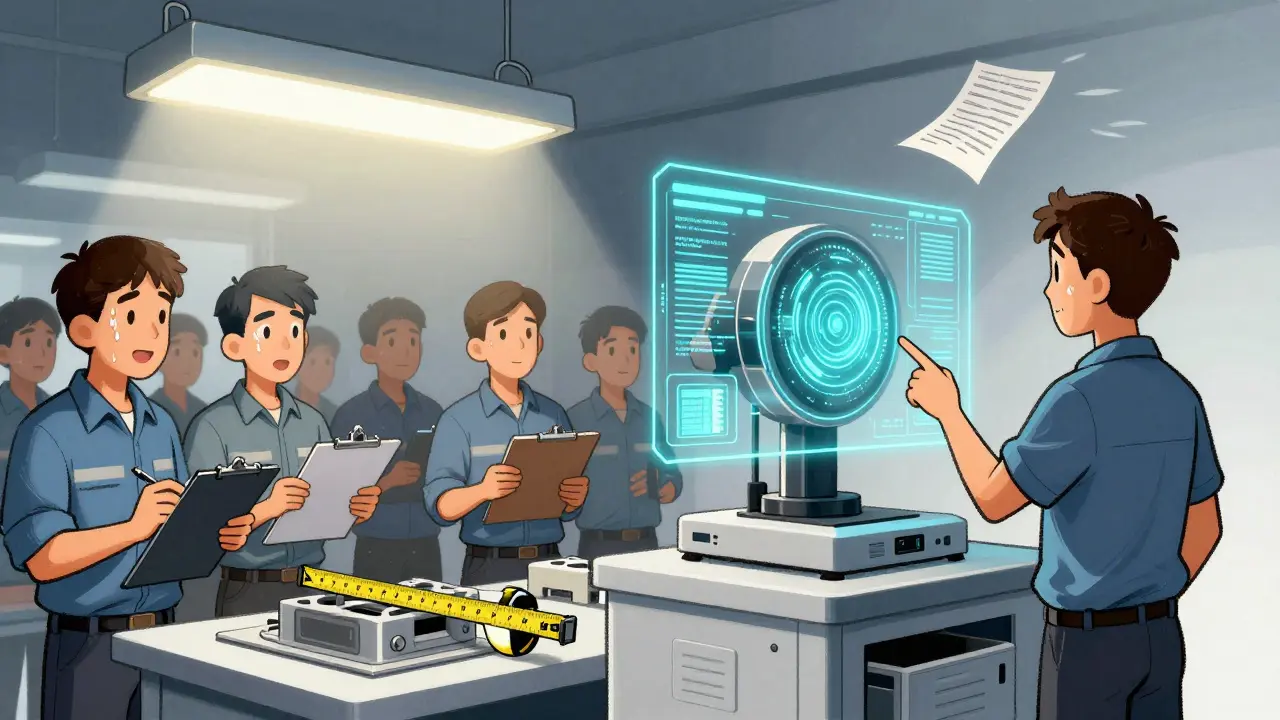
You can buy the best AI-powered inspection system in the world. But if no one knows how to use it, it’s just a fancy camera. In 2025, 47% of manufacturers said their biggest challenge was a lack of skilled personnel. Not just any workers - workers who understand both traditional quality methods AND digital tools. A quality engineer today needs to read blueprints, interpret AI-generated defect alerts, and troubleshoot data pipelines. The median salary for someone with those skills? $98,500. That’s 22% more than a traditional quality role.
And yet, companies keep hiring the same way. They train people on old machines. They assume new hires will pick up software on the job. That’s why one electronics manufacturer spent $2.3 million on automated inspection systems - and saw defect rates go up 40% in the first year. Why? Because their team didn’t know how to interpret the data. The system was telling them something was wrong. They didn’t believe it. So they overrode it. And the defects kept slipping through.
Technology Alone Won’t Save You
There’s a dangerous myth out there: if you buy the latest AI tool, your quality problems will disappear. That’s not true. The real problem isn’t technology. It’s integration. A 2025 survey by Reader Precision found that automation, robotics, and AI are often added without connecting them to existing systems. Data sits in silos. Quality teams use one platform. Production uses another. IT has its own dashboard. No one talks.
Manufacturers who fix this see real results. Deloitte found that companies with integrated quality systems had 22% lower rework costs and 18% faster time-to-market. One automotive supplier in Michigan linked their quality data to customer feedback. If a part failed in the field, the system automatically flagged the production line it came from. They cut customer-reported defects by 41% in nine months. That’s not magic. That’s data talking.
Cloud Systems Are the New Standard
Older manufacturers still use paper logs and spreadsheets. That’s not just outdated - it’s risky. In 2025, 68% of new enterprise deployments were cloud-based Quality Management Systems (QMS). Why? Because they’re flexible. They let teams in different locations - say, a factory in Ohio and a supplier in Mexico - see the same data in real time. They update automatically. They audit themselves. And if something goes wrong, you can trace it back to the exact shift, machine, and operator.
Regulators are catching up too. The FDA and EU authorities now expect digital records. Paper is no longer acceptable for high-risk products. If you’re still using clipboards, you’re not just behind - you’re vulnerable.
The Bigger Fear: Falling Behind
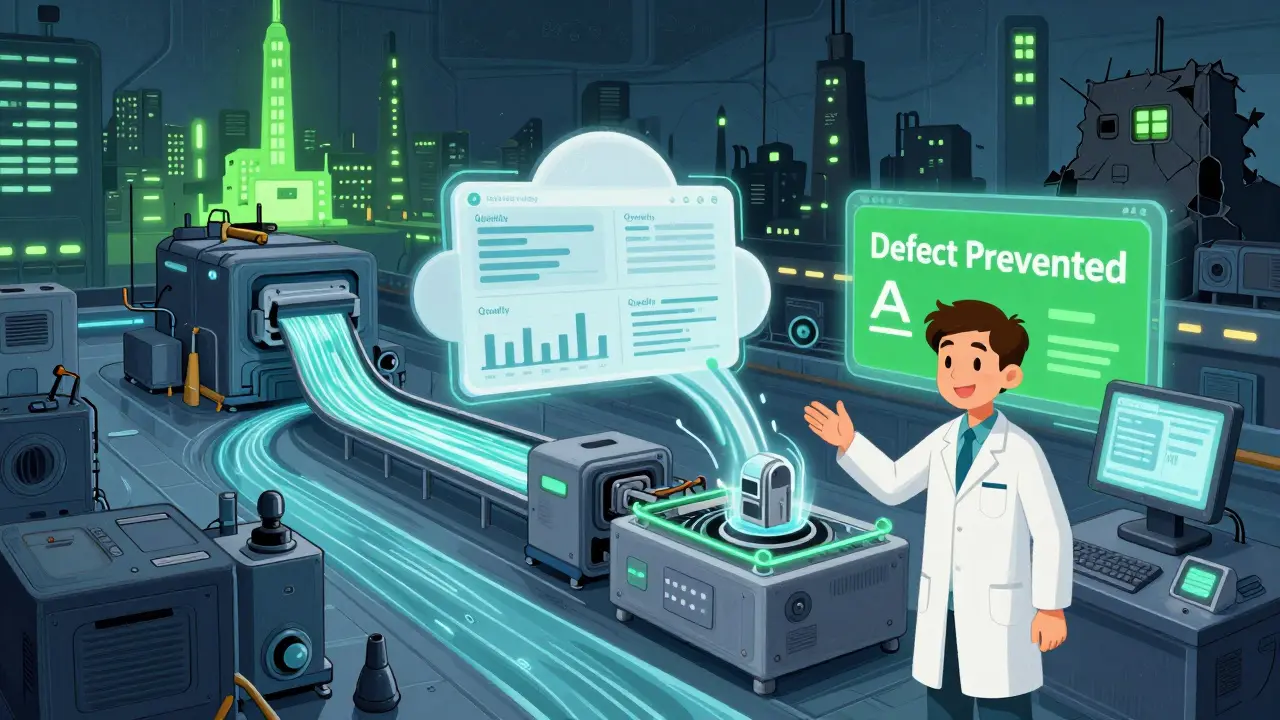
There’s a quiet divide forming in manufacturing. On one side are companies investing in predictive analytics - systems that can spot a defect before it happens. Early adopters report 27% fewer quality deviations. On the other side are companies still waiting. Forrester’s 2025 forecast says those who delay will see defect rates jump 23% by 2027. That’s not a prediction. That’s a countdown.
And it’s not just about defects. It’s about trust. If your product fails once, people remember. If it fails twice, they leave. In healthcare, that’s not just lost sales - it’s lost lives. That’s why 58% of manufacturers say they know quality is strategic - but they don’t have the resources to act. That’s the real fear. Not that something will go wrong. That they won’t be able to stop it.
What Needs to Change
There’s no single fix. But there are clear steps:
- Stop treating quality as a cost center. It’s a growth engine. Every dollar spent on prevention saves five in rework.
- Train your people like they’re engineers, not inspectors. Invest in data literacy. Pay for certifications. Make learning part of the job.
- Connect your systems. If your quality data doesn’t talk to your production line, you’re flying blind.
- Start small, but start now. You don’t need a $5 million system. Start with one AI-powered camera on one line. Measure the results. Scale from there.
Manufacturing isn’t dying. But the old way of doing things is. The companies that survive won’t be the ones with the biggest factories. They’ll be the ones with the clearest data, the most skilled teams, and the courage to treat quality as the heartbeat of their business - not an afterthought.
Why is quality assurance more important in manufacturing today than in the past?
Quality assurance is no longer just about meeting standards - it’s about survival. With tighter regulations, higher customer expectations, and more complex products (like medical devices and electric vehicle components), even a small defect can lead to recalls, lawsuits, or loss of trust. In 2025, 95% of manufacturing executives said quality is mission-critical, up from 82% in 2020. The cost of failure has shifted from financial to reputational and even life-threatening.
What’s the biggest challenge manufacturers face with quality control today?
The biggest challenge isn’t technology - it’s people. Nearly half of manufacturers (47%) report a lack of skilled workers who can operate both traditional quality tools and modern digital systems. Even with advanced AI and automation, if staff can’t interpret data or trust the system, defects slip through. Training and cultural change are now bigger hurdles than budget.
How much do poor quality controls cost manufacturers?
Rework and scrap account for 38% of quality management costs, according to the ZEISS 2025 report. On average, manufacturers with fragmented systems spend 43% more on labor for quality checks than those using integrated AI tools. One company saved $1.2 million annually by reducing rework through better metrology. The hidden cost? Lost time, delayed shipments, and damaged customer relationships - which are often harder to measure but far more damaging long-term.
Are AI and automation actually improving quality?
Yes - but only when properly implemented. One automotive supplier saw defect detection improve by 37% and false positives drop by 29% after adding AI-powered vision systems. But companies that bought tech without training saw defect rates rise. The key isn’t the tool - it’s integration. AI works best when it’s connected to production data, fed real-time feedback, and used by trained staff who understand what the numbers mean.
What’s the future of quality assurance in manufacturing?
The future is predictive. Instead of checking for defects after they happen, systems will predict them before they occur - using AI to spot patterns in temperature, vibration, or material flow. By 2027, 89% of leading manufacturers will use predictive analytics. Those who wait will face 19% higher operational costs. Quality will also tie directly to customer experience: if a product fails in the field, the system will trace it back to the production line and adjust in real time.