
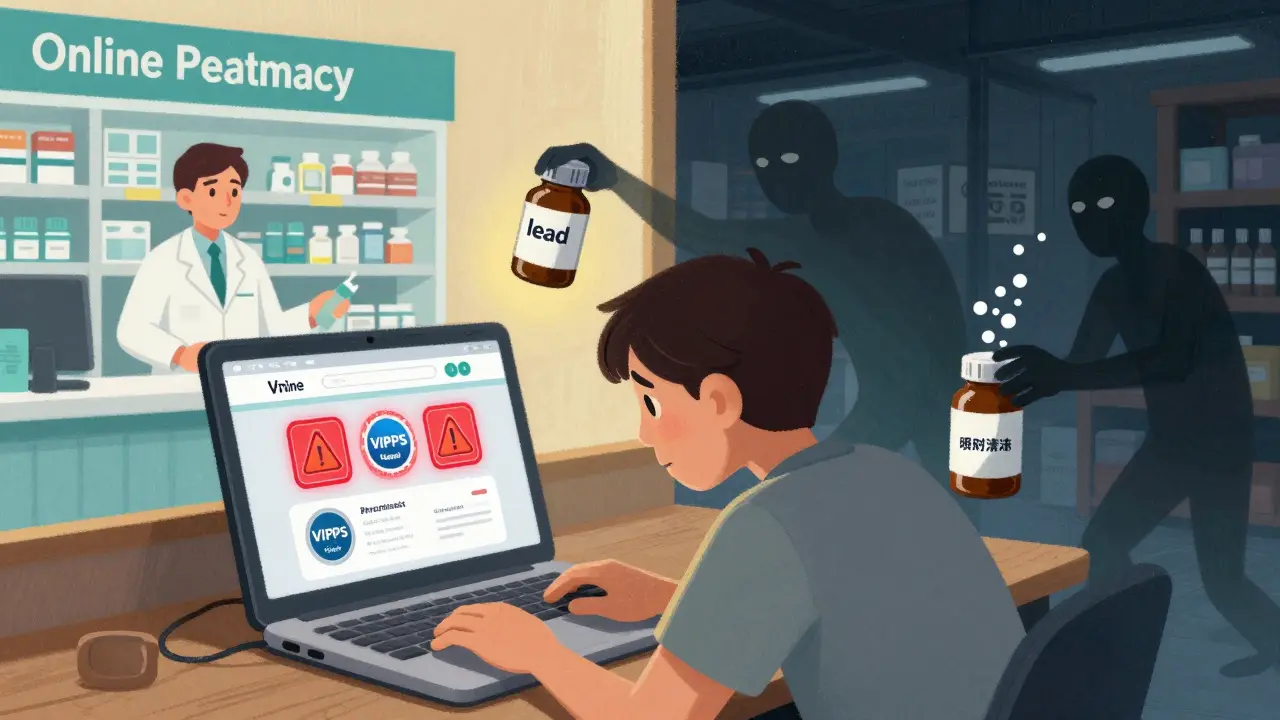
Every year, thousands of people in the U.S. buy medicine online without knowing if the pharmacy is real. Some sites look professional - they have clean designs, fake reviews, and even copied logos from real pharmacies. But behind the screen, they’re selling fake pills, expired drugs, or worse - medicines laced with dangerous chemicals. The FDA estimates that 1% to 3% of the $575 billion U.S. prescription drug market comes from unlicensed sources. That’s billions of dollars in potentially life-threatening products. So how do you make sure the pharmacy you’re using is actually licensed and safe?
What Makes a Pharmacy Licensed?
A licensed pharmacy isn’t just a business with a website. It’s a facility that has passed strict state-level inspections, employs certified pharmacists, and follows federal and state laws for handling medications. Each state has its own Board of Pharmacy that issues licenses. To get one, a pharmacy must prove it has qualified staff, secure storage, proper record-keeping, and a licensed pharmacist on-site during all operating hours. In most states, the pharmacist-in-charge must pass the North American Pharmacist Licensure Examination (NAPLEX), scoring at least 75 out of 150. Many also require a state-specific test on pharmacy law, like California’s CPJE. Without these credentials, a pharmacy can’t legally dispense prescription drugs. The National Association of Boards of Pharmacy (NABP), founded in 1904, coordinates these state boards. They track over 66,000 licensed pharmacies across the U.S. And here’s the key: only about 92% of those licenses stay active each year. That means nearly 1 in 10 pharmacies either lost their license or failed to renew it. If you’re using a pharmacy that’s not on the active list, you’re at risk.How to Check if a Pharmacy Is Legit
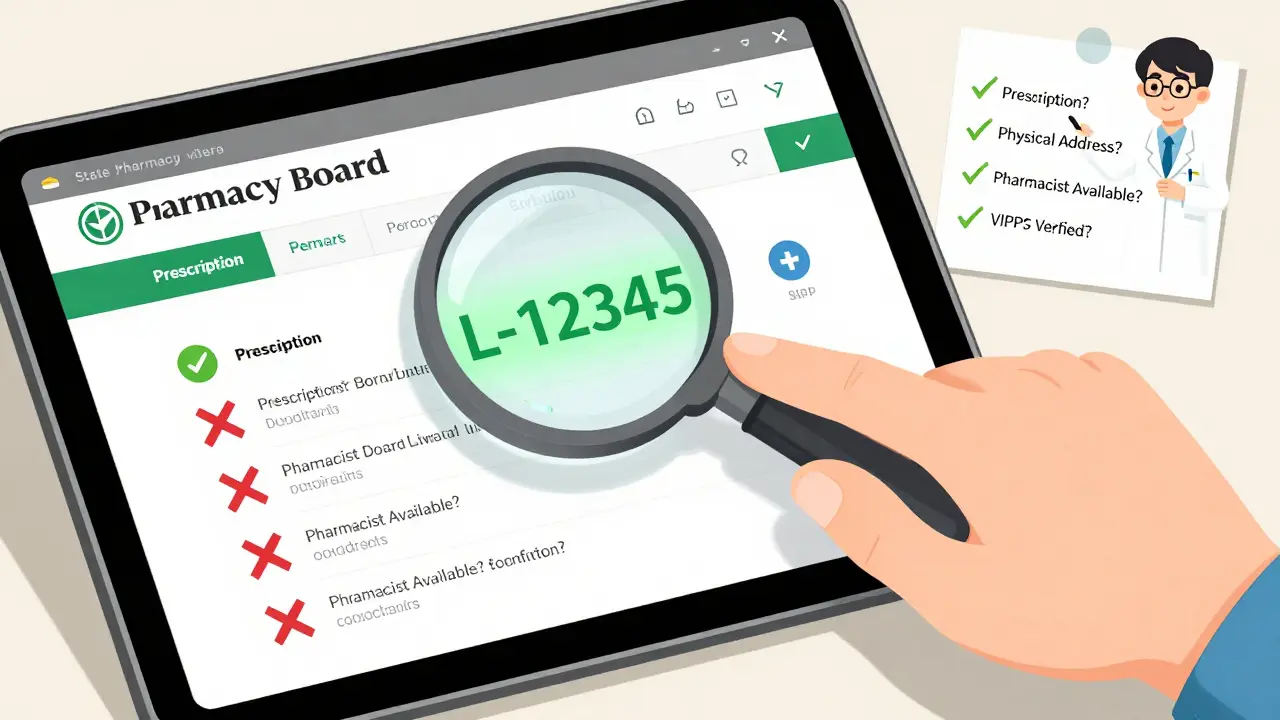
You don’t need a degree in pharmacy to verify a pharmacy. Just follow these five steps - it takes less than five minutes.- Look for a valid prescription requirement. Legitimate pharmacies will never sell prescription drugs without a valid prescription from a licensed doctor. If a website lets you buy pills like Viagra or Adderall with just a few clicks and no doctor’s note, walk away.
- Find a physical address. Use Google Maps Street View to check if the address actually exists. Many fake pharmacies list PO boxes or virtual office addresses. Real pharmacies have brick-and-mortar locations with signs, parking, and sometimes even customers coming in.
- Check the state board’s license database. Every state has a public portal where you can search for licensed pharmacies. For example, California’s Board of Pharmacy lets you search by name or license number - but don’t include prefixes like “Pharm” or “L-”. Just type the numbers. Florida offers free online verification. California charges $120 for a written request and takes up to 30 days. Most other states do it instantly.
- Look for a licensed pharmacist on staff. A real pharmacy must have a pharmacist available to answer questions. If you call and get a recording or an overseas call center, that’s a red flag. Forty-five states require pharmacists to be physically present or available for consultation during business hours.
- Verify VIPPS or NABP accreditation. The Verified Internet Pharmacy Practice Sites (VIPPS) program, run by NABP, certifies online pharmacies that meet strict safety standards. Look for the VIPPS seal on the website - but don’t trust it unless you click through to NABP’s official site to confirm it’s real. In 2023, the FDA found fake VIPPS seals on over 1,200 fraudulent sites.
One woman in California, Maria Chen, used the state’s license portal in March 2024 and discovered her pharmacy’s pharmacist-in-charge had resigned - and the pharmacy was still filling prescriptions. She reported it. The state shut them down the next week. That’s how powerful this check is.
The Dangers of Unlicensed Pharmacies
The risks aren’t theoretical. In 2022, NABP data showed that unlicensed pharmacies were 4.7 times more likely to dispense the wrong medication and 8.2 times more likely to be involved in diverting controlled substances like opioids or stimulants. In one case documented by the Better Business Bureau, a consumer paid $850 for “generic Cialis” from a site that looked official. The pills were fake - they contained no active ingredient, and one batch had traces of rat poison. The pharmacy vanished after the payment. Fake drugs aren’t just ineffective. They can cause organ damage, allergic reactions, or even death. The FDA has found counterfeit versions of heart medication, insulin, and cancer drugs containing toxic substances like lead, chalk, and floor cleaner. And here’s the scary part: 1 in 4 online pharmacies selling prescription drugs are operating illegally, according to the FDA’s Operation Safety Script. Most of these sites are based overseas, making legal action nearly impossible.Online Pharmacies vs. Brick-and-Mortar
It’s easier to verify a local pharmacy. You can walk in, see the staff, ask questions, and check their license on the wall. But online pharmacies? They’re harder to trust. The Verified Pharmacy Program (VPP), launched in 2020, helps multi-state online pharmacies get approved in one go. But it costs $1,850 to set up - a barrier for small operators. As of December 2023, only 312 pharmacies had enrolled, covering 1,872 locations. That’s less than 1% of all U.S. pharmacies. Meanwhile, 87% of state boards now offer online license verification - up from 63% in 2019. That’s good. But the system is still messy. California requires fingerprint background checks ($65.75), while other states use cheaper online checks ($35.25). Some states verify instantly. Others take weeks. That inconsistency confuses consumers. A 2023 University of Florida study found that 92% of people could verify a pharmacy’s license in under five minutes - but 38% didn’t understand what “administrative suspension” or “inactive” meant. They thought the pharmacy was still okay. That’s why clear language matters.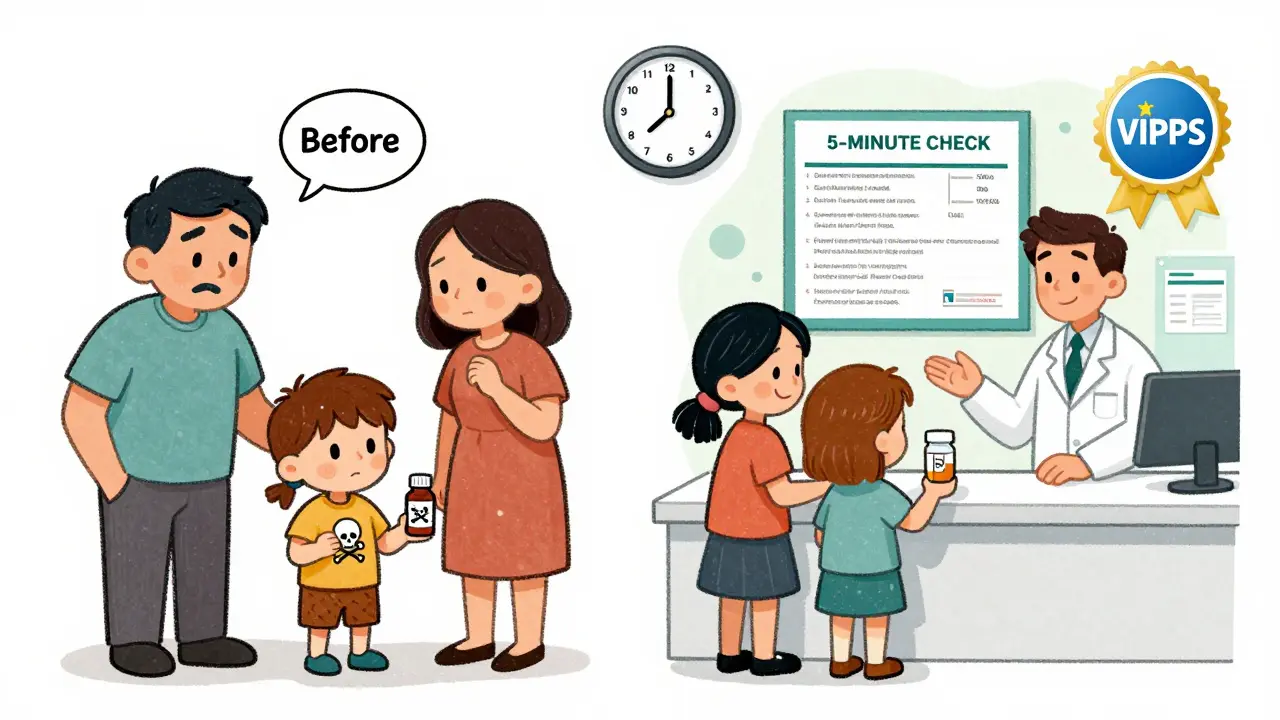
What Experts Say
Dr. Carmen Catizone of NABP says the licensing system is the first line of defense against counterfeit drugs. “Without it,” she says, “there’s no accountability.” The American Society of Health-System Pharmacists (ASHP) recommends using three verification tools: your state’s pharmacy board, NABP’s LegitScript program (which catches 98.7% of fake online pharmacies), and a physical inspection if possible. But Dr. Kevin T. Fuji of Pacific University points out a flaw: “The average consumer spends only 2.7 minutes checking a pharmacy. They don’t dig deep enough.” He’s right. Most people click on a link, see a logo, and assume it’s safe. The FDA’s 2024 Strategic Plan includes $15 million to improve detection of fake online pharmacies. Their goal? Reduce consumer harm by 40% by 2026. That’s progress. But it won’t matter if people don’t know how to check for themselves.What You Can Do Right Now
Here’s your action plan:- Always use pharmacies you know - local ones with a physical presence.
- If buying online, only use sites that display a valid VIPPS seal and link to NABP’s official verification page.
- Search your state’s Board of Pharmacy website directly - don’t rely on Google results.
- Call the pharmacy. Ask to speak to the pharmacist. If they hesitate or transfer you to a call center, walk away.
- Report suspicious pharmacies to the FDA at fda.gov/safety/report-problem.
Don’t assume a pharmacy is safe because it’s been around for years or has good reviews. Fake sites copy real ones. They steal logos. They fake testimonials. The only thing that matters is the license.
In 2024, a new California law requires out-of-state online pharmacies shipping to residents to provide an 800-number for direct pharmacist access. That’s a step forward. But it’s not nationwide. Until all states standardize rules, the burden falls on you.
Medications aren’t like buying shoes. A bad pair of sneakers might hurt your feet. A bad pill can kill you. Take the five minutes. Check the license. Save your life.
How do I know if an online pharmacy is licensed?
Check the pharmacy’s website for a valid VIPPS seal from NABP, then go to the NABP website and verify the seal is real. Also, search your state’s Board of Pharmacy website using the pharmacy’s name or license number. Legitimate pharmacies will always require a prescription and have a physical address you can verify on Google Maps.
Can I trust pharmacies that offer discounts on prescription drugs?
Be very careful. Legitimate pharmacies may offer discounts, but they won’t sell controlled substances without a prescription or offer prices that seem too good to be true. If a site offers $10 pills for brand-name drugs like Lipitor or Xanax, it’s almost certainly fake. The cost of real medication is regulated and transparent.
What’s the difference between NABP Verify and VIPPS?
NABP Verify is a tool that checks whether a pharmacy holds an active license in any U.S. state. VIPPS is a certification program that means the pharmacy meets strict standards for online operations - including secure websites, pharmacist availability, and compliance with U.S. laws. A pharmacy can be verified without being VIPPS-certified, but only VIPPS pharmacies are approved for safe online dispensing.
Are all pharmacies in the U.S. required to be licensed?
Yes. Every pharmacy that dispenses prescription drugs in the U.S. must be licensed by the state where it operates. This includes brick-and-mortar stores and online pharmacies. Even pharmacies that ship across state lines must be licensed in every state they serve. Operating without a license is illegal and a major red flag.
What should I do if I think I bought medicine from a fake pharmacy?
Stop taking the medication immediately. Contact your doctor or pharmacist to discuss potential risks. Report the pharmacy to the FDA through their MedWatch program at fda.gov/safety/report-problem. Save any packaging, emails, or receipts - they help authorities track down illegal operations. If you experience side effects, seek medical attention right away.
Isaac Bonillo Alcaina
December 24, 2025 AT 01:15Let me get this straight - you’re telling me people still fall for fake pharmacy websites? I’ve seen these scams for years. The VIPPS seal? Most of them clone it with pixel-perfect precision. I once spent 45 minutes reverse-engineering a site that looked like CVS until I checked the SSL certificate - it was issued to ‘secure-online-pharma[.]xyz’ in Cyprus. People don’t check the fine print. They just want cheap pills. Sad.
Bhargav Patel
December 25, 2025 AT 18:14The structural integrity of pharmaceutical regulation in the United States remains a commendable framework, albeit one undermined by consumer complacency. The NABP’s verification protocols, while robust, are rendered ineffective when individuals fail to engage with primary sources - relying instead on algorithmically surfaced search results or third-party aggregators. The onus, therefore, is not merely upon regulatory bodies, but upon the epistemic responsibility of the individual to verify, cross-reference, and prioritize authoritative channels over convenience.
Sidra Khan
December 26, 2025 AT 15:19Ugh. I just bought my insulin from a site that said ‘FDA Approved’ and had a fancy logo. Now I’m paranoid. 😬
Lu Jelonek
December 27, 2025 AT 18:01I work in a community pharmacy in Ohio. We get calls every week from people asking if we can fill a script they bought online. Most of them don’t even know what ‘inactive license’ means. We spend half our day explaining that ‘it’s on the website’ doesn’t mean ‘it’s legal’. It’s exhausting. But someone has to do it.
Ademola Madehin
December 29, 2025 AT 00:54Y’all be out here buying pills from some shady site like it’s Amazon Prime? I had a cousin die from fake Xanax last year. The guy who sold it? He’s probably sipping margaritas in Nigeria right now. This ain’t a joke. Stop being lazy. Check the license. Or your next post might be a funeral notice.
Adarsh Dubey
December 29, 2025 AT 14:32It’s interesting how the system works - state boards vary so much in speed and process, yet the consumer is expected to navigate all of them. I think the real solution isn’t more warnings, but a single federal portal. Imagine one search bar that pulls from every state’s database, VIPPS, and LegitScript. It’d cut verification time to 90 seconds. Why hasn’t this been built yet?
Bartholomew Henry Allen
December 30, 2025 AT 09:30Foreign pharmacies are stealing American lives. No more excuses. If you buy from outside the U.S. you’re complicit. The FDA should shut down every domain that doesn’t have a U.S. license and a U.S. pharmacist on duty. Period. No more ‘maybe’ or ‘I think’. This is national security.
Abby Polhill
December 31, 2025 AT 15:36From a clinical pharmacy standpoint, the real gap isn’t consumer awareness - it’s interoperability. Most state boards don’t feed into NABP’s API in real time. You’ve got legacy systems running COBOL, manual entry delays, and no standardized taxonomy for license statuses. ‘Inactive’ vs ‘suspended’ vs ‘revoked’ - these aren’t just semantics. They’re triage codes. If we can’t standardize the data layer, no amount of public education will fix the downstream risk.
Blow Job
January 1, 2026 AT 02:20I used to think this stuff didn’t matter until my mom got sick from fake blood pressure meds. She didn’t know how to check. I had to teach her. Now we do it together every time she orders. Five minutes. One search. One phone call. It’s not hard. You just have to care enough to try. Please don’t wait until it’s too late.