
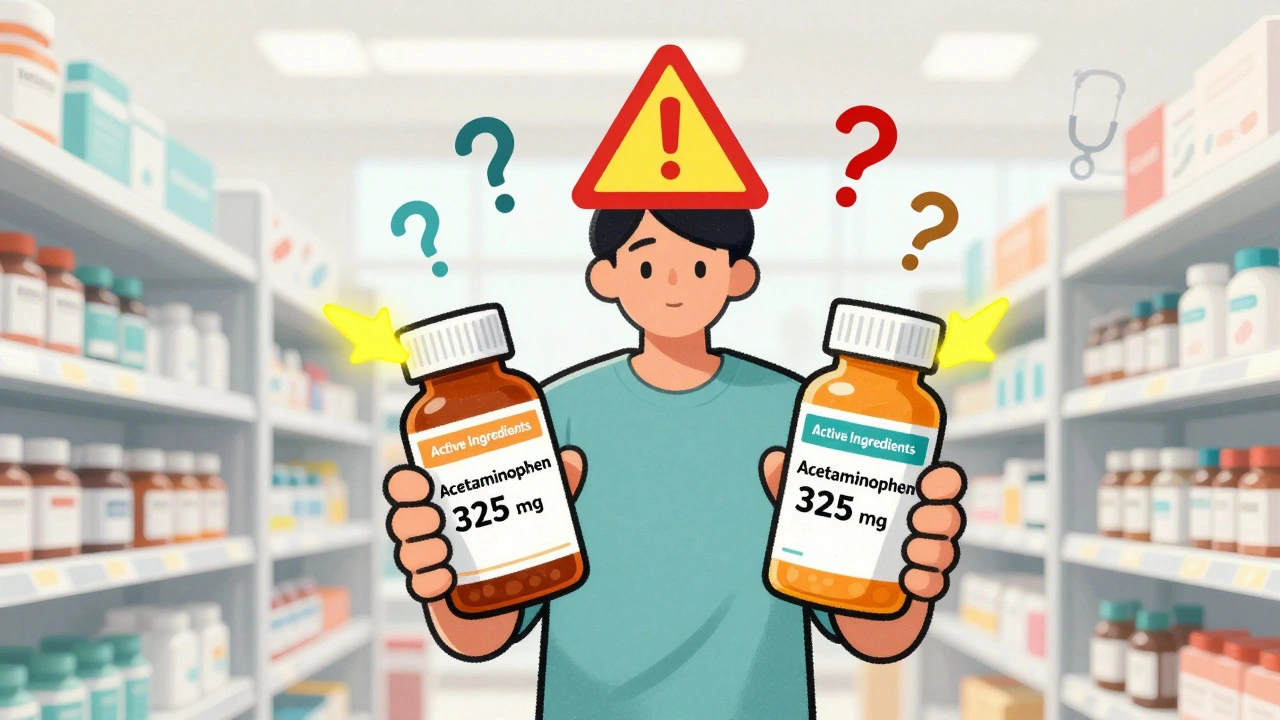
Every year, millions of people grab an OTC medicine off the shelf without reading the label. They see ‘Tylenol’ or ‘Advil’ and assume they know what’s inside. But what if that bottle also contains acetaminophen - the same active ingredient in the cold medicine you took this morning? That’s how accidental overdoses happen. The OTC drug facts label isn’t just fine print. It’s your safety net. And if you don’t know how to read it, you’re playing Russian roulette with your health.
What’s on the OTC Drug Facts Label?
The U.S. Food and Drug Administration (FDA) made this label mandatory in 2017. Before that, every brand had its own confusing layout. Now, every OTC medicine - whether it’s a pain reliever, allergy pill, or cough syrup - must follow the same format. There are seven sections, in this exact order:- Active Ingredients
- Purpose
- Uses
- Warnings
- Directions
- Other Information
- Inactive Ingredients
Active Ingredients: The Most Important Section
This is where you find the actual medicine. Not the brand name. Not the marketing term. The real chemical. For example:- Acetaminophen 325 mg
- Dextromethorphan HBr 10 mg
- Phenylephrine HCl 5 mg
Purpose and Uses: Match the Symptom to the Medicine
The ‘Purpose’ section explains what the active ingredient does. ‘Uses’ tells you exactly which symptoms it’s approved to treat. This isn’t marketing fluff. It’s FDA-approved language. For example, a label might say: “Temporarily relieves these common cold/flu symptoms: sore throat, headache, body aches, fever, runny nose, sneezing, itching of the nose or throat.” If your symptom isn’t listed - say, you have a rash or a persistent cough that won’t quit - this medicine isn’t meant for you. Taking it anyway won’t help. It might hurt. Don’t assume ‘multi-symptom’ means ‘everything.’ That’s how people end up taking four different pills, all with the same active ingredient. Always check the Uses section first. If it doesn’t match your problem, walk away.Warnings: Don’t Skip This
This is where the label protects you from yourself - and from other drugs you might be taking. Look for:- ‘Do not use if you have ever had an allergic reaction to [ingredient]’
- ‘Ask a doctor before use if you are taking blood thinners, antidepressants, or other medications’
- ‘Liver warning: This product contains acetaminophen. Severe liver damage may occur if you take more than 4,000 mg in 24 hours’
- ‘Stomach bleeding warning: This product contains an NSAID, which may cause severe stomach bleeding’
- ‘Do not use if you are pregnant or breastfeeding unless directed by a doctor’
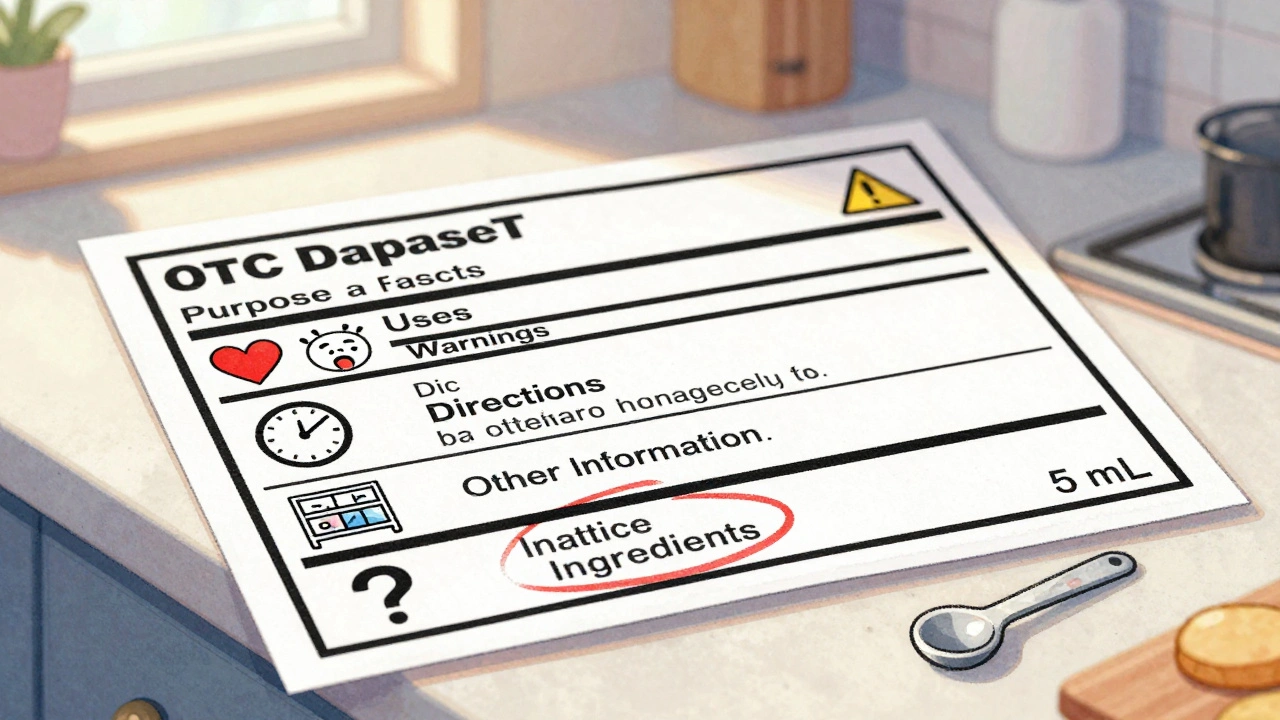
Directions: How Much, How Often, How Long
This section tells you the exact dose. Not ‘take as needed.’ Not ‘a couple of pills.’ It says:- ‘Adults and children 12 years and older: 2 caplets every 4 to 6 hours’
- ‘Do not take more than 12 caplets in 24 hours’
- ‘Do not use for more than 10 days unless directed by a doctor’
Other Information: Storage and Hidden Details
This section gets ignored - but it matters. It tells you:- Storage temperature: ‘Store between 68°F to 77°F’ (20°C to 25°C)
- How much sodium is in each dose: ‘Each tablet contains 2 mg sodium’
- Expiration date: Always check this. Old medicine can lose potency or break down into harmful substances.
Inactive Ingredients: The Silent Allergens
These are the fillers, dyes, and preservatives. They don’t treat your symptoms. But they can trigger reactions. Common ones:- Croscarmellose sodium
- Povidone
- FD&C Red No. 40
- High-fructose corn syrup
- Gluten (sometimes used as a binder)
How to Use the Label Like a Pro
Here’s a simple 5-step check that pharmacists recommend:- Identify the active ingredient - Write it down. Is it acetaminophen? Ibuprofen? Both? If you’re taking more than one product, make sure they don’t overlap.
- Check the Uses - Does this medicine treat what you actually have?
- Read every Warning - Especially liver, stomach, and drug interaction warnings.
- Follow the Directions exactly - Don’t increase the dose if it doesn’t work fast enough. Wait. Talk to a pharmacist.
- Scan the Inactive Ingredients - If you have allergies or dietary restrictions, this is your final safety net.
What’s Changing Soon?
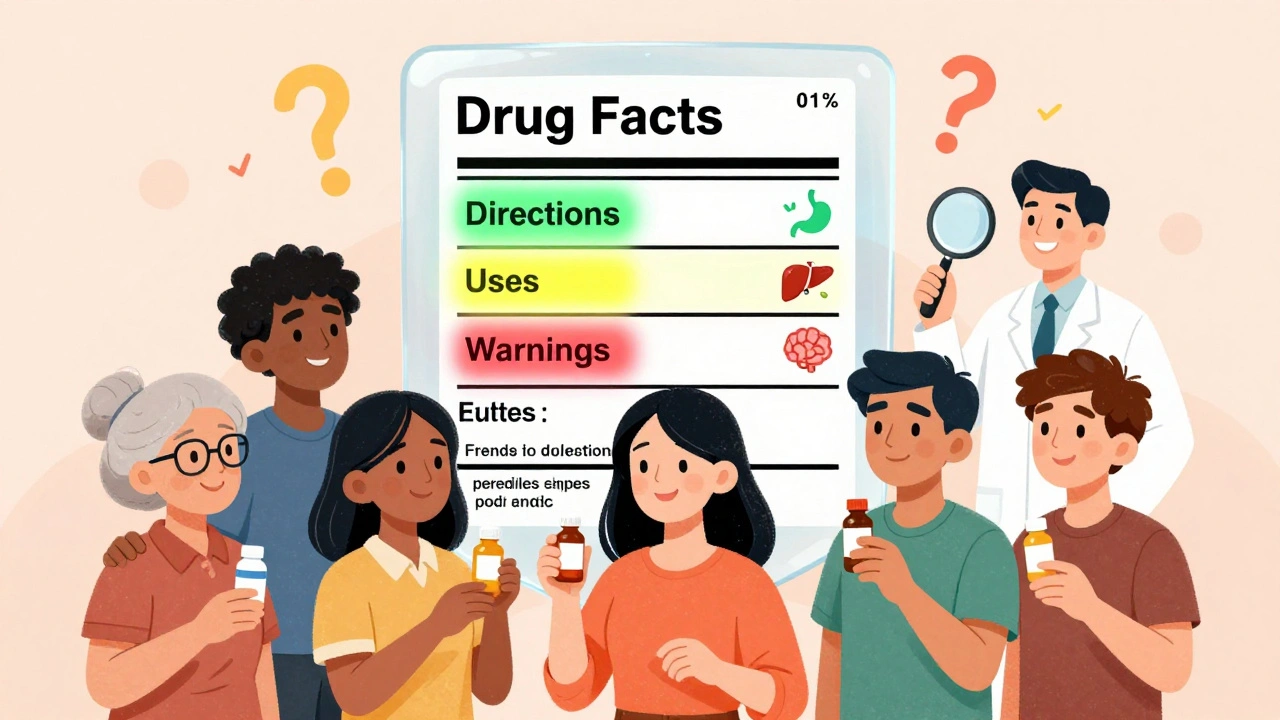
The FDA is updating the label again. By the end of 2025, new labels will have:- Bigger font for active ingredient concentrations
- Color-coded sections (red for warnings, green for directions)
- Simple icons - like a warning triangle for liver risk
- QR codes linking to video explanations
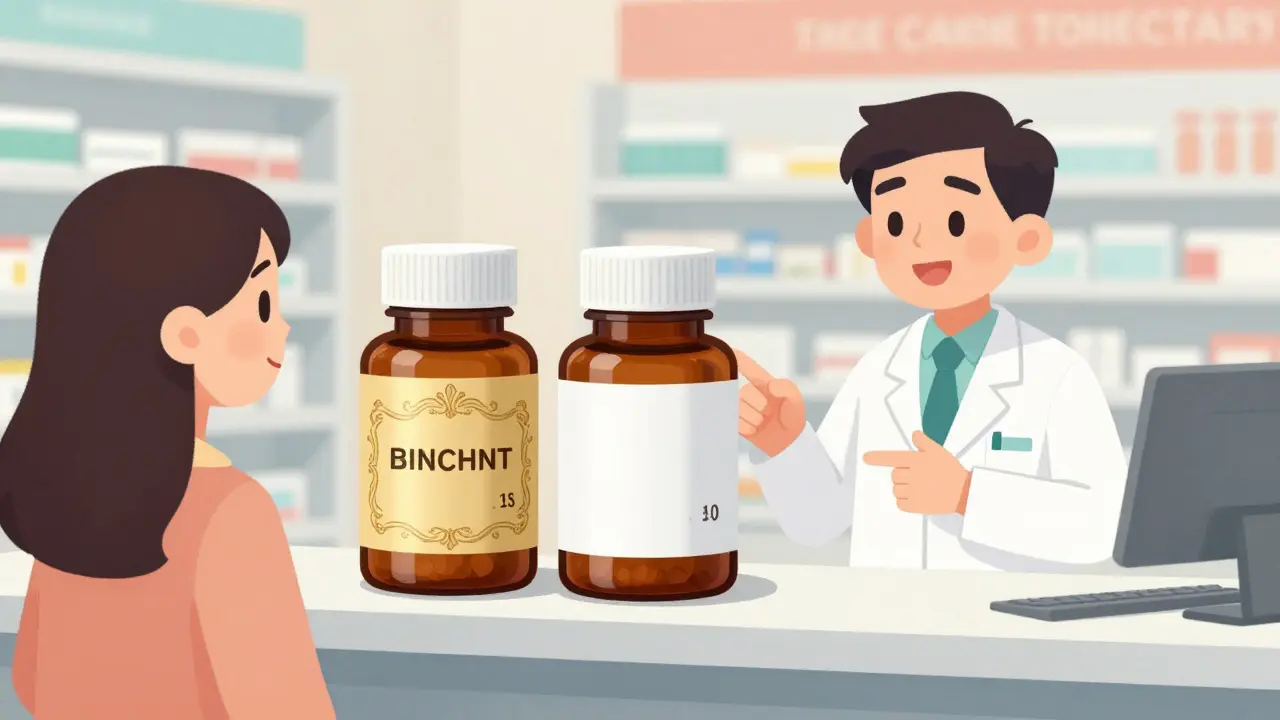
When in Doubt, Ask a Pharmacist
You don’t need a prescription to walk into a pharmacy. You don’t need an appointment. Just ask: ‘Can you help me check if this medicine is safe with what I’m already taking?’ Walgreens and CVS both report a 40% increase in these kinds of questions since 2023. Pharmacists aren’t just dispensers. They’re your free, expert safety advisors. And if you’re ever unsure - skip the medicine. Wait. Call your doctor. Or go to the pharmacy. Better safe than sorry.Final Thought: You’re Not Just Buying Medicine. You’re Choosing Your Safety.
OTC drugs are convenient. They’re cheap. They’re everywhere. But they’re not harmless. Every pill you take has a chemical effect on your body. And if you don’t know what’s in it - or how much - you’re not managing your health. You’re gambling with it. The Drug Facts Label exists to stop that. It’s clear. It’s consistent. It’s designed to protect you. All you have to do is read it.What should I do if I can’t read the small print on the label?
Use a magnifying glass or your phone’s camera zoom feature. Many pharmacies offer free magnifiers at the counter. You can also ask a pharmacist to read it to you. The FDA’s ‘Drug Label Decoder’ app (available for free on iOS and Android) lets you scan the label and hear the information aloud. This is especially helpful for older adults or those with vision impairments.
Can I trust generic brands over name brands?
Yes - as long as the active ingredient, dose, and directions match. Generic medicines contain the same active ingredient as name brands, just without the marketing. For example, store-brand acetaminophen is chemically identical to Tylenol. The only differences are in inactive ingredients, packaging, and price. Always check the Drug Facts label, not the brand name, to confirm you’re getting the right medicine.
What’s the difference between ‘OTC drug’ and ‘dietary supplement’ labels?
OTC drugs use the Drug Facts label and are regulated by the FDA for safety and effectiveness. Dietary supplements use a Supplement Facts label and are not required to prove they work before selling. They also don’t have to list side effects or drug interactions. If it’s sold as a ‘natural remedy’ or ‘herbal support’ without a Drug Facts label, it’s not an OTC medicine - and it’s not held to the same safety standards.
Why do some OTC medicines say ‘PM’ on the label?
‘PM’ means the product contains an antihistamine - usually diphenhydramine (38 mg per dose) - to help you sleep. These are not sleep aids in the medical sense. They cause drowsiness as a side effect. Never take a PM product during the day unless you plan to be sedated. Avoid mixing with alcohol or other sedatives. This combination can cause dangerous breathing problems.
What should I do if I think I’ve taken too much OTC medicine?
Call Poison Control immediately at 1-800-222-1222 (U.S.) or your local emergency number. Don’t wait for symptoms. Even if you feel fine, liver or kidney damage can start silently. Have the medicine bottle with you when you call - the active ingredient and dose are critical information. If you’re outside the U.S., contact your country’s poison center or go to the nearest emergency room.
Rebecca Braatz
December 4, 2025 AT 00:04Just read the label like it’s your life insurance policy-because it kinda is. I used to grab whatever looked easiest until my cousin ended up in the ER from mixing Tylenol and NyQuil. Now I always check the active ingredients first. Seriously, 50 seconds could save your liver.
And yes, generics are totally fine. My store-brand ibuprofen costs $3 and does the same job as Advil. Brand names are just fancy packaging.
Also, if you can’t read the tiny print? Use your phone’s zoom. Or ask the pharmacist. They don’t bite. I promise.
Pavan Kankala
December 4, 2025 AT 05:56They’re making us read labels now? Next they’ll tell us to breathe through our noses and drink filtered water. This is just step one in the Great Pharmaceutical Control Agenda. The FDA doesn’t care about your health-they care about controlling what you take. You think they want you to be healthy? No. They want you dependent on their approved chemicals. Wake up.
And don’t get me started on QR codes. That’s how they track you. Next thing you know, your meds will be tied to your social credit score.
Yasmine Hajar
December 5, 2025 AT 14:56OMG YES. I’m a nurse and I see this EVERY DAY. People take three different cold meds because ‘they all help’-and then they show up with liver enzymes through the roof. I literally hand out printed copies of the Drug Facts layout to my patients. It’s not complicated. It’s just ignored.
Also-PM meds? Don’t take them unless you’re ready to nap for 8 hours. I had a patient try to drive after taking a ‘PM’ painkiller. He crashed into a mailbox. Didn’t even remember it.
And yes, use the app. It’s free. And your grandma will thank you.
Ashley Elliott
December 7, 2025 AT 03:14I always scan the inactive ingredients. I’m allergic to red dye #40, and I didn’t know it was in some allergy pills until I broke out in hives after taking one. Now I check every time. It’s weird how many people don’t realize that ‘inactive’ doesn’t mean ‘harmless.’
Also, I keep my meds in a drawer-not the bathroom. Humidity ruins everything. Even aspirin.
And yes, generics are fine. I’ve been buying store-brand acetaminophen for 12 years. Still alive. Still pain-free.
Chad Handy
December 7, 2025 AT 07:39You know what’s really dangerous? The fact that we’re told to trust the FDA, but the same people who approved OTC labels also approved opioids for over-the-counter use in the 90s. This isn’t safety-it’s control. They want you to think you’re being responsible, but you’re just being manipulated into compliance. The label is a distraction. The real danger is the system that lets them sell poison with a smile and a checklist.
I don’t trust any label. I don’t trust any company. I don’t trust any ‘expert.’ I take nothing unless it’s been personally tested by someone I know. And even then… I’m skeptical.
Augusta Barlow
December 8, 2025 AT 14:07Let me guess-next they’ll tell us to wash our hands before eating. This is just another way to make people feel guilty for being normal. Who even reads these labels? I mean, really? I’ve been taking Advil for 20 years and I’ve never once looked at the back. I’m still alive. My kidneys are fine. Maybe the ‘danger’ is just a marketing tactic to sell apps and books.
Also, why are they adding QR codes? Are we children now? Do they think we can’t read? This feels like a corporate power grab disguised as ‘health literacy.’
And why do they keep saying ‘50 seconds’ like it’s a miracle? I spend 50 seconds deciding what to eat for lunch. I don’t need a lecture about my medicine choices.
Jenny Rogers
December 10, 2025 AT 00:42It is imperative that the general populace comprehend the fundamental importance of adhering to the standardized regulatory framework established by the Food and Drug Administration. The OTC Drug Facts Label is not merely a suggestion; it is a legally codified instrument of public health preservation. Failure to engage with this information constitutes a dereliction of personal responsibility and a tacit endorsement of pharmacological negligence.
One cannot, in good conscience, justify ignorance in the face of such clearly delineated safety parameters. The consequences are not hypothetical-they are documented, quantifiable, and tragically recurrent.
It is not ‘reading a label.’ It is exercising basic rational agency in a world increasingly defined by passive consumption.
Rachel Bonaparte
December 11, 2025 AT 01:34Ugh. I just bought a ‘multi-symptom’ cold pill last week and it had 650mg of acetaminophen in it. SIX HUNDRED AND FIFTY. And I didn’t even know I was already taking it in my daily vitamin. I’m lucky I didn’t end up on a transplant list. Honestly, this system is designed to kill you slowly. The FDA doesn’t want you to know how dangerous this stuff is-they want you to keep buying it.
And don’t even get me started on ‘natural’ supplements. They’re not regulated at all. But OTC drugs? Oh, they’ve got a whole fancy label. That’s just为了让 you feel safe while they poison you. I swear, if I didn’t have a pharmacy degree, I’d be dead by now.
Michael Feldstein
December 12, 2025 AT 08:19One thing I always tell people: write down the active ingredient on your phone when you buy something new. Then when you’re at the store again, check your notes before grabbing another bottle. I used to mix ibuprofen and cold meds all the time-until I started doing this. No more accidental overdoses.
Also, if you’re on blood thinners? Check the warnings. A lot of OTC painkillers have NSAIDs that can mess with your meds. Your pharmacist will tell you this for free. Just ask.
And yes-use the app. It’s dumb, but it works. My mom uses it. She’s 72. She says it’s like having a nurse in her pocket.
jagdish kumar
December 14, 2025 AT 04:23Labels are just distractions. The real question is: why are we allowed to buy poison without a prescription? The system is broken. We are not meant to self-medicate. We are meant to be guided. But no-let’s just throw pills on shelves and hope people read tiny text. That’s not freedom. That’s negligence dressed up as choice.
zac grant
December 16, 2025 AT 02:15Pro tip: if you’re taking more than one OTC med, use a med tracker app. I use Medisafe-it alerts you if you’re doubling up on acetaminophen. Saved me twice. Also, always check the sodium content if you’re hypertensive. Some cold meds have 100+ mg per tablet. That’s like a bag of chips in pill form.
And don’t trust ‘extra strength’-it’s just a marketing word. 500mg isn’t ‘stronger’ than 325mg-it’s just more. And more isn’t better. It’s riskier.
michael booth
December 18, 2025 AT 01:41It is essential to recognize that the OTC Drug Facts Label represents a significant advancement in consumer safety transparency. The standardized format ensures that critical pharmacological information is uniformly accessible across all products. This regulatory consistency is a model of public health infrastructure and should be embraced as such.
One should never underestimate the value of disciplined adherence to dosing instructions. The data is unequivocal: noncompliance correlates directly with preventable adverse events.
It is not merely prudent-it is ethically incumbent.
Libby Rees
December 18, 2025 AT 11:43I used to ignore labels too. Then I had a bad reaction to a cough syrup because of the corn syrup. I didn’t know it was in there. Now I check every single ingredient. Even the ones that sound like science fiction. Because if it’s in the bottle, it’s in your body.
And yes, the FDA app works. I use it for my dad. He’s blind. The voice feature is a lifesaver.
Jordan Wall
December 19, 2025 AT 19:06Let’s be real-this whole ‘read the label’ thing is just corporate theater. The real issue? Big Pharma owns the FDA. They design the labels to look safe while burying the risks in legalese. And those QR codes? That’s not for you. That’s for them to track your consumption patterns. You think they care about liver damage? Nah. They care about your data.
Also, ‘generic’? Sure. But did you know they use different fillers? Some are made in India. Some in China. Who knows what’s really in there? I stopped buying anything made outside the EU. Too risky.
Shofner Lehto
December 19, 2025 AT 21:01My grandma taught me to read labels when I was 10. Said, ‘If you don’t know what you’re putting in your body, you don’t own your health.’ I’ve never forgotten that.
Now I teach my kids the same thing. We read labels together every time we buy medicine. It’s not a chore-it’s a ritual. And it’s saved us from so many dumb mistakes.
Also, always check the expiration date. Old medicine doesn’t just stop working-it can turn toxic. I found a bottle of 10-year-old ibuprofen in my closet last year. Threw it out. No regrets.
Rebecca Braatz
December 21, 2025 AT 15:02Also-don’t trust ‘natural’ supplements. They’re not regulated. One guy I know took ‘turmeric extract’ for arthritis… turned out it had hidden steroids. He got hospitalized. No label. No warnings. Just a bottle with a leaf on it. That’s the real danger-not the FDA-approved stuff.