

Every year, millions of people pass a kidney stone. For many, it’s a one-time nightmare. But for others, it’s just the beginning. If you’ve had one kidney stone, you have a 30% to 50% chance of getting another within five years. And if you don’t change anything? That number jumps to 70%. This isn’t bad luck. It’s a chronic condition - and it’s preventable.
Why Kidney Stones Keep Coming Back
Kidney stones aren’t just random crystals that form out of nowhere. They’re the result of long-term imbalances in your body’s chemistry. Most stones are made of calcium oxalate - about 80% of them. But the real problem isn’t oxalate alone. It’s how your body handles fluids, salt, protein, and minerals over time.When you don’t drink enough, your urine gets too concentrated. Minerals clump together and stick to the inside of your kidneys. When you eat too much salt, your kidneys dump more calcium into your urine. Too much animal protein? That lowers citrate - a natural stone blocker - and makes your urine more acidic. All of this adds up.
And here’s the thing: cutting out calcium won’t help. In fact, it makes things worse. When you avoid calcium-rich foods, your gut absorbs more oxalate from plants like spinach, nuts, and beets. That oxalate then heads straight to your kidneys - and forms stones. The fix? Eat calcium with meals. It binds oxalate in your gut before it ever reaches your kidneys.
The #1 Rule: Drink More Than You Think
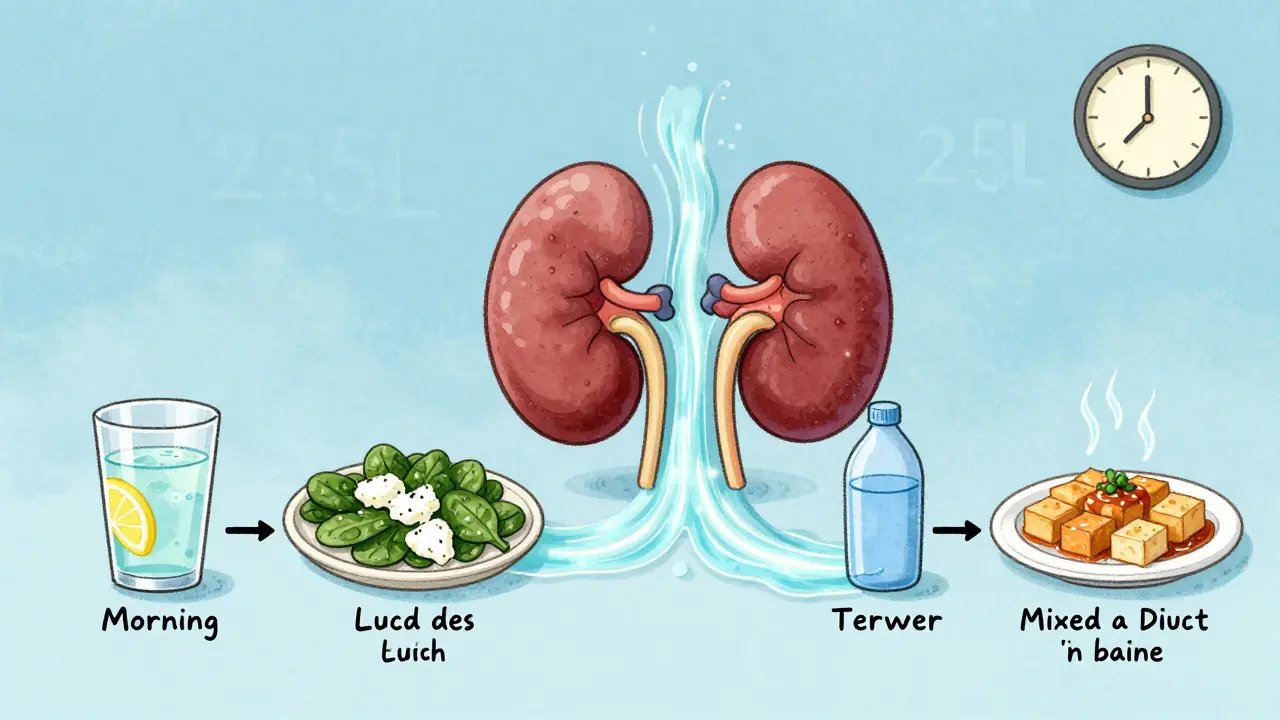
If you remember only one thing from this article, let it be this: drink more water.Doctors don’t just say this because it sounds good. They say it because it works - and the evidence is rock solid. The European Association of Urology, the National Kidney Foundation, and the American Academy of Family Physicians all agree: your goal is to produce at least 2.5 liters of urine every day. That means drinking 2.5 to 3 liters of fluid. Not 2. That’s 10 to 12 standard glasses.
Don’t rely on thirst. By the time you feel thirsty, you’re already behind. A study from the NHS found that people who wait for thirst to guide them end up with urine that’s too concentrated - and they’re more likely to form stones again.
Here’s how to make it easier:
- Start your day with a full glass of water before coffee.
- Keep a marked water bottle with you. Fill it twice a day - that’s your minimum.
- Check your urine color. Pale yellow or clear? You’re good. Dark yellow? Drink more.
- Drink extra when it’s hot, when you’re exercising, or if you’re sweating.
You don’t need to drink only water. Tea and coffee count. Studies show moderate caffeine intake doesn’t dehydrate you - it just adds to your total fluid. But skip the fizzy drinks. Sugary sodas, especially colas, raise your risk. They contain phosphoric acid and high fructose corn syrup - both linked to more stones.
What to Eat (and What to Avoid)
Diet isn’t about restriction. It’s about balance. You don’t need to give up your favorite foods - you just need to eat them smarter.Salt: The Silent Stone Maker
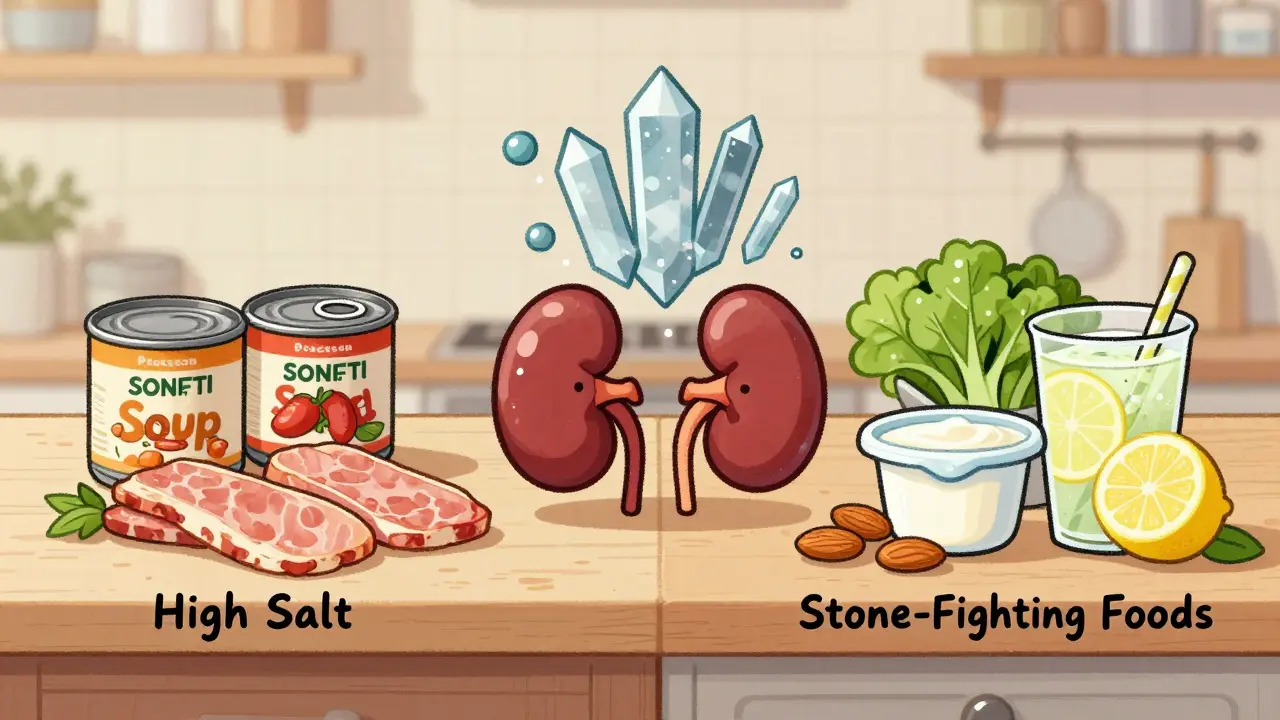
Most people eat 3 to 5 times more sodium than they should. The target? Less than 2 grams of sodium per day - that’s about 5 grams of salt. But here’s the catch: 75% of sodium comes from processed foods - not the salt shaker.
Check labels. Bread, canned soup, deli meats, frozen meals, and even breakfast cereals are loaded. Choose fresh or frozen vegetables without added sauce. Cook at home more often. When you do use salt, use it sparingly. Your kidneys will thank you.
Animal Protein: Less Is More
Limit animal protein to about 8 ounces per day - that’s the size of two decks of cards. That includes beef, chicken, pork, fish, and eggs. Too much protein increases uric acid and lowers citrate. Both are bad news for your kidneys.
Swap some meat for plant proteins: beans, lentils, tofu, or edamame. Studies show people who eat more plant-based foods have fewer stones. Not because they’re avoiding calcium - because their diets are naturally higher in fiber, potassium, and citrate.
Oxalate: Don’t Panic, Just Pair It
Oxalate is everywhere: spinach, beets, nuts, chocolate, tea, sweet potatoes. But you don’t need to cut them out. Just eat them with calcium-rich foods at the same meal.
Example: Have a spinach salad with feta cheese or almonds. Or snack on a handful of almonds with a glass of milk. The calcium binds to the oxalate in your gut and carries it out - instead of letting it go to your kidneys.
Citrate: Your Body’s Natural Shield
Citrate is a compound that stops crystals from forming. Low citrate = higher stone risk. The goal is to have at least 320 mg of citrate in your urine every day.
How do you boost it? Lemon juice. Fresh lemon juice. Add the juice of half a lemon to a glass of water - twice a day. The NHS now recommends this specifically. It’s cheap, easy, and backed by growing evidence. Orange juice works too, but it’s higher in sugar, so lemon is better.
What About Supplements and Medications?
Some people need more than diet and fluids. If you’ve had multiple stones, your doctor might order a 24-hour urine test. This shows exactly what’s going on in your body - too much calcium? Too little citrate? High uric acid?
Based on that, they might prescribe:
- Thiazide diuretics (to reduce calcium in urine)
- Potassium citrate (to raise citrate levels)
- Allopurinol (if uric acid stones are the problem)
But here’s the twist: one recent trial found that hydrochlorothiazide - a common diuretic - didn’t perform much better than a placebo in preventing recurrence. That doesn’t mean it doesn’t work for everyone. It means you need personalized care. Don’t assume a pill will fix it. Diet and fluids are still the foundation.
Long-Term Thinking: This Is a Lifelong Game
Kidney stone disease isn’t something you fix and forget. The numbers don’t lie: 14% of people get another stone within a year. By five years, it’s 35%. By ten years? Over half.
That’s why prevention isn’t a diet plan. It’s a lifestyle. You don’t need to be perfect. But you do need to be consistent.
Here’s what success looks like:
- Drinking 2.5-3 liters of fluid daily - every day.
- Keeping sodium under 2 grams - even on weekends.
- Eating calcium-rich foods with meals - not avoiding them.
- Adding lemon juice to water - not waiting for symptoms.
- Getting a 24-hour urine test after your first stone - and again if you have another.
And if you’ve had a stone and you’re not doing any of this? You’re playing Russian roulette with your kidneys. Each stone increases your risk of chronic kidney disease. One study found that 19% of people who form stones repeatedly develop long-term kidney damage.
What Works for Most People
The DASH diet - originally designed for high blood pressure - is now proven to cut kidney stone risk by 40% to 50%. It’s simple:
- Fruits and vegetables - lots of them
- Whole grains
- Low-fat dairy
- Lean proteins
- Low sodium
- Minimal added sugar
It’s not a fad. It’s the way your body was meant to eat. And it’s the most studied, most effective plan we have for stopping stones from coming back.
Final Thought: You’re Not Alone
Kidney stones are more common than you think. And they’re not your fault. But they are your responsibility - to manage, to prevent, to live well with.
You don’t need a perfect diet. You don’t need to become a nutritionist. Just drink more water. Cut back on salt. Eat calcium with your spinach. Add lemon to your glass. Do that every day, and you’re already ahead of 90% of people who’ve had a stone.
This isn’t about fear. It’s about control. You can’t change your past. But you can change what happens next.
Can I still drink coffee if I have kidney stones?
Yes. Moderate coffee and tea count toward your daily fluid intake. Studies show caffeine doesn’t dehydrate you enough to raise stone risk. Just avoid sugary coffee drinks and creamers loaded with additives. Stick to black coffee or tea with a splash of milk.
Should I avoid calcium if I have calcium stones?
No. Avoiding calcium increases your risk. Your body absorbs more oxalate from food when you don’t get enough calcium. Eat calcium-rich foods like milk, yogurt, cheese, or fortified plant milks - but have them with meals that contain oxalate. That way, calcium binds oxalate in your gut and prevents it from reaching your kidneys.
How much lemon juice should I add to my water?
Add the juice of half a fresh lemon to a glass of water, twice a day. That’s about 4-5 tablespoons total. Fresh lemon juice is better than bottled because it contains more natural citrate. You don’t need to drink it all day - just two glasses with meals is enough to make a difference.
Is it true that drinking more water can dissolve existing stones?
Water won’t dissolve stones that are already formed - especially calcium stones. But it can help small stones pass more easily and prevent new ones from forming. If you have a stone, drinking plenty of fluids is still critical - it reduces pain, lowers infection risk, and helps your body flush out fragments after treatment.
Do I need to get a 24-hour urine test?
If you’ve had more than one stone, yes. A 24-hour urine test shows what’s in your urine - calcium, citrate, oxalate, uric acid, sodium. This tells your doctor if you need dietary changes, medication, or both. Most people get tested after their first stone if they’re under 40 or have a family history. It’s the only way to personalize your prevention plan.
Can kidney stones cause permanent kidney damage?
Yes, especially if they recur. Each stone can cause tiny scars in the kidney tissue. Over time, repeated stones and infections can lead to chronic kidney disease. One study found that 19% of people who form stones repeatedly develop reduced kidney function. Prevention isn’t just about avoiding pain - it’s about protecting your long-term kidney health.
What’s the best time to drink water during the day?
Spread it out. Drink a glass with each meal, one mid-morning, one mid-afternoon, and one before bed. Avoid drinking large amounts all at once - your body can’t absorb it all at once. Consistent intake keeps your urine diluted all day, which is what stops crystals from forming.
Are there foods that can trigger a stone attack right away?
No single food triggers a stone attack instantly. Stones form over weeks and months due to chronic imbalances. But eating a large amount of oxalate-rich food (like a big spinach salad) without calcium can increase your risk that day. The key is consistency - not one meal, but your daily habits.
Audu ikhlas
January 13, 2026 AT 22:38Yall be drinkin' lemon water like it's some ancient secret but we in Nigeria been doin this since forever - lime juice, salt, water. No fancy studies needed. You think the NHS invented hydration? Lol. Also stop eatin processed bread - that's where the real salt is. My uncle passed 7 stones in 3 years, stopped eatin canned sardines and now he's fine. Simple.
Abner San Diego
January 14, 2026 AT 07:53Wow. Another article telling me to drink water. Groundbreaking. I’ve had 3 stones. I drink water. I still got them. The real problem? My job makes me sit 12 hours a day. No one talks about that. Also, I don’t care if lemon juice helps. I hate lemons. Tell me something useful. Like, can I just take a pill and forget this?
Monica Puglia
January 15, 2026 AT 01:35Yesss! 🙌 I’ve been doing the lemon water thing for 8 months now and my last stone was 11 months ago. I also started eating yogurt with my spinach salad - game changer. Also, I use a 32oz bottle and refill it twice. I mark it with sticky notes. I’m not perfect but I’m consistent. You got this 💪
Cecelia Alta
January 16, 2026 AT 01:37Oh my god. I’ve been reading this and I’m sweating. I thought I was doing okay. I drink water… sometimes. I eat cheese with my almonds. But I also eat chicken nuggets for lunch every day. And I drink one soda a day. Just one. Is that why I keep getting these excruciating episodes? I’m not even mad. I’m just… disappointed in myself. And also, why does everyone keep saying ‘lemon juice’ like it’s a miracle? I tried it. Tasted like regret. But I’m gonna keep trying. For my kidneys. 😭
George Bridges
January 18, 2026 AT 01:06Just wanted to say thank you for the clarity. I’ve had two stones and I was terrified. This wasn’t fearmongering. It was practical. I’ve started carrying a water bottle. I check my urine color now. I even added lemon to my tea. Small changes. But I feel like I’m not powerless anymore. That’s worth more than any pill.
Rebekah Cobbson
January 18, 2026 AT 23:21For anyone feeling overwhelmed - start with ONE thing. Just one. Maybe it’s drinking a glass of water before coffee. Or swapping one processed snack for almonds. You don’t need to overhaul your life. Just show up. Consistently. That’s how you win. I did this after my third stone. Took me 6 months to feel normal again. You can too.
Sonal Guha
January 19, 2026 AT 23:39TiM Vince
January 21, 2026 AT 12:08I’m from the Midwest. We don’t do lemon water here. We do iced tea and beer. But I read this and thought - maybe I can try it. So I started adding lemon to my tea. No sugar. Just lemon. And I drink a glass before bed. I don’t feel different. But I’m trying. And that’s enough for now.
Alice Elanora Shepherd
January 22, 2026 AT 03:32Thank you for this. I’ve been a nurse for 18 years and I’ve seen too many patients come in with recurrent stones - and they’re all terrified, confused, and guilty. This is the first time I’ve seen a guide that’s both scientifically accurate and emotionally supportive. The DASH diet point? Crucial. And the lemon juice advice? Spot on. I’m sharing this with every patient I see. Also - please, please, please get that 24-hour urine test. It’s not scary. It’s empowering.
Christina Widodo
January 22, 2026 AT 17:09Wait - so if I eat spinach and cheese together, the calcium binds the oxalate? So I can still have my kale smoothie with yogurt? That’s the best news I’ve had all year. I thought I had to give up my green drinks forever. Also - does it matter if I use bottled lemon juice? Or does it have to be fresh? Asking for a friend who’s too lazy to squeeze lemons.
Prachi Chauhan
January 24, 2026 AT 00:55Life is a series of imbalances. Our bodies are mirrors of our habits. Water isn’t magic. It’s physics. Salt isn’t evil. It’s context. Calcium isn’t the enemy - ignorance is. We fear what we don’t understand. So we restrict. We avoid. We panic. But the body doesn’t care about fear. It cares about consistency. One glass. One meal. One day. Then another. That’s how you outsmart your biology. Not with pills. Not with guilt. With patience. With presence. With water.