
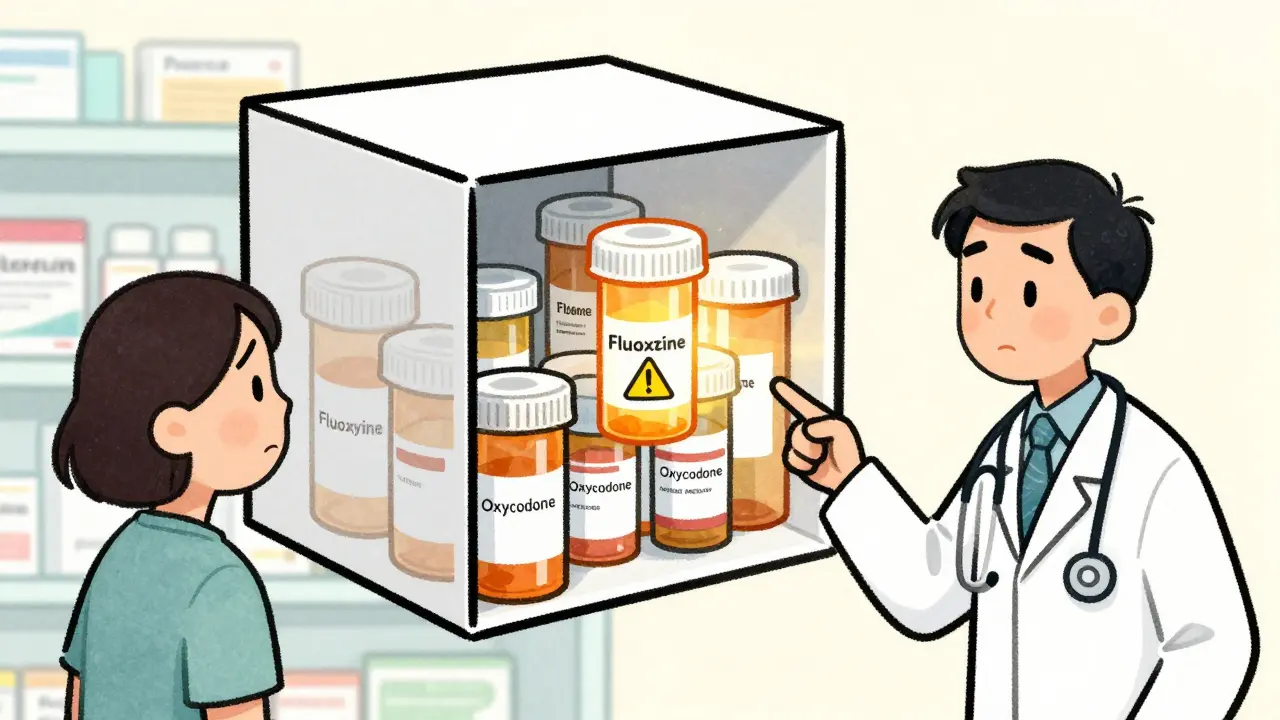
Black Box Warning Checker
Check if your medication has an FDA black box warning. Enter a drug name to see if it carries the strongest safety alert and what it means for your treatment.
Enter a drug name to check for black box warnings.
When a drug comes with a black box warning, it’s not just a caution-it’s a red flag. This isn’t a footnote or a small print disclaimer. It’s the FDA’s loudest possible signal that a medication can cause serious harm, even death, under certain conditions. If you’ve ever opened a prescription bottle and seen a thick black border around a paragraph of text near the front of the leaflet, you’ve seen one. And if you’re taking a drug with this warning, you need to understand what it really means.
What Exactly Is a Black Box Warning?
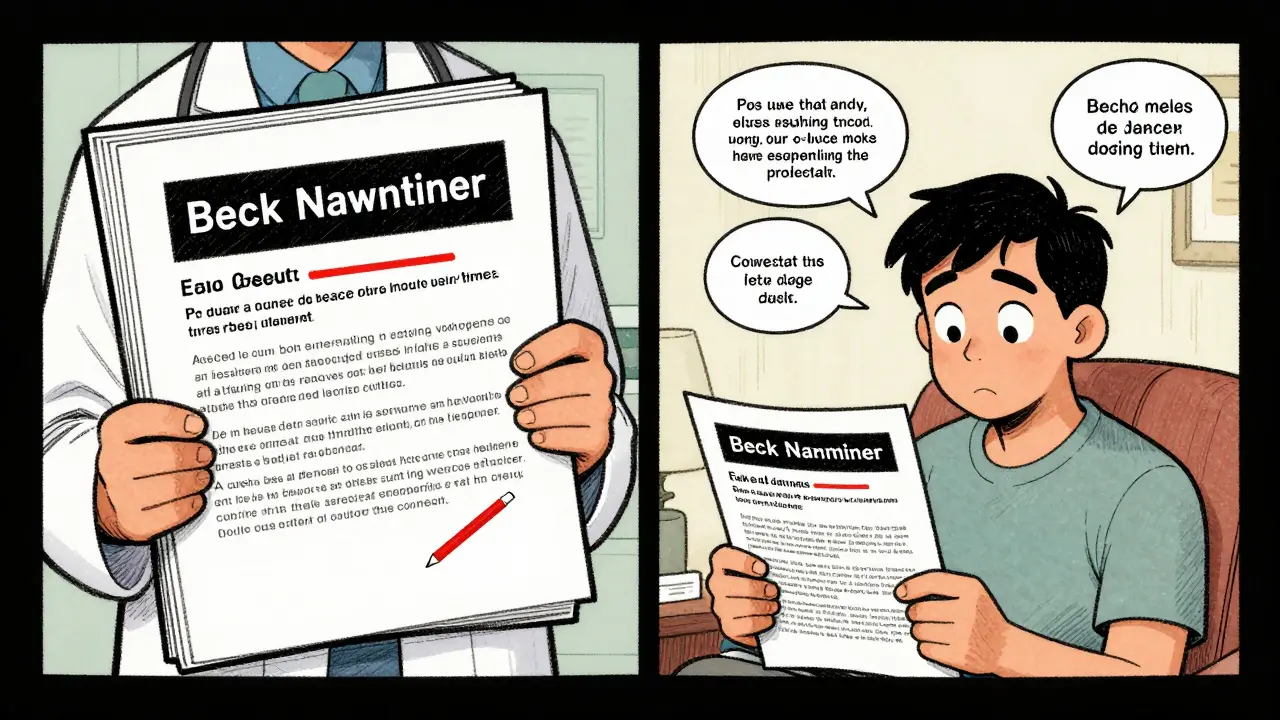
A black box warning is the most serious safety alert the U.S. Food and Drug Administration (FDA) can require on a prescription drug label. It’s printed in a bold, black-bordered box at the very beginning of the drug’s prescribing information. This isn’t just for show. The FDA mandates it only when evidence shows the drug carries a significant risk of death or serious injury-risks that are often preventable with proper use. These warnings don’t appear randomly. They’re added after years of research: lab tests, animal studies, clinical trials, and, crucially, real-world data collected after the drug hits the market. Over 400 medications currently carry this warning as of 2022, according to Medical News Today. That includes drugs for depression, diabetes, seizures, pain, and even some cancer treatments. The warning isn’t saying “don’t take this.” It’s saying: “This is dangerous. Only use it if the benefits clearly outweigh the risks-and here’s exactly how to do that safely.”Why Does the FDA Use Black Box Warnings?
The FDA introduced formalized warning requirements in the 1960s under the Kefauver-Harris Amendments, but the black box format evolved later as a way to cut through the noise. In a 15-page drug label full of small text, this black border grabs attention. It’s designed for doctors and patients to stop, read, and think before prescribing or taking the drug. The FDA typically issues a black box warning in three situations:- The drug has a risk so severe that it could outweigh the benefits for some patients
- The risk can be reduced by careful monitoring, avoiding certain drug combinations, or restricting use to specific populations
- The drug requires special training, testing, or restrictions to be used safely
How Is It Different From Other FDA Warnings?
The FDA uses several types of safety alerts, but black box warnings sit at the top of the hierarchy.- Regular warnings and precautions are listed in the body of the label and cover common side effects or moderate risks.
- Safety communications are public notices issued through press releases or the FDA website.
- Boxed warnings are legally required to appear on every prescription bottle and in all promotional materials. They’re the only warning the FDA forces drugmakers to put in a black box.
What Do These Warnings Actually Say?
Each black box warning is tailored to the drug’s specific dangers. Here’s what you might find inside:- Specific conditions that make the drug unsafe (e.g., “avoid in patients with liver disease”)
- Drug interactions that can cause fatal reactions
- Required lab tests or monitoring schedules (e.g., “check liver enzymes every 3 months”)
- Populations who should not use the drug (e.g., “not for use in pregnant women”)
- Instructions for safe discontinuation (e.g., “do not stop abruptly”)
Do Black Box Warnings Actually Work?
The answer is: sometimes. And that’s the problem. When rosiglitazone got its black box warning in 2007, prescriptions dropped sharply. But not because everyone read the label. Media coverage, academic papers, and patient advocacy played a big role. Meanwhile, pioglitazone-a similar drug with a comparable warning-didn’t see the same drop in use, simply because it didn’t get the same media attention. Studies show that doctors often miss or underestimate these warnings. A 2020 study in the Journal of the American Medical Informatics Association found that nearly half of primary care physicians didn’t recall seeing the black box warning on a commonly prescribed antidepressant, even though they’d prescribed it for years. The warning is only as good as the conversation it sparks. If a doctor doesn’t explain it to a patient-or if a patient doesn’t ask-then the black box becomes invisible.What Should You Do If Your Drug Has a Black Box Warning?
If you’re taking a medication with this warning, don’t panic. But do take action.- Ask your doctor: “What’s the specific risk here? How likely is it to happen to me?”
- Ask about alternatives: “Is there another drug without this warning that would work just as well?”
- Ask about monitoring: “Do I need blood tests? How often? What signs should I watch for at home?”
- Ask about interactions: “Could my other medications, supplements, or even grapefruit juice make this more dangerous?”
What About Reporting Side Effects?
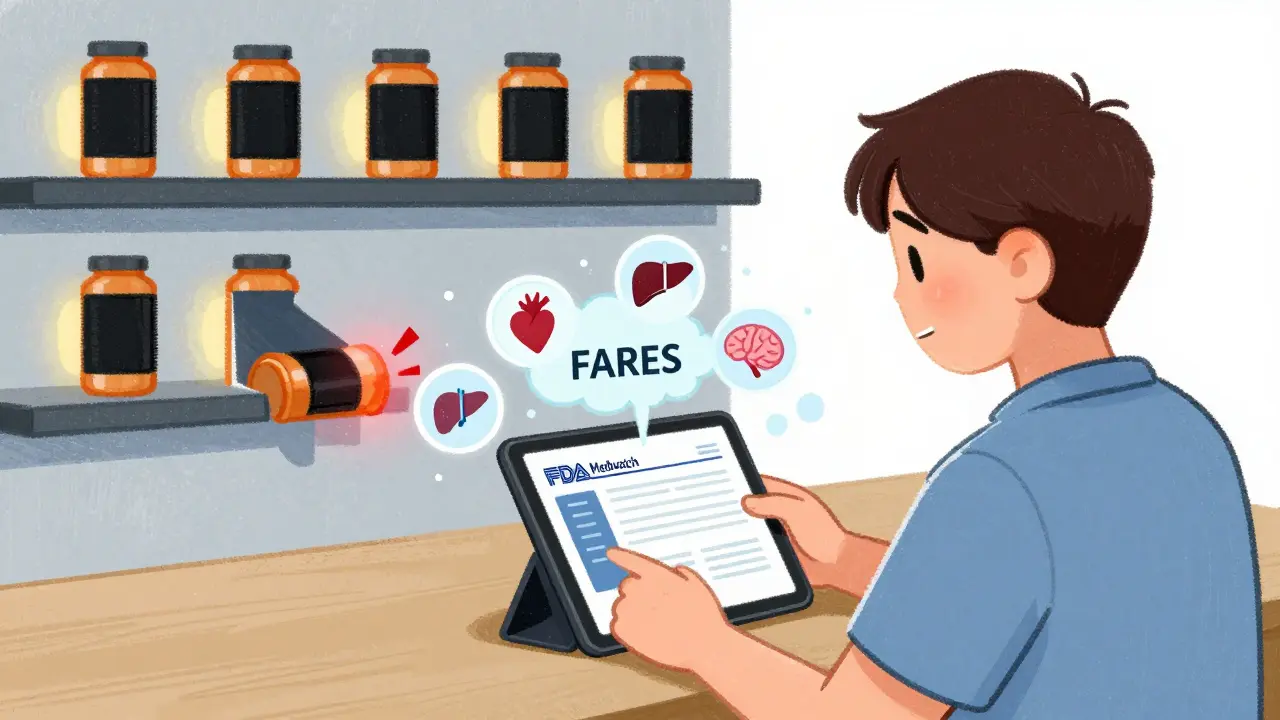
If you experience a serious side effect-even if you think it’s unrelated-report it. The FDA doesn’t just rely on clinical trials. It tracks real-world harm through the FDA Adverse Event Reporting System (FAERS). Anyone can submit a report: patients, family members, pharmacists, doctors. You can file a report online through the FDA’s MedWatch program. That data helps the agency decide whether to strengthen a warning, add a new one, or even pull a drug from the market.Are These Warnings Fair to Patients?
Some critics argue black box warnings scare people away from life-saving drugs. Others say they’re too vague. A 2021 study in Health Affairs found that many warnings use relative risk (“risk increased by 50%”) instead of absolute risk (“1 in 200 people may experience this”), which can mislead patients. The FDA admits this is a challenge. They’re working on clearer language and patient-friendly summaries. But for now, the black box remains the most powerful tool they have to flag the deadliest risks.Bottom Line
A black box warning isn’t a death sentence. It’s a call to be informed. Millions of people safely take drugs with these warnings every day-because their doctors understood the risks and managed them carefully. If your prescription has this warning, don’t assume it’s too dangerous to use. But don’t assume it’s safe either. Ask questions. Get the facts. And never let a black box warning sit unread on the bottom of a pill bottle.Does a black box warning mean I can’t take the drug at all?
No. A black box warning doesn’t mean the drug is banned or unsafe for everyone. It means the risks are serious enough that your doctor must carefully weigh them against the benefits. Many patients take these medications safely when monitored closely and used exactly as directed.
Can I stop taking the drug if it has a black box warning?
Never stop a prescription medication on your own, even if it has a black box warning. Stopping suddenly can cause dangerous withdrawal symptoms or make your condition worse. Always talk to your doctor first. They may adjust your dose, switch you to another drug, or help you taper off safely.
Are over-the-counter drugs ever given black box warnings?
No. Black box warnings only apply to prescription drugs. Over-the-counter medications have different labeling rules and don’t carry this type of warning. But that doesn’t mean they’re risk-free-some OTC drugs, like high-dose acetaminophen, can still cause serious harm if misused.
How often does the FDA add new black box warnings?
The FDA adds new black box warnings regularly-usually after a drug has been on the market for years. Most warnings are based on post-marketing data from real-world use, not just clinical trials. In 2023 alone, the FDA added warnings to several diabetes and psychiatric medications after reports of severe liver damage and suicidal behavior emerged.
Do other countries have black box warnings?
Other countries have similar systems, but they’re not called “black box warnings.” The European Medicines Agency uses “contraindications” and “warnings” with bold text and symbols. Canada and Australia have comparable risk alerts. The FDA’s black box format is unique to the U.S., but the concept of highlighting life-threatening risks is global.


Rebekah Cobbson
January 12, 2026 AT 04:23My dad was on a drug with a black box warning for liver damage. His doctor caught it early because they were checking his enzymes every month. I used to think these warnings were scare tactics-now I know they’re lifesavers when you actually pay attention.
Audu ikhlas
January 13, 2026 AT 23:15USA always overreacts with these black boxes. In Nigeria we just trust the doctor and take the pill. Why waste time reading 15 pages of legal jargon? The medicine works or it dont. Simple.
Sonal Guha
January 14, 2026 AT 10:59Black box warnings are useless if doctors dont communicate them. 80% of patients dont read the leaflet. The real issue is systemic neglect in primary care. No one trains patients to ask questions. The system fails before the warning even matters
TiM Vince
January 15, 2026 AT 11:09I work in a rural clinic in Ohio. Most patients dont even know what a black box is. I print out a one-page summary in plain language and hand it out. It cuts down on panic and increases compliance. Small change. Big difference.
gary ysturiz
January 15, 2026 AT 13:35Don’t let fear stop you from getting help. I was on an antidepressant with a black box warning. My doctor explained the risks. I got monitored. I’m doing great now. These warnings aren’t there to scare you-they’re there to help you stay safe.
Jessica Bnouzalim
January 15, 2026 AT 19:17OMG YES!! I had no idea about FAERS!! I reported my weird rash after starting a new med-and 3 months later, the FDA updated the warning!! I felt like a superhero!! Seriously, if you feel something off-REPORT IT!! It matters!!
Bryan Wolfe
January 17, 2026 AT 06:36My cousin was on a diabetes drug with a black box warning for heart issues. She asked her doctor for alternatives-and switched to one without the warning. She’s been fine for 5 years now. Knowledge is power. Don’t be shy. Ask. Ask. Ask.
Sumit Sharma
January 18, 2026 AT 07:35The FDA’s black box system is a bureaucratic farce. The language is deliberately vague to avoid liability. Relative risk metrics mislead patients. The real solution is mandatory physician-patient risk dialogues with standardized risk quantification. Until then, this is performative safety.
Jay Powers
January 18, 2026 AT 12:23Just want to say thanks to everyone sharing their stories. This isn’t about fear. It’s about awareness. I’ve seen people avoid life-saving meds because of these warnings. And I’ve seen others thrive because they asked the right questions. You’re not alone in this.