
Pomegranate and Warfarin: What You Need to Know About This Dangerous Interaction
When you're on warfarin, a blood thinner used to prevent clots in people with atrial fibrillation, artificial heart valves, or deep vein thrombosis. Also known as Coumadin, it works by blocking vitamin K activity—but it’s incredibly sensitive to what you eat and drink. One of the most overlooked dangers? pomegranate, a fruit rich in antioxidants, often marketed as a superfood for heart health. Studies show pomegranate juice can inhibit the CYP3A4 and CYP2C9 enzymes in your liver—the same ones that break down warfarin. When these enzymes slow down, warfarin builds up in your blood, raising your INR and putting you at risk for dangerous bleeding.
This isn’t just theory. A 2010 case report in the Annals of Pharmacotherapy described a man on stable warfarin therapy who started drinking pomegranate juice daily. Within days, his INR jumped from 2.5 to 8.9—more than triple the safe range. He ended up in the ER with bruising and nosebleeds. The same thing happens with grapefruit juice, a well-known culprit in drug interactions. But unlike grapefruit, pomegranate doesn’t always show up on warning lists. Many people think, "It’s natural, so it’s safe," but natural doesn’t mean harmless when you’re on a narrow-therapeutic-index drug like warfarin.
It’s not just juice. Whole pomegranate seeds, extracts, and even supplements can cause the same effect. The risk isn’t about quantity—it’s about consistency. Drinking pomegranate juice once a week? Probably fine. Drinking it every morning? That’s a problem. Your doctor checks your INR because warfarin’s effect is so unpredictable. Adding pomegranate throws off that balance. And if you’re also taking estrogen, found in birth control or hormone therapy.—as shown in another article on this site—the interaction gets even more complex. Estrogen can also alter warfarin metabolism. Stack that with pomegranate? You’re playing with fire.
So what do you do? If you love pomegranate, talk to your pharmacist or doctor. Don’t quit cold turkey—sudden changes can be just as risky. Instead, keep your intake consistent. If you’ve been drinking the juice for months, keep drinking it. If you’ve never had it, don’t start. And always get your INR checked after any dietary change. The same goes for other foods and supplements that affect warfarin: green leafy veggies, garlic, ginger, ginseng, and even some teas. It’s not about avoiding everything—it’s about knowing what’s safe for your body, your dose, and your routine.
Below, you’ll find real patient stories, clinical data, and clear comparisons about warfarin interactions—with estrogen, with other fruits, and with common supplements. No fluff. No guesses. Just what you need to stay safe while taking this life-saving medication.
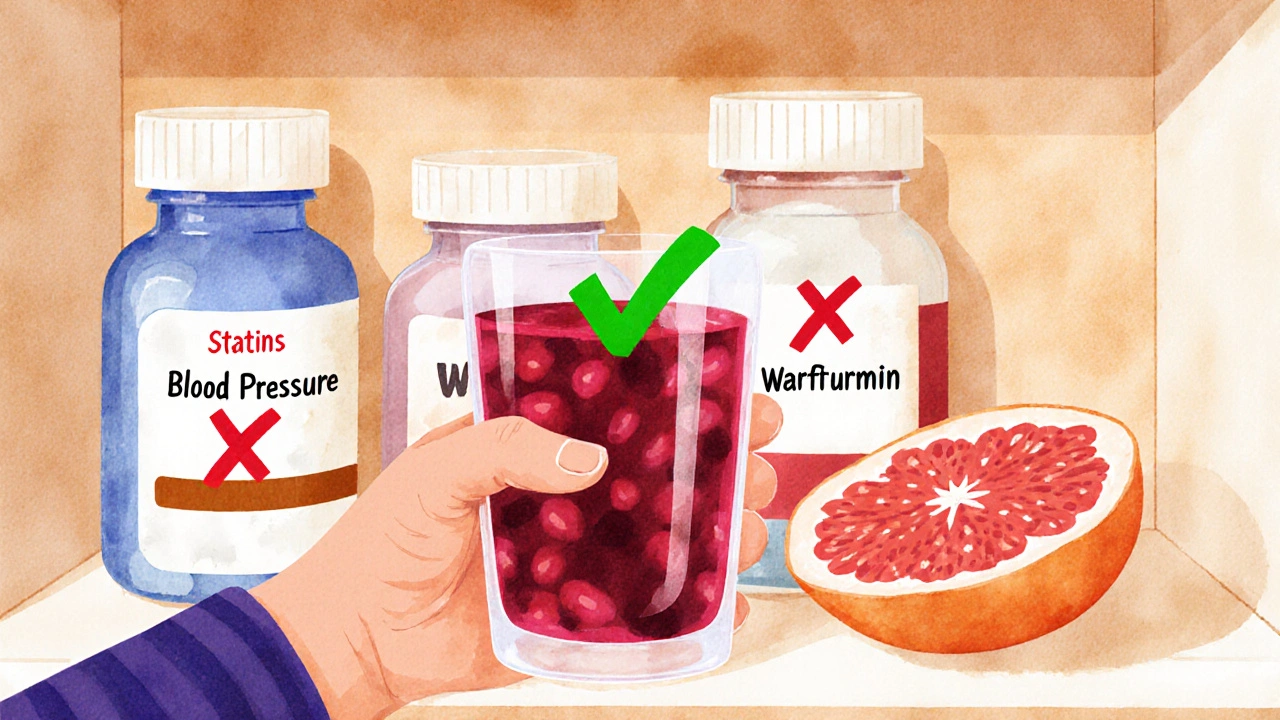
Pomegranate Juice and Medications: What You Really Need to Know About Drug Interactions
Pomegranate juice doesn't interact with medications like grapefruit juice does, despite early lab studies suggesting otherwise. Human trials show no clinically significant effects on drug levels, making it safe for most people on common medications.