
MAOI Medication Safety Calculator
Safety Calculator
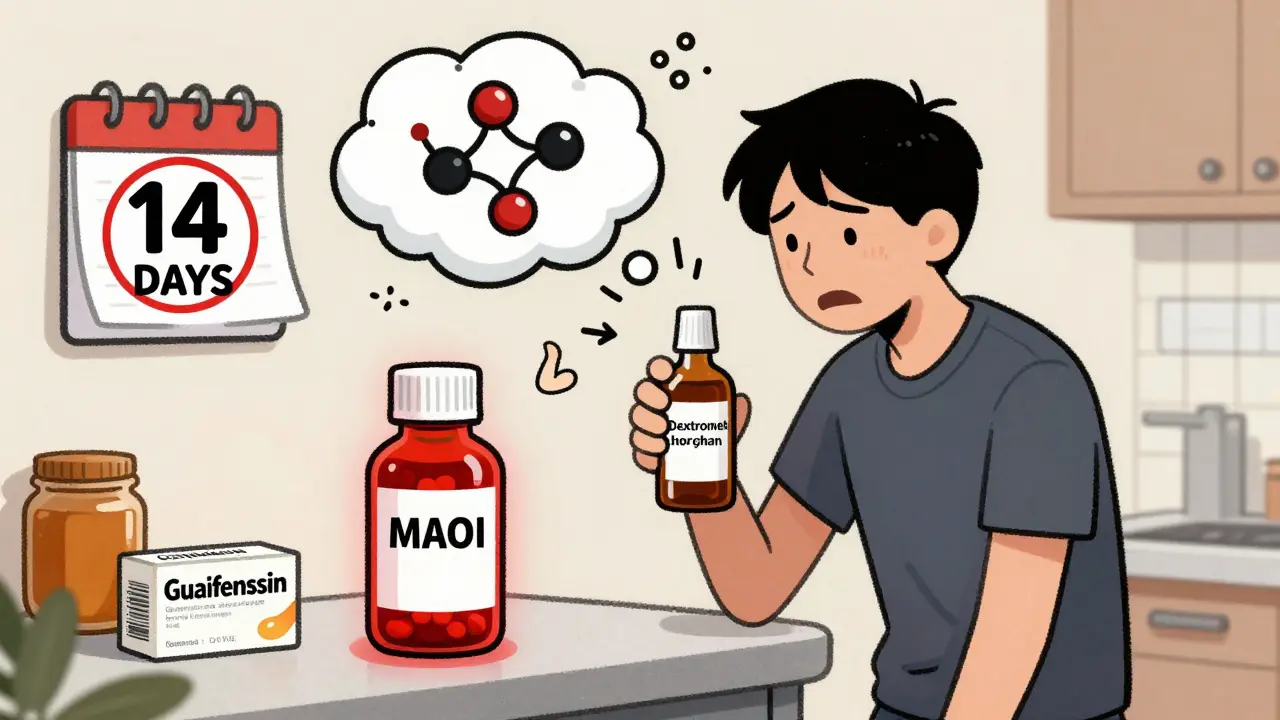
Determine safe waiting period after stopping MAOI medication before taking dextromethorphan-containing cough medicine. The FDA recommends at least 14 days.
Important Safety Information
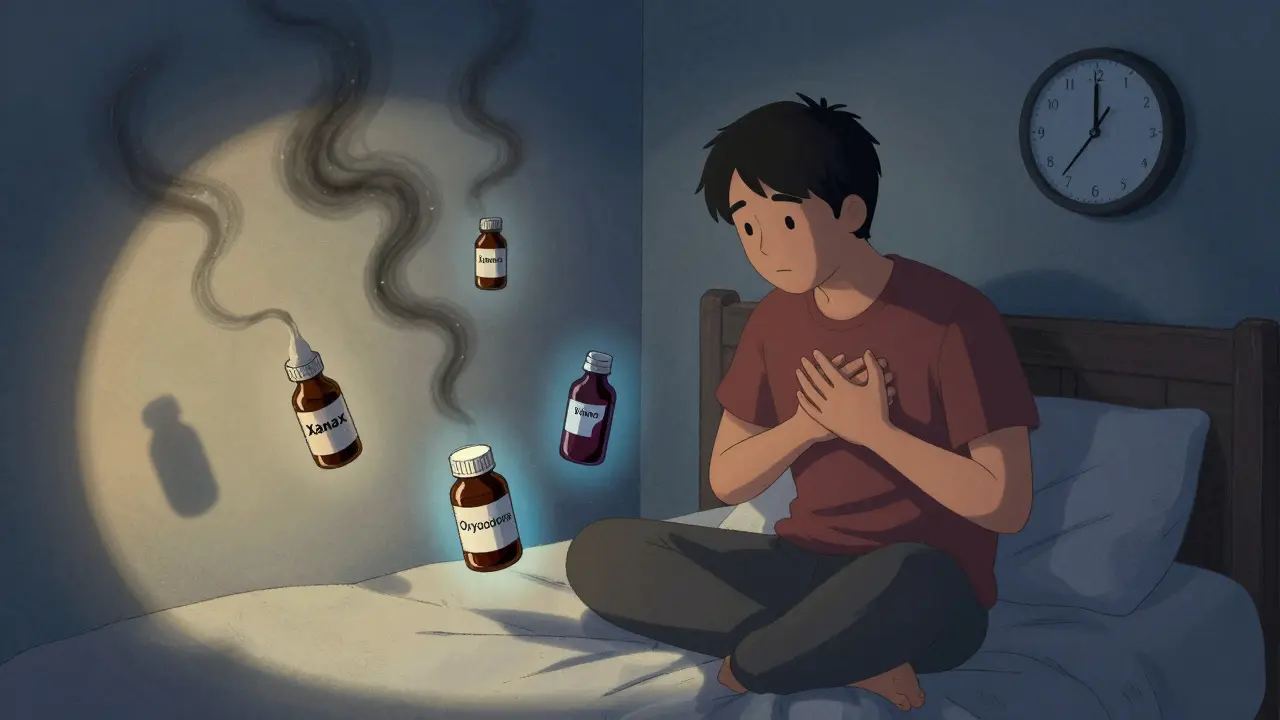
If you're taking an MAOI for depression or Parkinson’s, and you reach for a bottle of cough syrup because you’ve got a cold, you could be putting yourself in serious danger. It’s not a myth. It’s not a warning you can ignore. Dextromethorphan, the active ingredient in popular over-the-counter cough medicines like Robitussin, Delsym, and NyQuil, can trigger a life-threatening reaction when mixed with MAOIs - antidepressants like phenelzine, tranylcypromine, or selegiline.
Why This Interaction Is So Dangerous
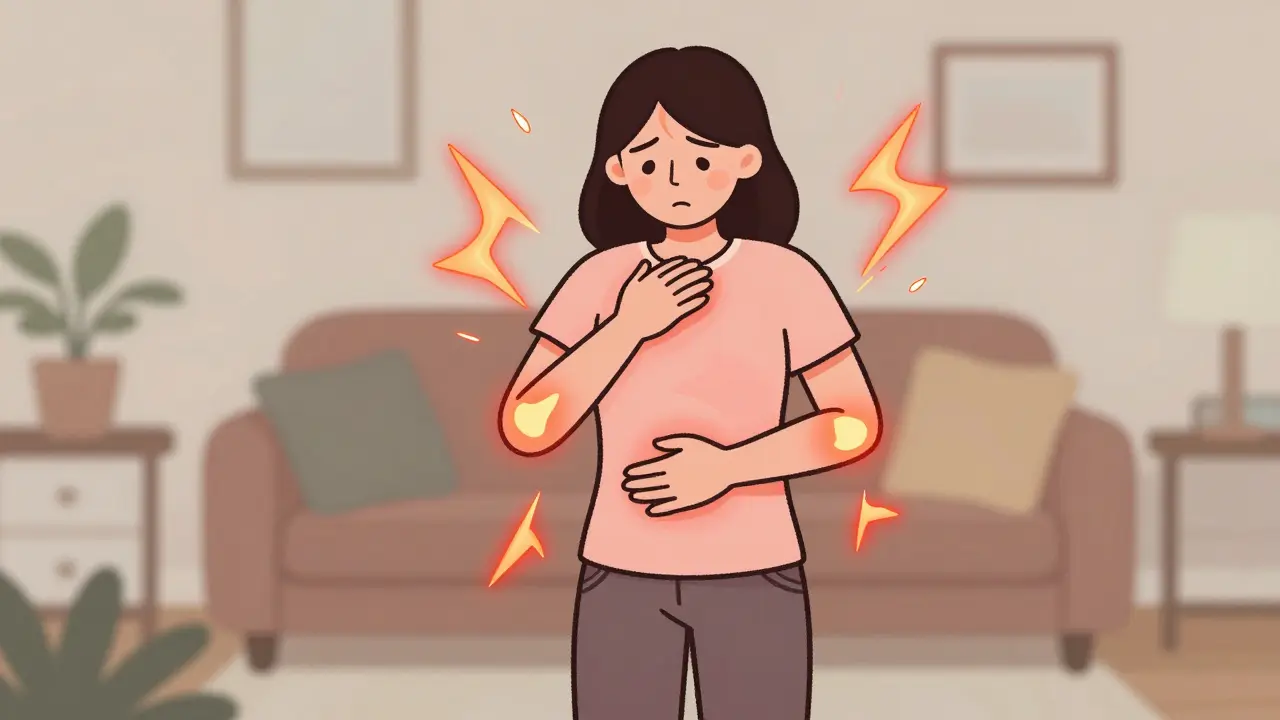
Dextromethorphan doesn’t just calm a cough. It also affects serotonin levels in your brain. So do MAOIs. When you take both, your body can’t handle the flood. Serotonin builds up too fast. Too high. And that’s when serotonin syndrome kicks in. Serotonin syndrome isn’t just feeling a little off. It’s a medical emergency. Symptoms can show up within hours: high fever (104°F or higher), muscle stiffness, confusion, rapid heartbeat, shaking, seizures. In severe cases, it can lead to organ failure or death. A 2022 review in the PMC journal found that 2% to 12% of people with severe serotonin syndrome don’t survive - even with treatment. The problem isn’t just the combination. It’s how common it is. Millions of people use dextromethorphan every year. And while MAOIs are less common than SSRIs, they’re still used for treatment-resistant depression, atypical depression, and even Parkinson’s. A 2015 study found that about 3.2% of people on MAOIs had adverse reactions linked to dextromethorphan. That might sound low, but when the reaction can kill, even 1 in 30 is too high.How the Body Reacts - The Science Behind the Risk
Dextromethorphan works in two ways. First, it acts on brain receptors to suppress the cough reflex. Second, it blocks serotonin from being reabsorbed - a weak form of what SSRIs do. MAOIs stop your body from breaking down serotonin at all. So when you mix them, serotonin piles up in your brain and nervous system like traffic on a highway with no exits. Your liver tries to clear dextromethorphan using an enzyme called CYP2D6. But many MAOIs, especially older ones, slow down this enzyme. Studies show this can increase dextromethorphan levels in your blood by 300% to 400%. That’s not a little more. That’s enough to push you from a safe dose into a toxic one - even if you take the normal amount. And it gets worse. If you’re taking other meds that also block CYP2D6 - like fluoxetine, paroxetine, or even some heart medications - your risk shoots up even more. This isn’t just about one bad combo. It’s about stacking risks.Real People, Real Consequences
Behind the numbers are real stories. On Reddit’s r/MAOI forum, users shared experiences: one person described muscle rigidity and a 104°F fever after taking cough syrup while on selegiline. Another said they couldn’t speak clearly four hours after taking NyQuil with Parnate. Both ended up in the ER. The FDA’s adverse event database recorded 237 cases of serotonin syndrome tied to dextromethorphan and MAOIs between 2010 and 2022. Over 40% of those cases required hospitalization. One patient on PatientsLikeMe wrote: “I didn’t know my nighttime cold medicine had dextromethorphan. I thought it was just for cough. I was lucky to survive.” These aren’t rare accidents. They’re preventable - if people know.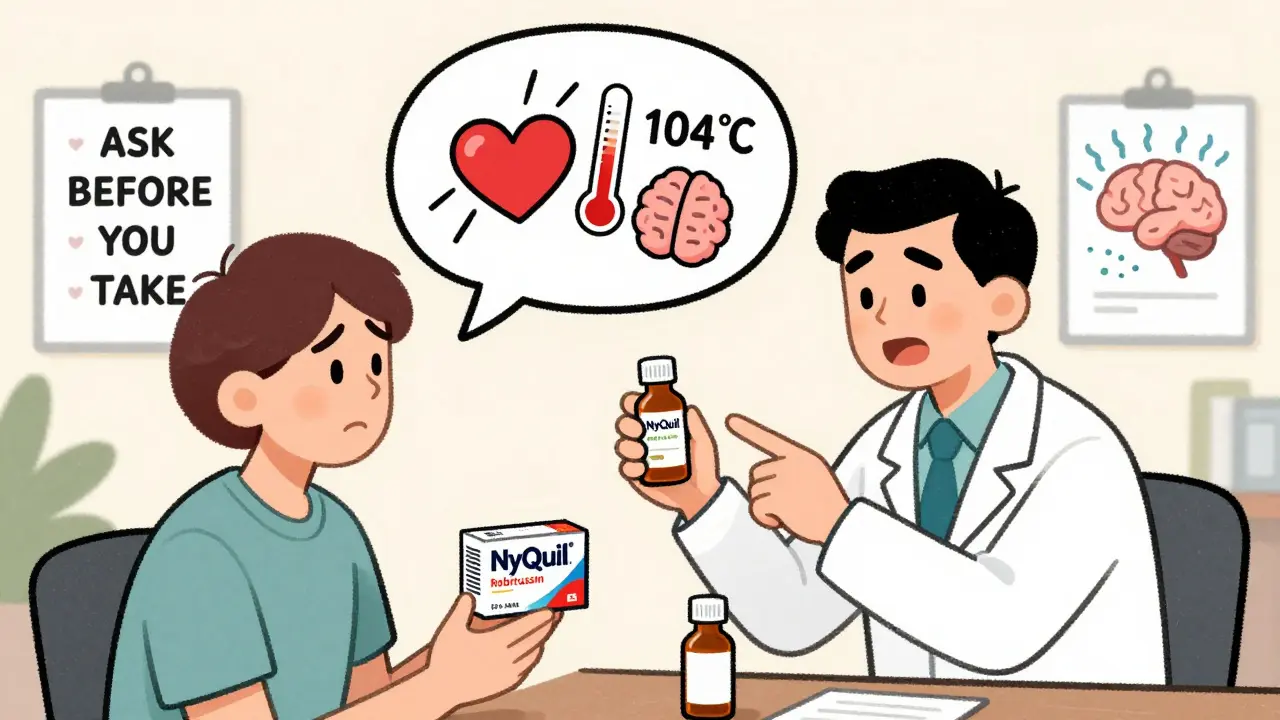
How Long to Wait After Stopping an MAOI
You can’t just skip a dose and think you’re safe. MAOIs stick around in your system longer than most drugs. The body needs time to clear them and rebuild the enzymes they suppress. The Therapeutic Goods Administration of Australia, the FDA, and major medical guidelines all agree: wait at least 14 days after your last dose of an MAOI before taking dextromethorphan. Some experts recommend 21 days for extra safety, especially with older, irreversible MAOIs like phenelzine. And it works both ways. If you’ve taken dextromethorphan recently - even once - you still need to wait 14 days before starting an MAOI. This isn’t a suggestion. It’s a hard rule.What to Use Instead
You still need to treat a cough. But you don’t need dextromethorphan. Guaifenesin is a safe alternative. It’s an expectorant - it helps loosen mucus so you can cough it up. Look for products labeled “guaifenesin only.” Avoid anything that says “DM” or “dextromethorphan” on the label. Honey is another proven option. A spoonful of honey before bed can be as effective as dextromethorphan for nighttime coughs - and it’s safe with MAOIs. Just make sure it’s pure honey. Some honey products, especially those with added herbs or fruit extracts, may contain tyramine, which can also interact with MAOIs. Steam inhalation, saline nasal sprays, and staying hydrated are also helpful. They won’t stop your cough completely, but they’ll ease it without risking your life.Why Labels Don’t Always Help
You’d think the warning would be obvious. But here’s the problem: many OTC cough products bury the MAOI warning in tiny print on the back of the bottle. A 2021 study found only 38% of dextromethorphan labels clearly highlighted the interaction risk. Even worse, most people don’t read the label. A 2019 survey showed that 78% of patients on MAOIs didn’t know common cough medicines contained dextromethorphan. They saw “cough suppressant” and assumed it was harmless. The FDA tried to fix this in 2022 by proposing bigger, bolder warnings - but the changes haven’t rolled out everywhere yet. Until they do, you can’t rely on the label.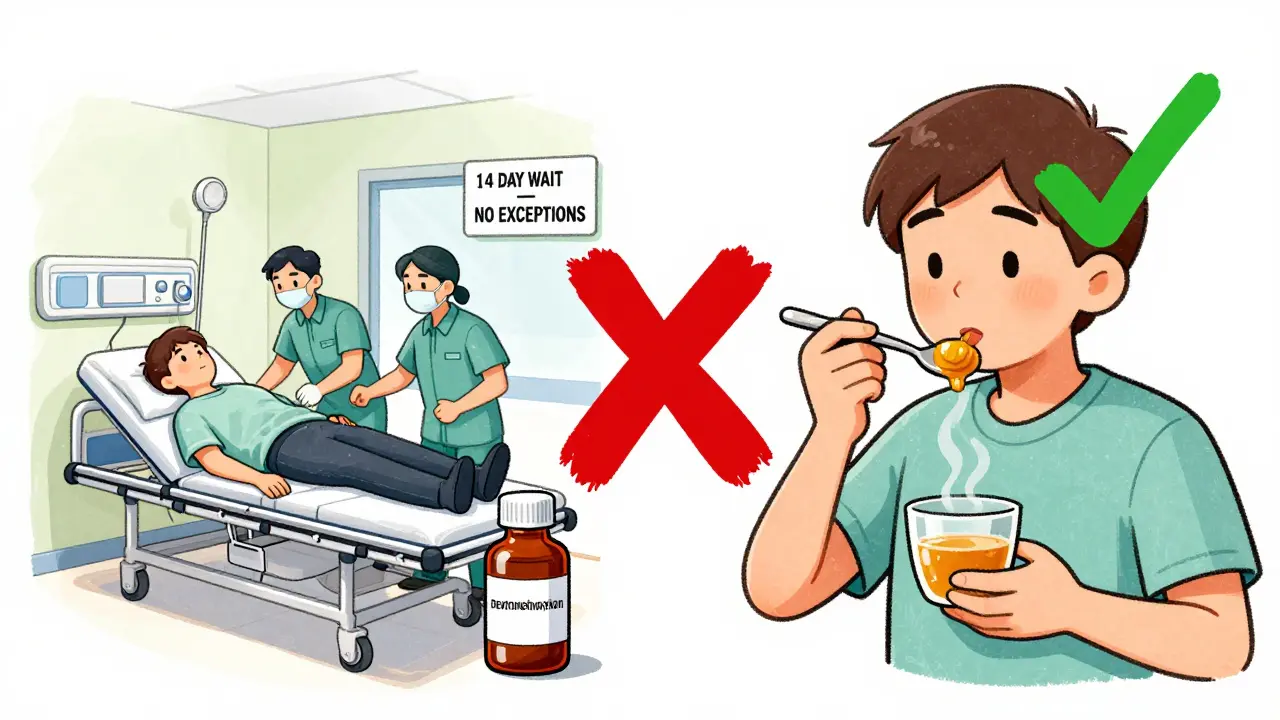
The Role of Pharmacists - And Why You Should Ask
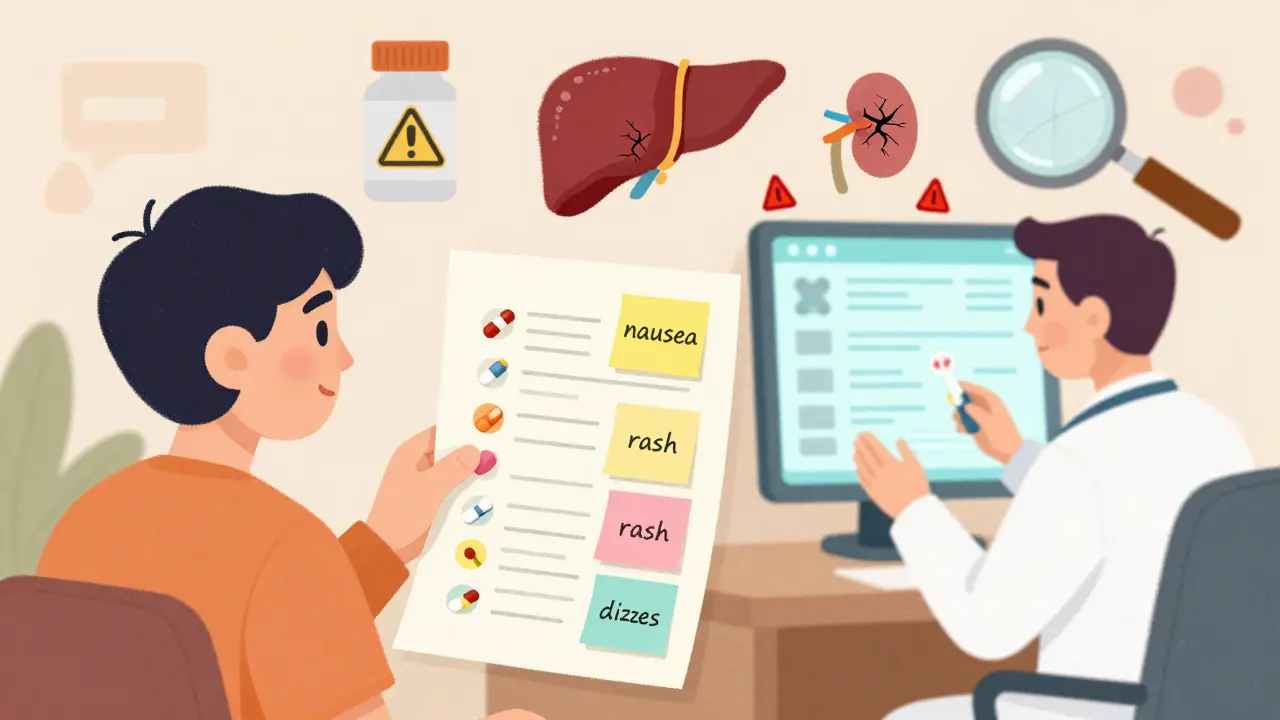
Pharmacists are your last line of defense. A 2021 study showed that when pharmacists took five minutes to counsel MAOI patients about OTC risks, accidental dextromethorphan use dropped by 67%. Don’t assume they’ll catch it. Don’t assume they’ll ask. Bring your list of meds - all of them - every time you pick up a cough syrup. Say: “I’m on an MAOI. Is this safe?” Even if the pharmacist says yes, double-check the ingredients. Look for “dextromethorphan,” “DM,” or “DXM.” If you’re unsure, walk away. Call your doctor. Better safe than sorry.What’s Changing - And What’s Next
MAOI use is rising. Since 2020, prescriptions for these drugs have gone up 22%, mostly for people who haven’t responded to other antidepressants. That means more people are at risk. Newer MAOIs like moclobemide are reversible and carry much lower risk. But they’re not widely available everywhere. In Australia and Europe, they’re more common. In the U.S., most patients still get older, irreversible types. The European Medicines Agency now requires MAOI prescriptions to come with a printed list of unsafe OTC products - including brand names like Delsym and Robitussin DM. That’s a step forward. But the biggest gap? Education. Only 43% of patients starting MAOI therapy get proper counseling about OTC risks. That’s not enough. It’s dangerous.Final Checklist: What to Do Right Now
- If you’re on an MAOI: Do not take any cough medicine with dextromethorphan.
- Check every OTC cold, flu, or cough product - even ones you’ve used before. Ingredients change.
- Wait at least 14 days after your last MAOI dose before using dextromethorphan - and vice versa.
- Use guaifenesin or honey instead. They work. They’re safe.
- Always tell your pharmacist you’re on an MAOI. Don’t assume they know.
- If you feel feverish, stiff, confused, or have a racing heart after taking cough medicine - go to the ER. Tell them you’re on an MAOI.
This isn’t about being paranoid. It’s about being informed. A cough is annoying. Serotonin syndrome can kill. There’s no middle ground.


Juan Reibelo
January 24, 2026 AT 10:56I can't believe how many people just grab cough syrup without reading the label. I've been on phenelzine for five years, and I still triple-check every OTC bottle. One time, I almost took NyQuil because I didn't see 'DM' in the tiny print. Scary stuff.
Always ask your pharmacist. Always. Even if they seem busy. Your life is worth five minutes of their time.
Vatsal Patel
January 26, 2026 AT 08:26Oh wow, another 'dangerous combo' article. Next you'll tell me breathing near a toaster while on lithium is a death sentence. People need to stop treating medicine like it's magic fairy dust. If you can't read a label, maybe you shouldn't be allowed to own a pharmacy.
Also, honey? Really? That's your alternative? Next you'll recommend chanting mantras to lower blood pressure.
blackbelt security
January 26, 2026 AT 16:11This is exactly why we need better patient education. You don't need to be a doctor to understand this. Just be aware. Just ask. Just pause before you take something new.
If you're on an MAOI, you're already fighting a tough battle. Don't let a cough kill you. Stay smart. Stay safe. You've got this.
Patrick Gornik
January 28, 2026 AT 09:18Let’s be real-this isn’t about dextromethorphan. It’s about the pharmaceutical-industrial complex’s failure to prioritize transparency. The FDA’s ‘recommendations’ are toothless. They don’t mandate bold warnings because Big Pharma doesn’t want you to know that your cough syrup is basically a serotonin bomb.
And honey? Cute. But let’s not pretend it’s a pharmacological solution. It’s a placebo with carbs. The real issue is systemic negligence. We’re treating symptoms while ignoring the architecture of risk. And yes, I’ve read the 2022 PMC paper. Twice.
Tommy Sandri
January 28, 2026 AT 15:48The clinical significance of this interaction is well-documented and warrants public awareness. It is imperative that patients on monoamine oxidase inhibitors be counseled regarding the potential for serotonin syndrome when exposed to serotonergic agents, including dextromethorphan.
While the incidence rate may appear low, the morbidity and mortality associated with this adverse event justify precautionary measures. The recommendations outlined herein are consistent with international guidelines and should be disseminated through primary care channels.
Luke Davidson
January 29, 2026 AT 16:16I used to think cough syrup was harmless until my buddy went to the ER after mixing NyQuil with his selegiline. He was shaking so bad he couldn’t hold his water bottle. We didn’t even know dextromethorphan was in it.
Now I keep a list of safe meds on my phone. Honey works great for night coughs. Guaifenesin too. And I always ask the pharmacist. No shame in asking. Better safe than sorry. You’re not overreacting-you’re being smart.
Also, if you’re on an MAOI, you’re a warrior. Don’t let a cold take you down. You’ve already survived so much. Keep going.
Karen Conlin
January 30, 2026 AT 18:15People need to stop treating their meds like they’re snacks. I’ve been on Parnate for three years. I don’t touch anything without checking. I keep a printed list in my wallet. I show it to every pharmacist. I even have a note in my phone’s lock screen.
If you’re reading this and you’re on an MAOI-don’t wait for a scare to change your habits. Do it now. Your life matters more than your cough. And if you’re helping someone who’s on one? Tell them. Loudly. Clearly. Repeatedly.
We’re not being paranoid. We’re being responsible.
asa MNG
January 31, 2026 AT 09:23ok so like… i just took delsym last week and im on selegiline?? 😱 is it too late?? i feel kinda weird but i thought it was just the cold… plz help someone?? 🥺🫠
Sushrita Chakraborty
January 31, 2026 AT 19:50It is imperative to emphasize the necessity of pharmacological vigilance in patients receiving monoamine oxidase inhibitors. The interaction between dextromethorphan and MAOIs is not merely theoretical; it is clinically validated, with documented cases of severe serotonin syndrome and fatalities.
Therefore, the recommendation to avoid dextromethorphan for a minimum of fourteen days post-MAOI discontinuation is not arbitrary-it is evidence-based. Patients must be educated, and healthcare providers must reinforce this message with consistency and clarity.
Sawyer Vitela
February 1, 2026 AT 06:372% to 12% mortality? That’s not ‘rare.’ That’s a lottery you don’t want to play. Stop being casual about this. You’re not ‘just taking a little cough syrup.’ You’re playing Russian roulette with your brain chemistry.
Tiffany Wagner
February 2, 2026 AT 04:34I just started MAOI therapy last month and had no idea about this. Thank you for posting this. I checked my medicine cabinet and threw out two bottles I didn’t realize had DM. I feel so much safer now.
Also, honey works great. I’ve been using it every night. My cough is gone and I didn’t have to risk anything.
Viola Li
February 2, 2026 AT 08:37Why are we letting Big Pharma get away with this? If this interaction is so dangerous, why isn’t dextromethorphan banned from OTC sales entirely? Why do we still let people buy it like candy? This isn’t safety-it’s negligence wrapped in a label.
Dolores Rider
February 3, 2026 AT 00:26did you know the government knows about this but they don't tell you because they want you to die so they can collect your social security? i heard it on a forum. i'm not lying. i have proof. they're watching us through the cough syrup bottles. 😨
Darren Links
February 3, 2026 AT 21:02They say 'don't mix MAOIs with dextromethorphan'-but what about the American way? We don't take orders from some European medical board. If I want to take NyQuil with my Parnate, that's my right. This is the land of the free. Let people make their own choices. Even dumb ones.