
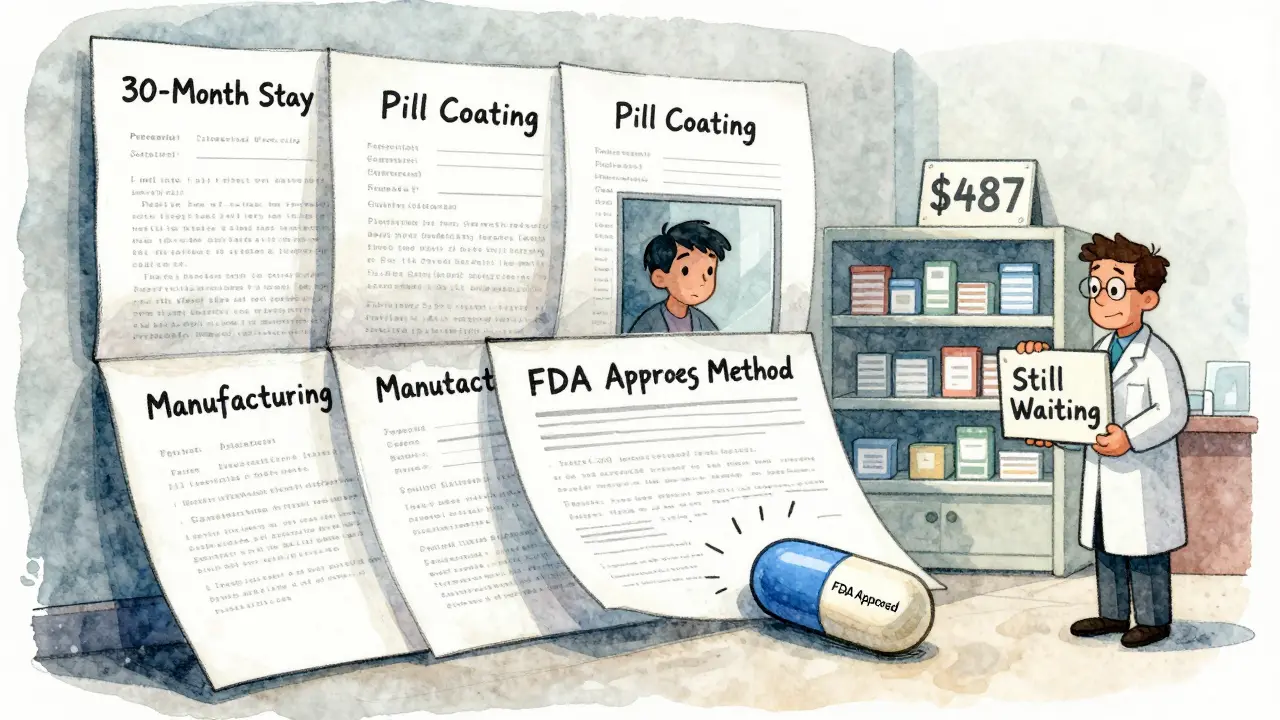
When the FDA approves a generic drug, you’d expect it to hit pharmacy shelves soon after. But in reality, many approved generics sit on the shelf-literally-for years. Between 2023 and 2025, this gap between approval and availability became more visible than ever. Patients, pharmacists, and hospitals kept asking: why can’t we get this drug? The answer isn’t about safety or quality. It’s about patents.
Why Approval Doesn’t Mean Availability
The FDA approved 63 first-time generic drugs by late September 2025. That sounds like progress. But according to a 2024 study in the Journal of Generic Medicines, the average time between FDA approval and actual market launch stretched to 3.2 years. That’s over three years of patients paying full price for brand-name drugs while generics sit waiting. This isn’t a glitch. It’s the system working as designed-except the design is broken. Under the Hatch-Waxman Act, generic companies can challenge a brand-name drug’s patents by filing a Paragraph IV certification. That triggers a 30-month legal stay. The brand company sues. The FDA can’t give final approval until the court rules, the patent expires, or the 30 months run out. Even if the patent is weak, the delay still happens. In 2024, 68% of all generic applications included a Paragraph IV challenge. That’s nearly seven in ten. And the number of patents listed per drug? It jumped to 14.7 in 2025, up from 12.3 in 2020. That’s not innovation. That’s a legal wall.Patent Thicketing: The Real Enemy
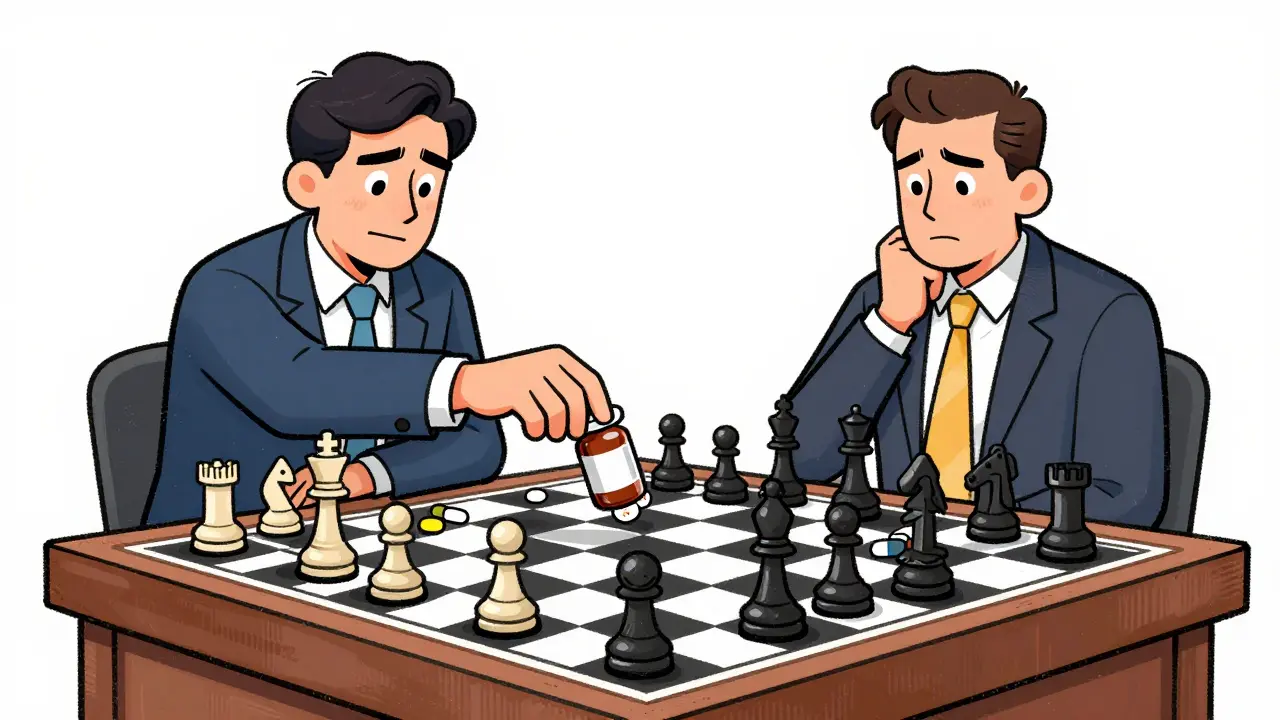
Brand-name companies aren’t just defending one patent anymore. They’re building thickets-dozens, sometimes hundreds-of overlapping patents covering everything from pill coatings to manufacturing methods. These aren’t always strong patents. Many would never hold up in court. But they don’t need to. They just need to delay. Take Humira. Its core patent expired in 2016. But AbbVie filed over 240 related patents. That stretched its monopoly until 2023. A 2025 analysis by RBC Capital Markets found that the 30-month stay is now used as a strategic tool. Companies file lawsuits even when they know they’ll lose, just to buy time. Dr. Aaron Kesselheim from Harvard Medical School put it bluntly: “The current patent thicketing strategies have extended monopolies beyond the intended 20-year term by an average of 3.7 years per drug.” That’s not just a delay. That’s an extension of monopoly power.Who Gets Hurt the Most?
The people paying for this delay? Patients. A 2025 survey by Patients For Affordable Drugs Now found 412 documented cases where patients skipped doses or went without medication because the generic wasn’t available. For drugs like Xarelto, Eliquis, or Trulicity, the brand-name version costs around $487 a month. The generic? Around $85. That’s an 82% price drop. But patients don’t see it. Pharmacists are the front line. A pharmacist on Drugs.com wrote in August 2025: “We had the generic for Xarelto approved last November but still can’t get it-the brand company filed three new patents last month. Now we’re looking at another 30-month delay.” Hospitals are suffering too. The American Society of Health-System Pharmacists reported that 78% of hospital pharmacy directors see patent delays as a major contributor to drug shortages-especially for cancer drugs. Of the 15 oncology injectables in short supply between 2023 and 2025, 14 were held up by patent litigation.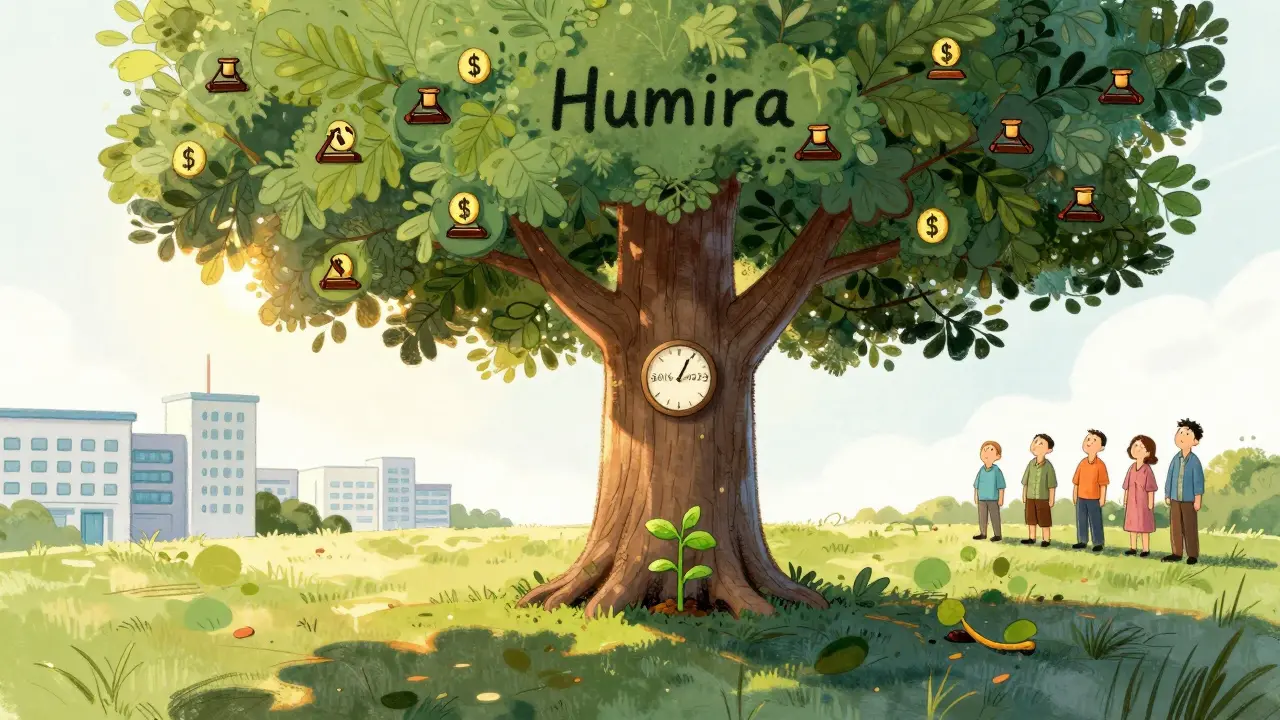
Why Some Generics Move Faster Than Others
Not all generics face the same delays. Simple oral pills-like metformin or lisinopril-move quicker. Only 63% of delays for these are tied to patents. But for complex generics? The numbers are brutal. Injectables, inhalers, and other complex formulations? 89% of delays are patent-related. Why? Because these drugs are harder to copy. The FDA requires more data. And brand companies know that. So they file more patents on delivery systems, solvents, and packaging. Each one adds another legal hurdle. The therapeutic area matters too. Oncology generics take the longest-4.1 years on average between approval and launch. Cardiovascular drugs? 2.8 years. Central nervous system drugs? 2.3 years. That’s not random. It’s money. Cancer drugs are the most expensive. The financial incentive to delay competition is highest there.The U.S. vs. The Rest of the World
The U.S. is an outlier. In Europe, the average time between generic approval and market launch is just 1.7 years. Why? Because their patent systems don’t allow the same kind of legal stalling. No 30-month automatic stay. No patent thickets. Courts move faster. And regulators don’t wait for lawsuits to clear before approving generics. The U.S. system was meant to balance innovation and access. But today, it favors the former at the expense of the latter. The Congressional Budget Office estimated in August 2025 that these delays cost Medicare Part D $3.2 billion a year in unnecessary spending. That’s billions of dollars that could’ve gone to patient care, not corporate profits.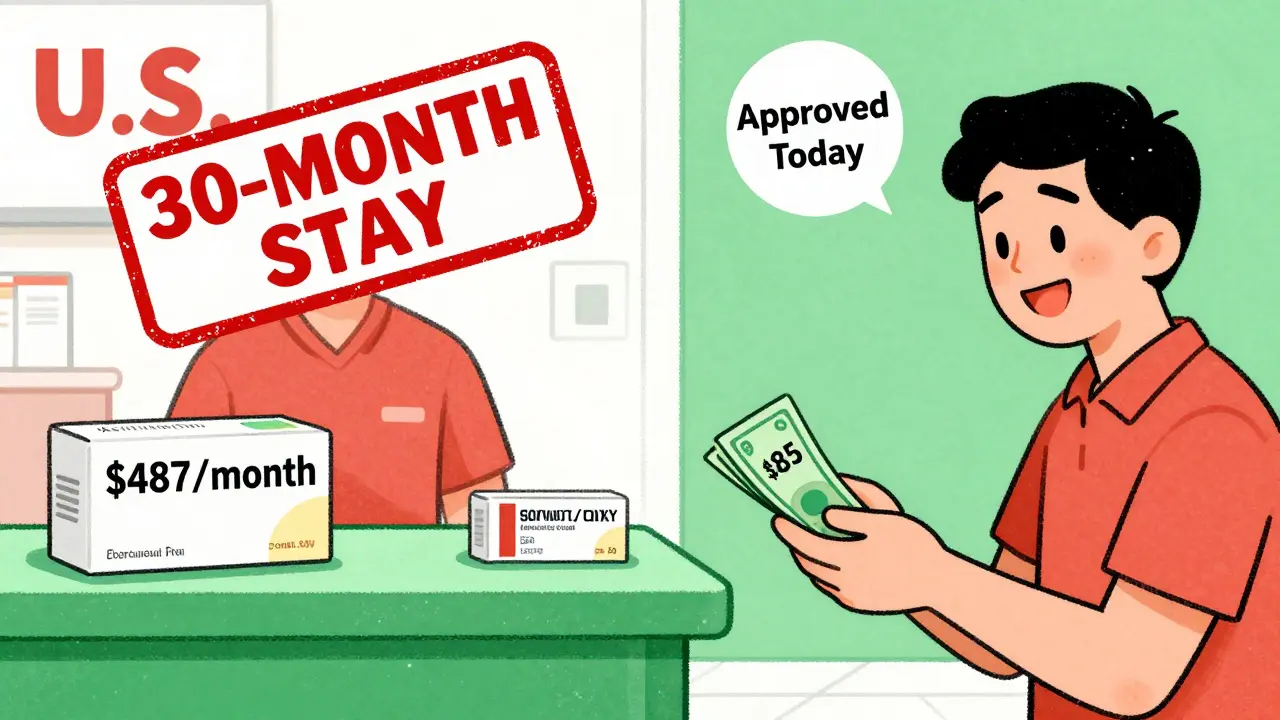
Who’s Trying to Fix This?
Some reform is happening. The Federal Trade Commission filed seven enforcement actions between 2024 and 2025 against companies using patent tactics to block generics. One case against Jazz Pharmaceuticals over Xyrem ended in February 2025 with a settlement forcing earlier generic entry. The FDA is also trying. Dr. Patrizia Cavazzoni, director of the Center for Drug Evaluation and Research, admitted in May 2025 that patent litigation is outside their control-but they’re working to clean up the Orange Book. That’s the list of patents linked to brand drugs. For years, companies listed patents that had nothing to do with the drug’s active ingredient. Now, the FDA is cracking down on that. The CREATES Act, passed in 2020 but still stalled in Congress, would force brand companies to provide samples to generic makers so they can test their versions. Without samples, you can’t even start the approval process. That’s another hidden barrier.What’s Changing on the Ground?
Generic manufacturers are adapting. They’re starting patent research 48 to 60 months before a patent expires. Legal costs? They’ve jumped from $9.3 million per case in 2023 to $12.7 million in 2025. That’s a 36% increase. Only big players can afford this. Small and mid-sized generic companies-those making under $500 million a year-are getting squeezed. 63% of delayed generics involve these smaller firms. Supply chains are another focus. In 2022, generic companies had an average of 1.8 approved suppliers for active ingredients. By 2025, that number jumped to 3.4. Why? Because 37% of delays between 2023 and 2025 were tied to API shortages. If you can’t get the raw material, even a cleared patent won’t help. The FDA’s new AI-assisted review system cut review times by 22% for non-patent cases. But for those caught in litigation? No change. The 30-month stay still blocks everything.The Bottom Line
The system isn’t broken because it’s inefficient. It’s broken because it’s being exploited. Patent laws meant to protect innovation are now being used to block competition. The FDA approves the drugs. The courts delay them. Patients pay the price. There’s no quick fix. But the signs are clear: the current model is unsustainable. Patients need access. Hospitals need stability. And the cost of delay is no longer just financial-it’s human.Why do generic drugs get approved but not sold?
Generic drugs are often approved by the FDA but can’t be sold because brand-name companies file lawsuits to extend patent protection. These lawsuits trigger a 30-month legal stay that blocks the FDA from granting final approval-even if the patent is weak or invalid. The drug sits in limbo until the court rules or the patent expires.
What is a Paragraph IV certification?
A Paragraph IV certification is a legal statement filed by a generic drug company claiming that a brand-name drug’s patent is invalid, unenforceable, or won’t be infringed. This triggers a 30-month automatic stay, during which the FDA cannot finalize approval. It’s the main legal tool generic companies use to challenge patents-but it’s also the primary cause of delays.
How long do patent delays typically last?
The average delay between FDA approval and market launch is 3.2 years in the U.S. For complex generics like injectables or oncology drugs, delays can stretch to 4.1 years. The 30-month statutory stay is the biggest contributor, but additional lawsuits can add more years.
Why are oncology generics delayed the most?
Oncology drugs are the most expensive on the market, with annual sales often exceeding $5 billion per drug. Brand companies have the strongest financial incentive to delay competition. They also file more patents on delivery methods, formulations, and dosing schedules-making it harder for generics to challenge them. Complex injectable forms also require more testing, slowing approval even after patent issues are resolved.
Is the U.S. the only country with these delays?
No. The U.S. is an outlier. In Europe, generics typically reach the market in 1.7 years after approval. That’s because European systems don’t have automatic 30-month stays and limit how many patents can be listed per drug. Courts move faster, and regulators approve generics without waiting for lawsuits to end.
What’s being done to fix patent delays?
The FDA is improving transparency in the Orange Book to block weak patent listings. The FTC has filed enforcement actions against companies using patents to block competition. The CREATES Act would require brand companies to provide drug samples to generics. But progress is slow. Most reforms are still in Congress or under review, and the 30-month stay remains untouched.
How do patent delays affect patients?
Patients pay more, skip doses, or go without medication. Between 2023 and 2025, over 400 documented cases showed patients unable to afford brand-name drugs because generics were blocked by patents. For drugs like Eliquis or Xarelto, the cost difference is $400 per month. That’s life-changing money for many.
Are biosimilars facing the same delays?
Yes, even more so. Biosimilars face an even more complex patent landscape. For Humira, over 240 patents were challenged. The average number of patents challenged per biosimilar application jumped from 5.2 in 2020 to 9.7 in 2025. While more biosimilars are being approved, patent litigation still delays market entry by years.

Luke Davidson
January 22, 2026 AT 19:37Man, I just read this and my blood pressure spiked. I had to pay $500 for a month’s supply of Eliquis last year while my buddy in Canada got the generic for $60. We’re not talking about innovation here - we’re talking about corporations playing chess with people’s lives. And the worst part? The FDA’s just sitting there like a bystander while the legal system becomes a money-printing machine for Big Pharma.
Karen Conlin
January 23, 2026 AT 01:27Let’s be real - this isn’t about patents, it’s about power. The system was designed to protect innovation, but now it’s weaponized to protect profits. And the people who pay? The elderly on fixed incomes. The single moms choosing between insulin and rent. The cancer patients who can’t afford to wait 3 years for a drug that should’ve been affordable yesterday. This isn’t capitalism - it’s corporate feudalism. And we’re all serfs now.
Sushrita Chakraborty
January 23, 2026 AT 02:27It is truly unfortunate that the United States healthcare system has deviated so significantly from global norms. In India, for instance, generic drug access is prioritized through robust regulatory frameworks and limited patent extensions. The 30-month stay mechanism, as described, appears to be a legal anomaly that disproportionately disadvantages patients. Regulatory harmonization with international standards could offer a viable path forward.
Vatsal Patel
January 24, 2026 AT 03:56Oh wow, so the system works exactly as intended - just not for you. You think patents are meant to help patients? Nah. They’re meant to let rich guys in suits get richer while you cry over your $487 pill. The real tragedy? You’re mad at the system instead of the people who designed it. Congrats, you just paid for the privilege of being a victim.
Himanshu Singh
January 24, 2026 AT 22:46Bro, I feel you. I’ve seen my uncle skip his meds because of this. But here’s the thing - change is possible. Look at the FTC stepping in. Look at the FDA cleaning up the Orange Book. It’s slow, yeah. But every lawsuit, every reform, every whistleblower? That’s a crack in the wall. We’re not powerless. We just gotta keep pushing. 💪🫡
Izzy Hadala
January 26, 2026 AT 01:05While the anecdotal evidence presented is compelling, it is imperative to acknowledge the structural economic incentives that underpin the current patent regime. The 30-month stay, as codified under the Hatch-Waxman Act, was intended to balance the competing interests of innovation and accessibility. The statistical anomalies cited - while troubling - may reflect systemic inefficiencies rather than intentional malfeasance. Further empirical analysis is warranted before concluding that the framework is inherently exploitative.
Elizabeth Cannon
January 26, 2026 AT 01:16so like… why is no one just calling this what it is? corporate greed with a law degree. i had a friend with stage 3 cancer who had to wait 2 years for the generic of her chemo drug. she lost her house. the brand company made $12 BILLION in that time. and now they’re gonna get another 3 years? this isnt a system. this is a scam. and its disgusting.
Marlon Mentolaroc
January 27, 2026 AT 19:27Here’s the real kicker - the companies filing these patents? They’re not even the ones making the drugs anymore. It’s all private equity firms now. They buy the brand, milk the patent pipeline, then flip it. The original R&D? Gone. The innovation? A memory. All that’s left is a spreadsheet with ‘delay’ as the only KPI. And we’re the ones paying for it. Congrats, America - you turned healthcare into a hedge fund.