

Every year, millions of people take supplements and herbal remedies-turmeric for joint pain, garlic pills for heart health, St. John’s wort for low mood. Many believe these are harmless because they’re ‘natural.’ But here’s the hard truth: supplements aren’t safe just because they’re sold on a shelf. And if you don’t tell your doctor you’re taking them, you could be putting your health at serious risk.
Most People Don’t Tell Their Doctors-And That’s Dangerous
A 2023 study found that only about one in three people who use herbal supplements or vitamins actually tell their doctor. Even among people with chronic conditions like diabetes, high blood pressure, or heart disease, disclosure rates stay below 50%. Why? Because most assume their doctor doesn’t need to know. Or worse-they think their doctor won’t care. That’s a dangerous assumption. Take St. John’s wort, one of the most popular herbal mood boosters. It can make birth control pills useless. It can turn blood thinners like warfarin into a ticking time bomb. It can cancel out the effects of antidepressants, HIV meds, and even chemotherapy drugs. And yet, patients often don’t mention it unless their doctor asks. The same goes for turmeric. People take it for inflammation, not realizing it can thin the blood. If you’re on aspirin or clopidogrel, mixing it with turmeric could lead to uncontrolled bleeding during surgery-or even a stroke. Garlic pills? They can spike your risk of bleeding too. Green tea extract? It can damage your liver when combined with certain painkillers. These aren’t hypothetical risks. They’re documented in medical journals, emergency room reports, and FDA adverse event databases. The problem isn’t the supplements themselves. It’s the silence around them.Why Doctors Don’t Always Ask
You might think, “My doctor should know to ask.” But here’s the reality: most doctors aren’t trained to ask. A 2021 survey in JAMA Internal Medicine found that only 27% of physicians felt confident discussing supplements. Medical schools rarely teach this. A typical 15-minute appointment is packed with questions about blood pressure, cholesterol, and new symptoms. Supplements? They’re an afterthought. And patients? They don’t bring them up because they assume their doctor will judge them. Or they think supplements are “just vitamins,” not real medicine. But supplements aren’t candy. They’re bioactive substances with chemical effects in your body-just like prescription drugs. One patient in Sydney told me (in a follow-up to a clinic survey) that she took ashwagandha for stress for two years. Her doctor never asked. Then she got dizzy during a routine check-up. Her blood pressure had dropped dangerously low-because ashwagandha was interacting with her beta-blocker. She didn’t know. Her doctor didn’t know. That’s the gap.What You Should Bring to Your Appointment
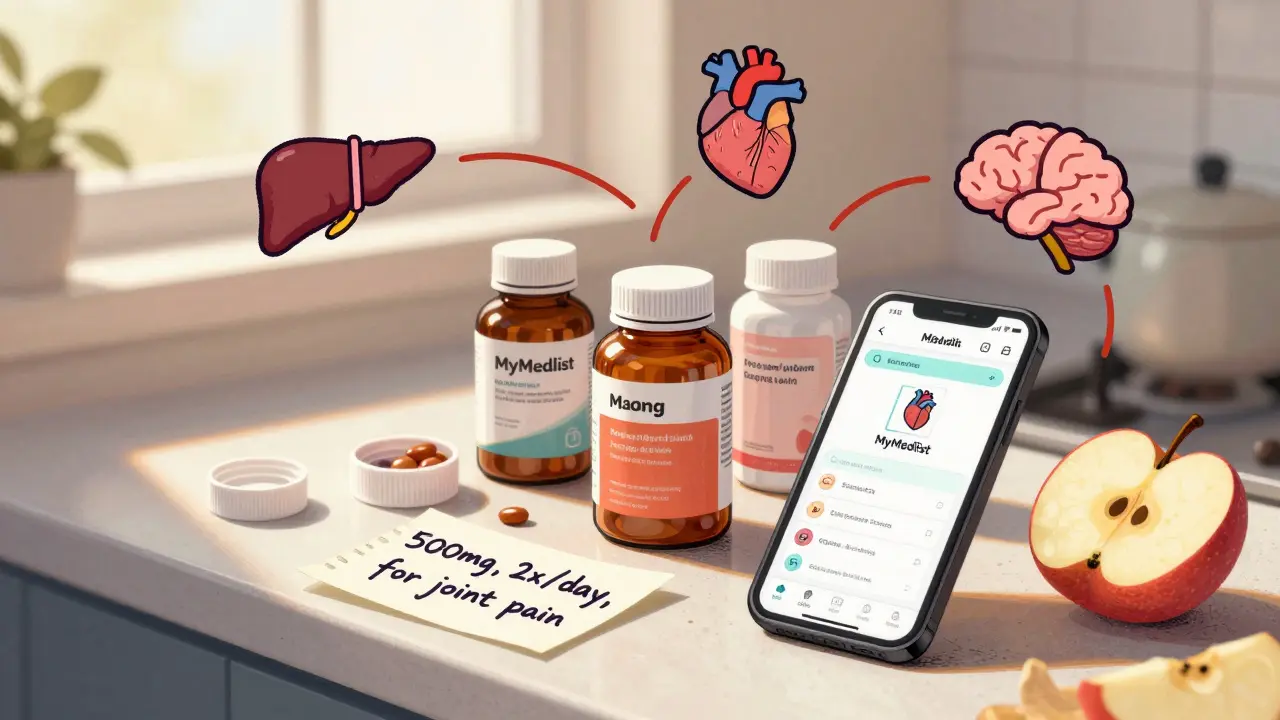
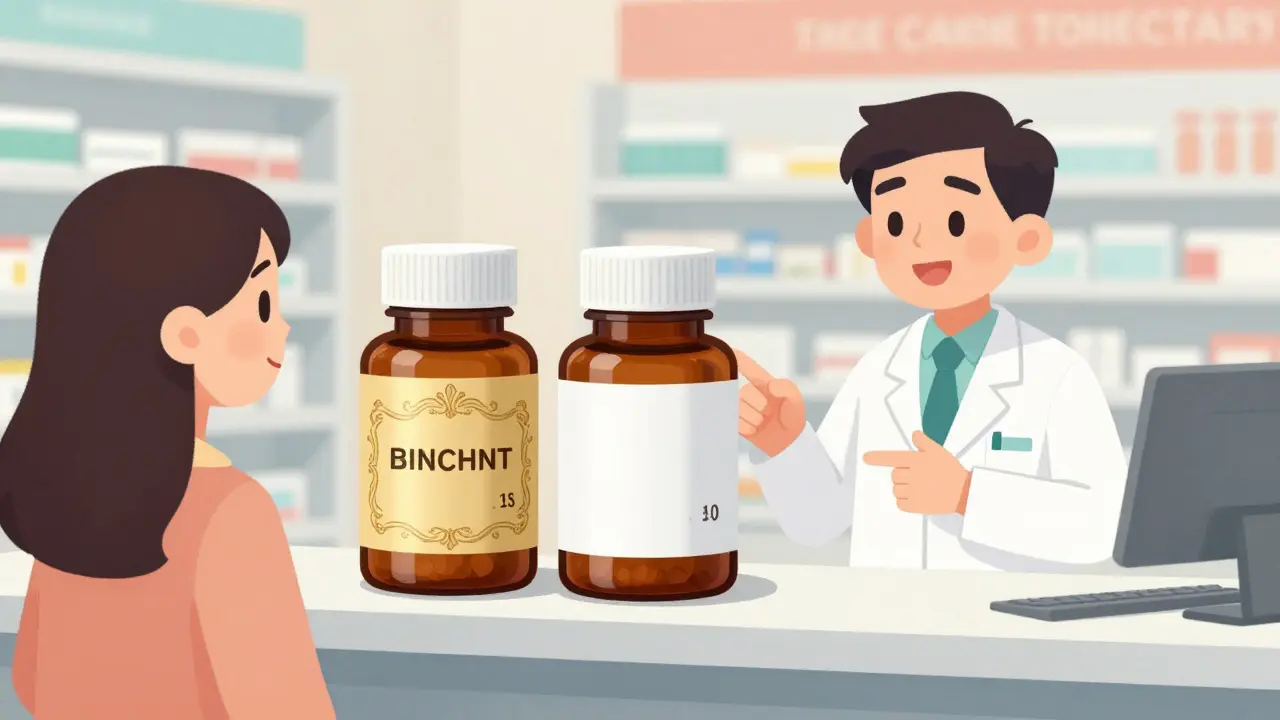
Don’t rely on memory. Don’t say “I take a few things.” Bring the actual bottles. That’s not weird. It’s smart. Every supplement label has a “Supplement Facts” panel. It lists the exact ingredients and dosages. Your doctor needs to see that-not your word for it. Many products are mislabeled, contaminated, or contain hidden pharmaceuticals. The FDA doesn’t approve supplements before they hit shelves. That means what’s on the bottle might not match what’s inside. If you take five supplements, bring five bottles. Or take a photo of each label with your phone. Even better-use a free app like MyMedList to scan and save your list. In a 2023 trial, patients who used this app improved disclosure accuracy by 44%. Write down:- The name of each supplement
- The dose (e.g., 500 mg, 2 capsules daily)
- Why you take it (e.g., “for sleep,” “for joint pain”)
- How long you’ve been taking it
What Your Doctor Should Do
Good providers don’t just nod and move on. They ask. They check. They know. The best clinics now use a simple five-question screening tool during intake:- Do you take any vitamins, minerals, or herbal products?
- Do you take anything for sleep, anxiety, or mood?
- Do you take anything for digestion or immunity?
- Have you started or stopped anything in the last three months?
- Would you like me to review what you’re taking for possible interactions?
What Happens When You Don’t Tell
Real stories, not theory. A 58-year-old man in Melbourne took ginger root for arthritis. He didn’t mention it. Two weeks later, he had a heart attack. His blood thinner, apixaban, was working too hard because ginger increased its effect. He survived-but barely. A woman in Brisbane took melatonin for insomnia. She didn’t tell her psychiatrist. Her depression meds stopped working. Melatonin interferes with serotonin metabolism. Her dose had to be completely rewritten. A teenager in Sydney took creatine for sports. He didn’t say anything. His kidney function dropped. Creatine can stress kidneys, especially in teens with undiagnosed conditions. He needed hospitalization. These aren’t rare cases. They’re predictable. The FDA estimates fewer than 1% of supplement-related adverse events are reported. That means for every one case we hear about, there are 99 we don’t.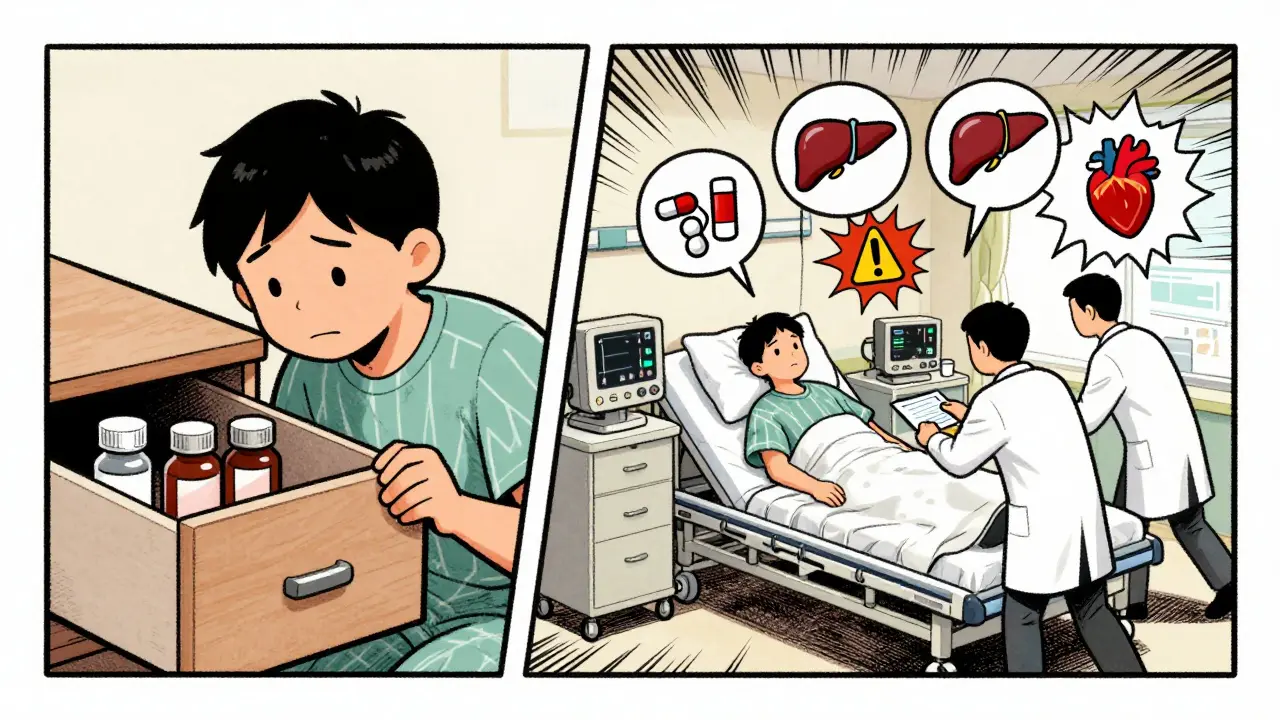
Jillian Angus
December 22, 2025 AT 16:36i took turmeric for months and never told my doc because i thought it was just spice in a pill
then i got a weird bruise after a minor fall and they found my platelets were low
turns out turmeric + my blood thinner = bad combo
now i bring my bottles to every appointment
no shame in it
Payson Mattes
December 24, 2025 AT 09:45you think this is bad? wait till you hear about the big pharma cover-up
they don't want you knowing supplements can replace drugs because they make billions off prescriptions
the FDA is in bed with Pfizer and Moderna
they banned ephedra not because it's dangerous but because it was too cheap
your doctor won't tell you this because they get kickbacks
ask them about the 2018 Senate whistleblower report
they'll change the subject
siddharth tiwari
December 25, 2025 AT 15:36people dont tell doc because they know doc dont care
my cousin took ashwagandha for anxiety and got liver issue
doc said 'oh u take that?' like it was a snack
no follow up no test just nod and move on
supplements are not regulated so why should we trust them
but also why should we trust doctors who dont even ask
Diana Alime
December 27, 2025 AT 06:17okay but like... i took green tea extract for 'metabolism boost' and ended up in the ER with liver enzymes through the roof
my doctor was like 'you did WHAT with what?'
and i was like 'i thought it was just tea?'
bro i felt like a toddler who ate the crayons
why is no one talking about this??
also my bottle said 'natural' like that means safe??
what even is natural anymore???
my cat eats grass and i'm not giving her a prescription
Adarsh Dubey
December 29, 2025 AT 04:50the core issue here isn't just patient disclosure-it's systemic neglect in medical education. Most physicians receive less than five hours of training on herbal interactions across their entire curriculum. Meanwhile, the supplement industry spends billions on marketing that frames these substances as benign. The disconnect isn't negligence; it's structural ignorance. Patients aren't being careless-they're responding to a system that never taught them to see supplements as medicine. We need mandatory continuing education for providers and standardized screening tools in every clinic-not just a few pilot programs. Until then, we're all just guessing.
Bartholomew Henry Allen
December 30, 2025 AT 13:50the american public has become lazy and irresponsible
they take random herbs like candy and expect doctors to read their minds
in my country we dont have this problem
if you take something you tell the doctor or you dont get care
no excuses
its not rocket science
you want health you take responsibility
not some trendy supplement you saw on instagram
Jeffrey Frye
December 31, 2025 AT 15:20funny how everyone acts shocked that supplements interact with meds
but nobody ever checks the damn labels
and the FDA doesn't regulate them so technically every bottle could have unlisted pharmaceuticals
remember that time that 'natural weight loss' pill had sibutramine in it? yeah
and people still buy it because it says 'herbal' on the front
and then they blame the doctor for not knowing
but you didn't tell them you took it
so who's the real idiot here
Delilah Rose
January 1, 2026 AT 09:51i used to think supplements were harmless because they were 'natural' and i'd read articles about how turmeric was a miracle cure
then i got diagnosed with autoimmune disease and started on immunosuppressants
my mom kept giving me ashwagandha because 'it reduces stress' and i didn't want to hurt her feelings so i kept taking it
three months later my doctor found my immune markers were all over the place
she said ashwagandha can stimulate immune activity which is the opposite of what i needed
she didn't yell she didn't judge she just said 'thank you for telling me now we can fix this'
so i started bringing my bottles
and i started saying 'i'm taking this because my mom said so' and it actually helped
now my doc asks me about supplements before she even asks about my sleep
and i feel like i'm finally being seen as a whole person
not just a list of symptoms
and honestly? that's more healing than any pill
CHETAN MANDLECHA
January 1, 2026 AT 20:01when i was in med school in delhi we were taught to ask about herbal remedies as part of routine history
not because it was trendy but because it was basic
in rural india people use neem, tulsi, ginger, and amla daily
some of them are on blood pressure meds
you don't ask you miss something
the problem isn't the patient
the problem is the system that treats supplements like a side note
not part of the medical picture
just bring your bottles
it's not weird
it's medical hygiene