
When it comes to losing weight, most people ask: cardio or strength training? The answer isn’t as simple as picking one. You don’t have to choose. In fact, trying to pick just one might be holding you back.
Cardio Burns Calories Fast - But Only While You’re Doing It
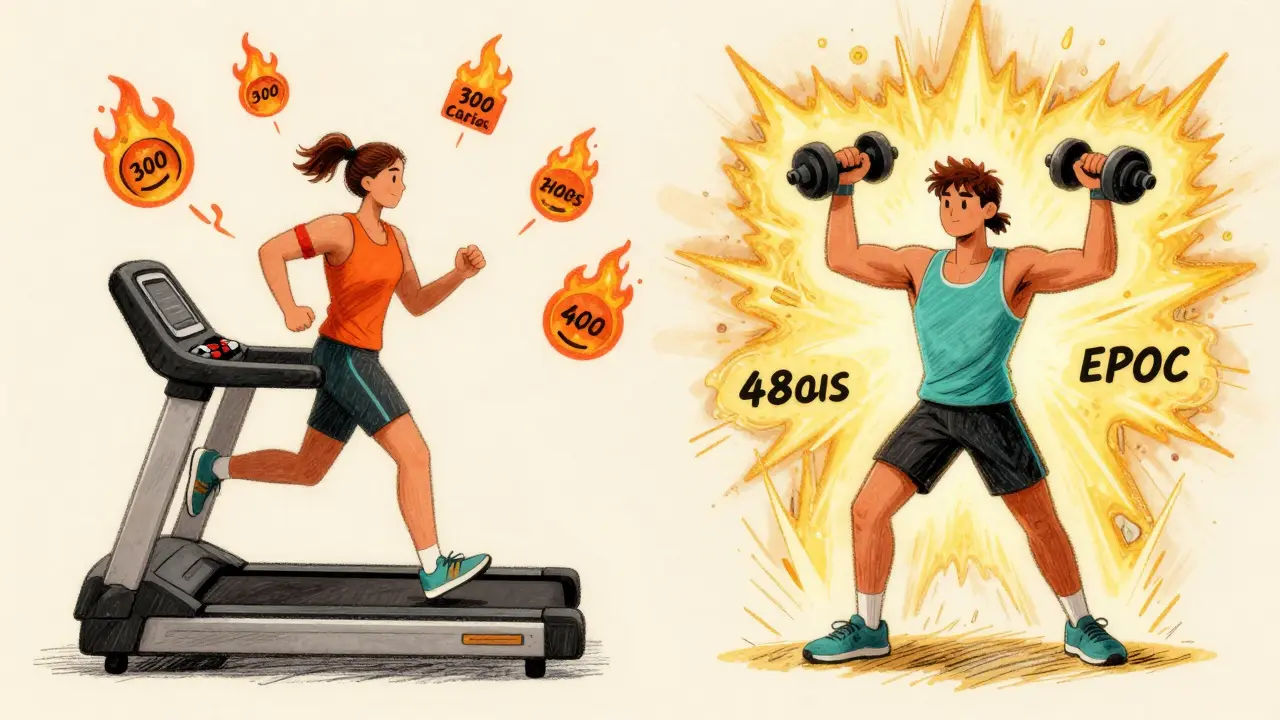
Cardio is the go-to for quick results. Run for 30 minutes, and you’ll burn 300 to 400 calories. Cycle hard? That can jump to 600. Swim laps? You’re looking at 400 to 500. These numbers come from Harvard Medical School’s 2023 metabolic data. It’s no wonder people start with cardio - the scale moves fast.But here’s the catch: the moment you stop moving, the calorie burn drops. Your body returns to its resting state. That’s why many people hit a wall after 8 to 12 weeks. Their metabolism adapts. They’re doing the same runs, same pace, same duration - and the weight loss stalls. That’s not your fault. It’s biology.
Cardio also doesn’t protect muscle. If you’re only doing cardio and not eating enough protein, your body will break down muscle for energy. That’s bad news. Muscle burns more calories at rest than fat. Lose muscle, and your metabolism slows down. You end up burning fewer calories even when you’re not exercising.
Strength Training Burns Fewer Calories During the Workout - But More After
A 30-minute weight session might only burn 90 to 150 calories. That’s less than half of what cardio burns in the same time. So why bother?Because strength training triggers something called EPOC - excess post-exercise oxygen consumption. Think of it as your body’s afterburn. After a hard lifting session, your metabolism stays elevated for up to 48 hours. You keep burning extra calories while you sleep, eat, or sit at your desk.
And here’s the real game-changer: muscle is metabolically active. Every kilogram of muscle burns 13 to 15 calories per day just to stay alive. Fat? Only 4.5 to 5. So if you gain 2 kilograms of muscle over six months, you’re burning an extra 26 to 30 calories every single day - without lifting a finger. That’s over 9,000 extra calories a year. That’s roughly 2.5 pounds of fat gone, just from having more muscle.
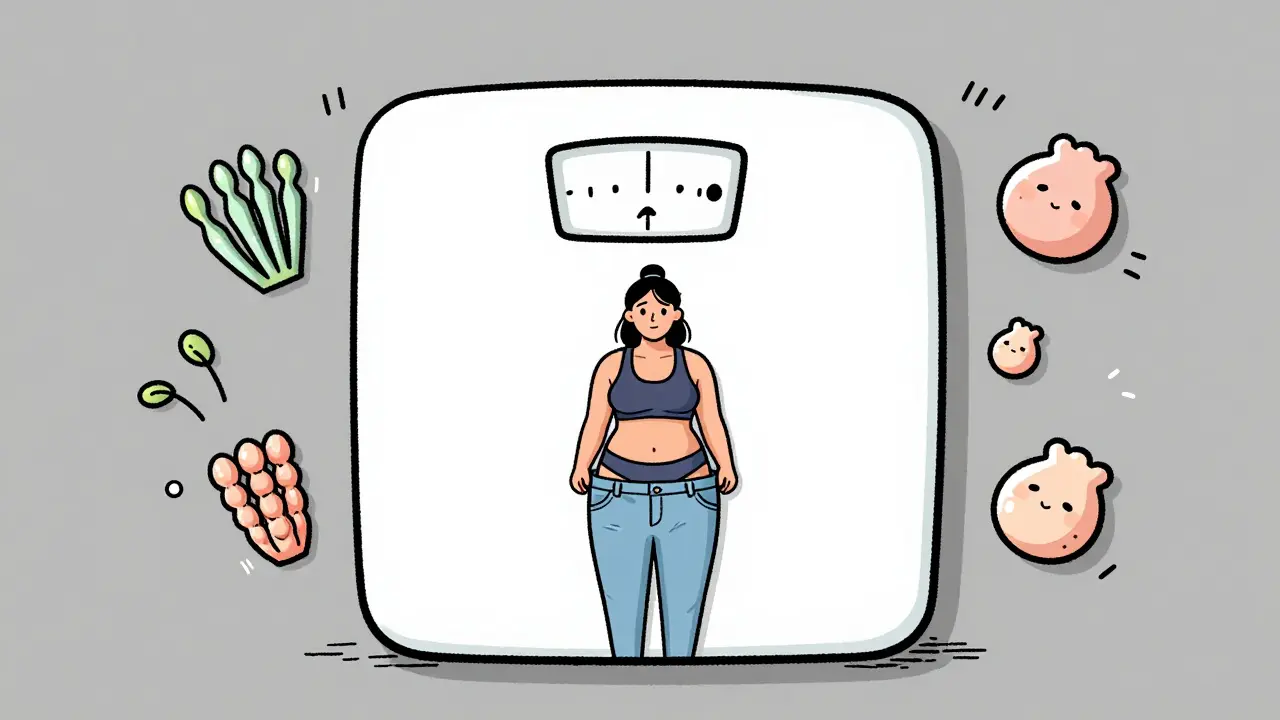
People who lift weights often notice something strange: the scale doesn’t move, but their clothes fit better. That’s because they’re losing fat and gaining muscle at the same time. Muscle is denser. It takes up less space. So you look leaner even if the number on the scale stays the same.
The Science Says: Combine Them
A 2022 study in Obesity followed 200 overweight adults for six months. One group did only cardio. Another did only strength training. The third did both.The combo group lost 12.4% body fat - and gained 1.8 kilograms of lean muscle. The cardio-only group lost 9.7% fat - but lost a little muscle too. The strength-only group gained 2.3 kilograms of muscle - but only lost 7.1% fat.
That’s the pattern across nearly every major study since 2019. The best results come from doing both. Not instead of each other. Alongside each other.
Women’s Health Magazine analyzed data from the National Weight Control Registry - people who’ve lost 30 pounds or more and kept it off for five years. Their secret? They averaged 220 minutes of cardio per week. But the ones who kept the weight off longest? They did at least three strength sessions every week.
What About HIIT?
High-Intensity Interval Training (HIIT) blends the best of both. You do short bursts of all-out effort - like sprinting for 30 seconds - followed by a minute of walking. Repeat for 20 minutes.Studies show HIIT burns 25 to 30% more calories than steady-state cardio in the same time. It also creates 12 to 15% more afterburn than regular cardio. And if you add bodyweight exercises like burpees, jump squats, or kettlebell swings, you’re getting strength benefits too.
HIIT isn’t for everyone - especially if you’re new to exercise or have joint issues. But if you’re short on time and want maximum bang for your buck, it’s the most efficient option.
Real People, Real Results
Look at Reddit threads from people who’ve tried this for months. In one top thread with over 3,400 upvotes, 68% of people who combined cardio and strength lost more than 15% body fat. Only 42% of cardio-only users hit that mark. And just 31% of strength-only users did.Cardio fans love the immediate results: "I lost 5 pounds in two weeks!" They also say it reduces stress. Strength trainers say: "I didn’t lose weight, but my jeans are loose." They talk about feeling stronger, more confident, and noticing changes in their arms, legs, and core.
One common complaint? Strength training makes the scale go up at first. That’s not fat. It’s water retention from muscle repair. It’s also muscle glycogen storage. It’s temporary. If you stick with it, the fat loss follows.
What Should You Actually Do?
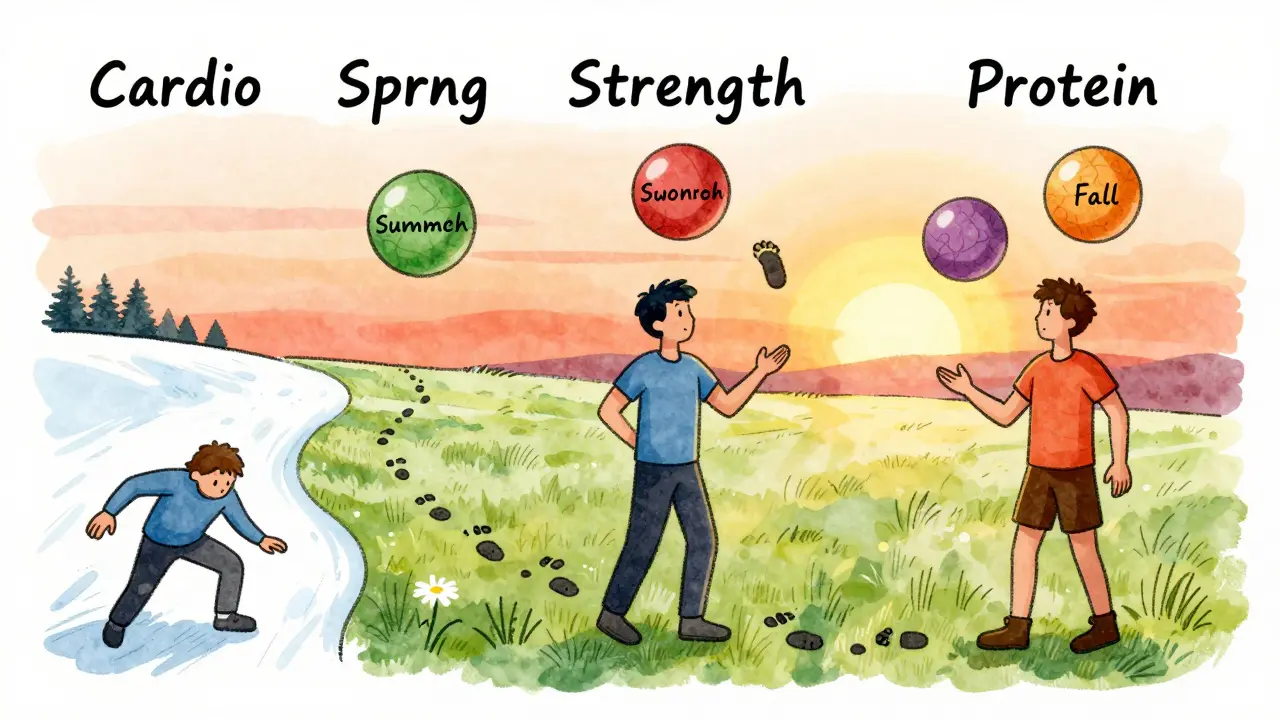
The American College of Sports Medicine (ACSM) gives clear advice for beginners:- Start with 3 days of cardio - 20 to 30 minutes each session. Keep it at a pace where you can talk but not sing.
- Do 2 full-body strength sessions per week. Use weights or resistance bands. Aim for 8 to 12 reps per set. If it feels easy, increase the weight.
After a few months, bump it up to:
- 150 minutes of cardio per week (that’s 30 minutes, 5 days a week)
- 120 minutes of strength training (4 days of 30 minutes, or 3 days of 40 minutes)
Don’t forget protein. Most people trying to lose weight don’t eat enough. The International Society of Sports Nutrition recommends 1.6 to 2.2 grams of protein per kilogram of body weight daily. If you weigh 70 kg, that’s 112 to 154 grams of protein a day. Eggs, chicken, tofu, Greek yogurt, lentils - spread it across meals.
The Biggest Mistake People Make
They think they have to choose. They believe cardio is the "real" way to lose weight. Or that lifting will make them bulky. Neither is true.Cardio won’t make you skinny if you’re eating too much. Strength training won’t turn you into a bodybuilder unless you’re taking steroids and eating 5,000 calories a day.
The real issue? Most people quit because they don’t see fast results. They get discouraged. But weight loss isn’t a sprint. It’s a lifestyle change.
Those who stick with both cardio and strength training for 18 months keep 72% of their weight off, according to a MyFitnessPal survey of 25,000 users. Those who stick with only one? Only 48% keep it off.
What’s Next?
The fitness industry is moving toward personalized plans. Wearables like Apple Watch and Garmin now track EPOC and metabolic rate. AI tools are starting to recommend workout splits based on your genetics, sleep, and stress levels.But you don’t need fancy tech. You just need consistency. Two days of cardio. Two days of lifting. One day of walking or cycling. Rest when you need to. Eat enough protein. Sleep well.
Forget the hype. Forget the "best" exercise. The best exercise is the one you’ll do every week - and the one you’ll keep doing for years.
Cardio gets you moving. Strength keeps you strong. Together, they change your body - and your life.

Elaine Douglass
December 18, 2025 AT 12:27I used to think cardio was the only way to lose weight until I started lifting and realized my jeans were getting looser even though the scale didn't budge
It took me months to understand that muscle isn't the enemy
Now I feel stronger, sleep better, and honestly? I don't hate working out anymore
Laura Hamill
December 19, 2025 AT 01:24THEY DON'T WANT YOU TO KNOW THIS BUT CARDIO IS A BIG PHARMA SCAM TO KEEP YOU BUYING GYM MEMBERSHIPS AND PROTEIN SHAKES
THE GOVT AND BIG FITNESS ARE HIDING THE TRUTH ABOUT MUSCLE AND METABOLISM
JUST EAT LESS AND WALK MORE LOL 😡
Alana Koerts
December 20, 2025 AT 07:35Harvard data is outdated
2023 metabolic tables don't account for individual variance
Also protein recommendations are wildly off for sedentary populations
And HIIT? Only works if you're already fit
Most people just burn out and quit
Gloria Parraz
December 21, 2025 AT 10:20Look I know this sounds boring but consistency beats intensity every single time
You don't need to run marathons or lift like a bodybuilder
Just move every day. Lift something heavy twice a week. Eat protein. Sleep. Repeat.
It's not sexy. But it works.
And you'll feel better than you have in years
Mark Able
December 22, 2025 AT 18:49Hey I tried this combo thing and it worked but I had to stop because my knees are shot from running
Anyone else have joint issues and still manage to do both?
Maybe I'm just old but I need some advice
Chris Clark
December 24, 2025 AT 06:26Yo I'm from the UK originally but moved to Texas last year and wow the fitness culture here is wild
Everyone's obsessed with cardio like it's a religion
But when I started lifting with my cousin he told me 'man your body ain't a calculator' and it clicked
Now I do 3 days weights 2 days bike and I feel like a new person
Also protein shakes are garbage unless you mix em with peanut butter
William Storrs
December 24, 2025 AT 11:33Just started this routine 3 weeks ago
My scale went up 2 pounds
But I can now do 10 pushups in a row
And I didn't even know I could do 3
That's the win right there
Don't quit on week 2
You got this
James Stearns
December 26, 2025 AT 05:04While the empirical data presented is superficially compelling, one must interrogate the methodological limitations of the Obesity journal study, particularly its failure to control for dietary adherence variance across cohorts. Furthermore, the National Weight Control Registry suffers from selection bias, as it excludes individuals who regained weight within the first year. The assertion that muscle confers a metabolic advantage is statistically negligible at the population level. One cannot reasonably infer causation from correlational data without accounting for confounding variables such as sleep architecture, circadian rhythm alignment, and glycemic load. In sum, the narrative is reductionist and potentially misleading to the lay audience.
Nina Stacey
December 26, 2025 AT 08:12I used to think strength training was just for guys who want to look like action figures
But after my mom had surgery and couldn't walk without help I started doing light weights with her
Now she can climb stairs again and she says she feels like herself
It's not about losing weight it's about being able to live
Also I typo a lot sorry
Dominic Suyo
December 27, 2025 AT 13:37Cardio is the opiate of the masses. You think you're burning fat but you're just exhausting your adrenal glands and lowering your testosterone. Meanwhile, the elite are doing cold plunges, breathwork, and resistance training while you're running on a treadmill watching Netflix. The system wants you weak, tired, and dependent on supplements. Wake up. Lift heavy. Eat real food. Stop chasing the scale. The fat will melt when your body isn't in survival mode.